
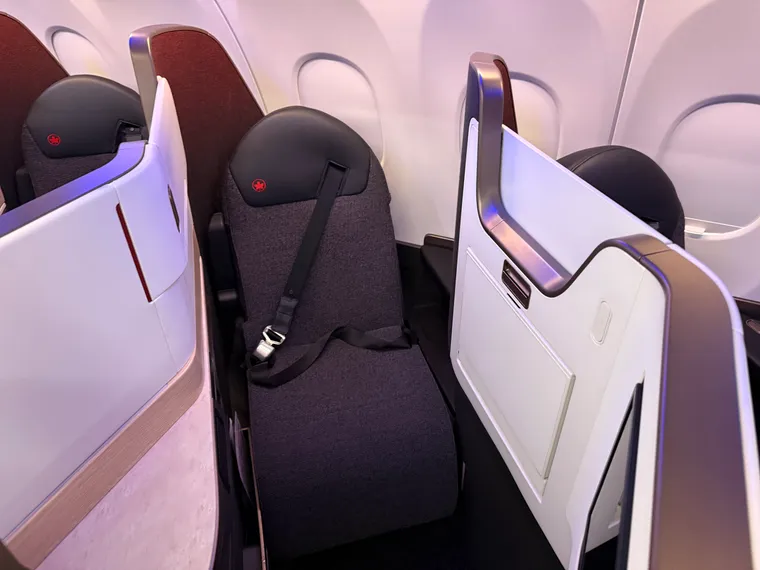
Can longhaul narrowbody business class be just as good for passengers as its widebody equivalent? It’s one of the fundamental challenges of the seats, cabins, and passenger experiences industry — for the last decade, this decade, and the decade to come.
There are inherent problems posed by the 3D geometry of the space onboard an A321neo or 737 MAX cabin, and solving them has proven difficult for seatmakers across the board.
Even more than on widebodies, the space constraints of a single-aisle mean that every inch counts, driving deeper and deeper tradeoffs in design, certification, and manufacturing.
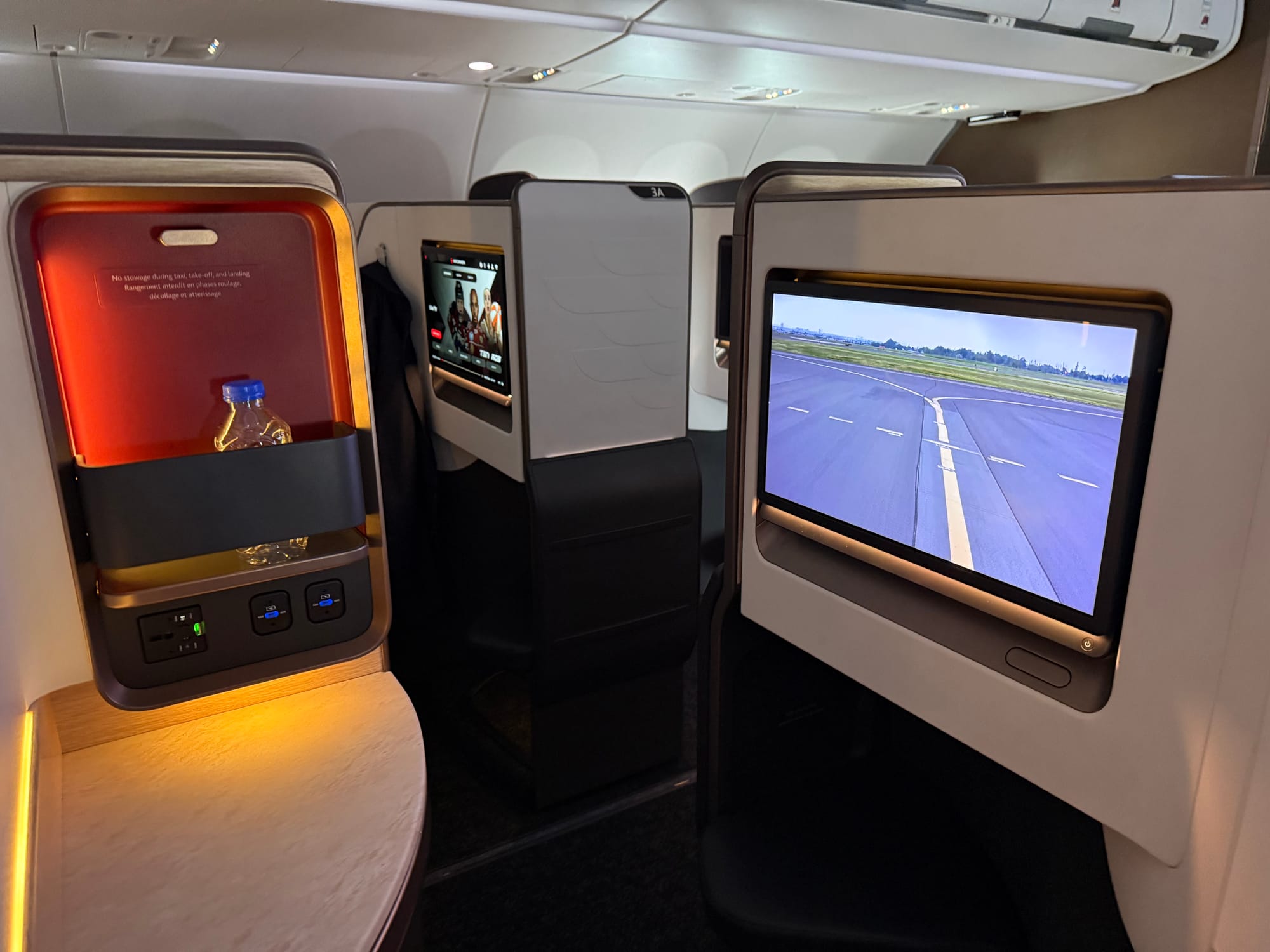
And so to Air Canada’s A321XLR, with its doorless Collins Aerospace Aurora aisle-facing herringbone seats, which have received a real love-them-or-hate-them response in their (doored) American Airlines version.
The aircraft has an unusual role to play thanks to Air Canada’s triple-hub operational structure and network geography, so the airline and its design partner Acumen have made some controversial choices as a result, including no doors in business class and a tiny half-galley at the rear.
Short version: this is a great business class experience, better than many a widebody product I’ve flown. The seat is excellent, with genuinely beautiful CMF, especially comfortable padding, an incredible IFE screen — and an utterly stunning 4K front-facing camera that makes for a fascinatingly mesmerising experience.
Long version: read on.
