
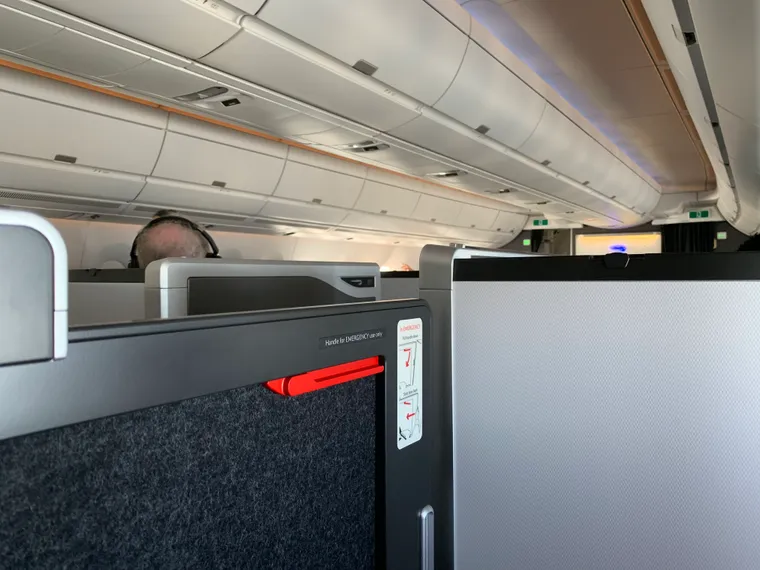
Since the introduction of business class suite doors nearly a decade ago, they’ve become a default option for airlines: the “nobody ever got fired for buying IBM” at the pointy end of the plane.
But with more and more seats turning into suites, it’s become clear that all doors are not created equal. Some of them really add to a feeling of privacy in the seat, whether the seat itself already felt private to start with — or whether it very much needed the help.
But are doors actually necessary for a modern seat? This is a “what’s the best airline?” sort of question, and the answer depends on a multitude of intersecting factors, tradeoffs and further questions.
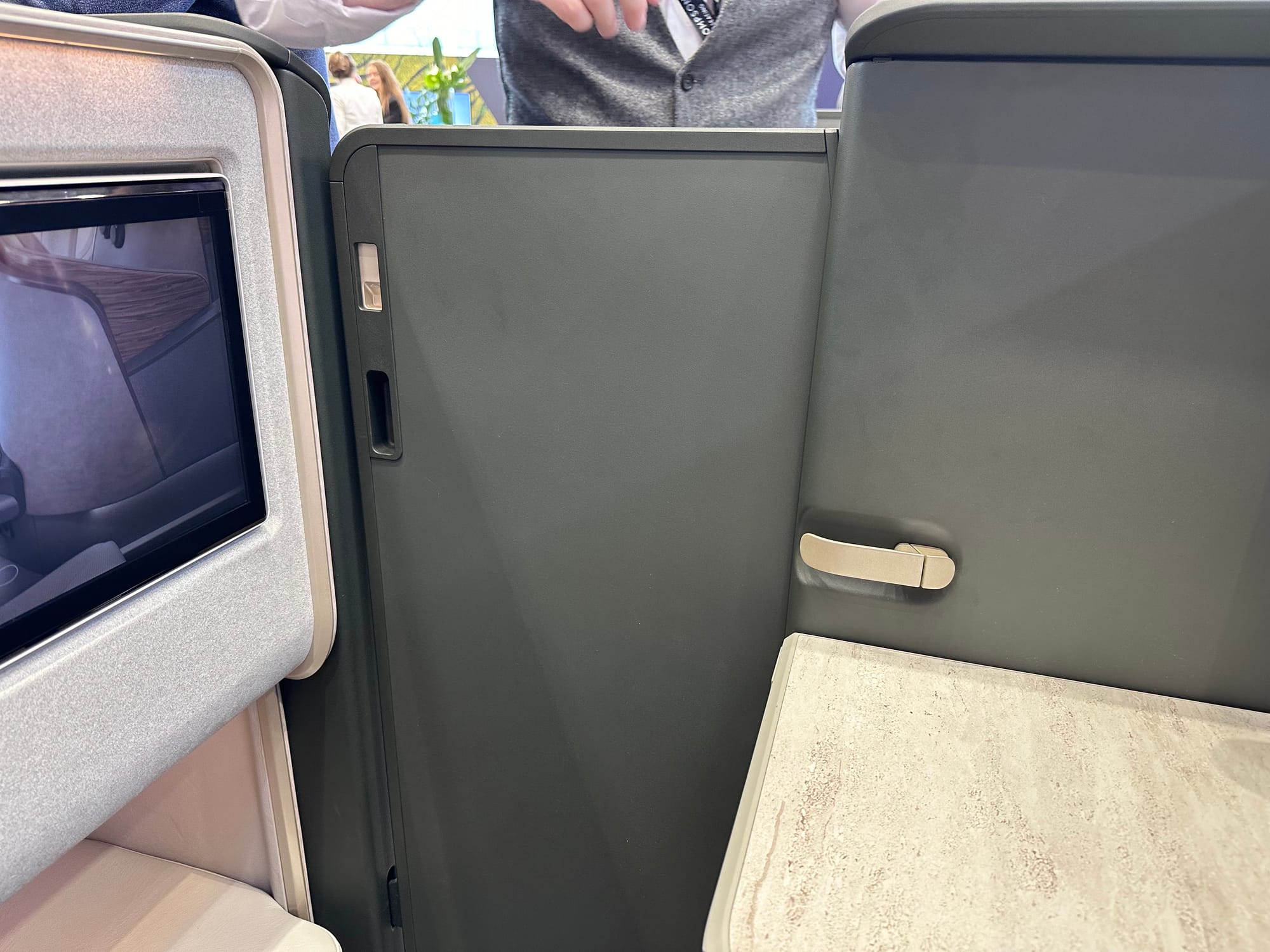
Those questions include:
- seat layout: is it a herringbone, staggered, or some rarer configuration, and what does that inherently mean for privacy?
- shroud height: how much privacy does the seat surround add?
- door height: how much privacy would a door add?
- bin or ceiling height: how far is it from the passenger to whatever’s above them, and how does that change things?
- type of door: from sliding to pocket, flappy or curtain, how does that factor in?
- other privacy perception factors: what auditory, visual and other elements can boost the feeling of privacy?
Some new seats — like Air Canada’s A321XLR — are eschewing doors, and seatmakers are showing off not-a-door options like flexible panels, screens, and curtains. At the same time, manufacturing issues, certification concerns and regulatory problems are continuing to bite, especially around doors.
It’s clear, though, that some of the latest seats and the latest cabins fundamentally don’t need doors. Other seats, in other cabins, absolutely do. And sometimes, certain seats in the same cabin really benefit from having a door, while others don’t.
Let’s sit down and get started.
