
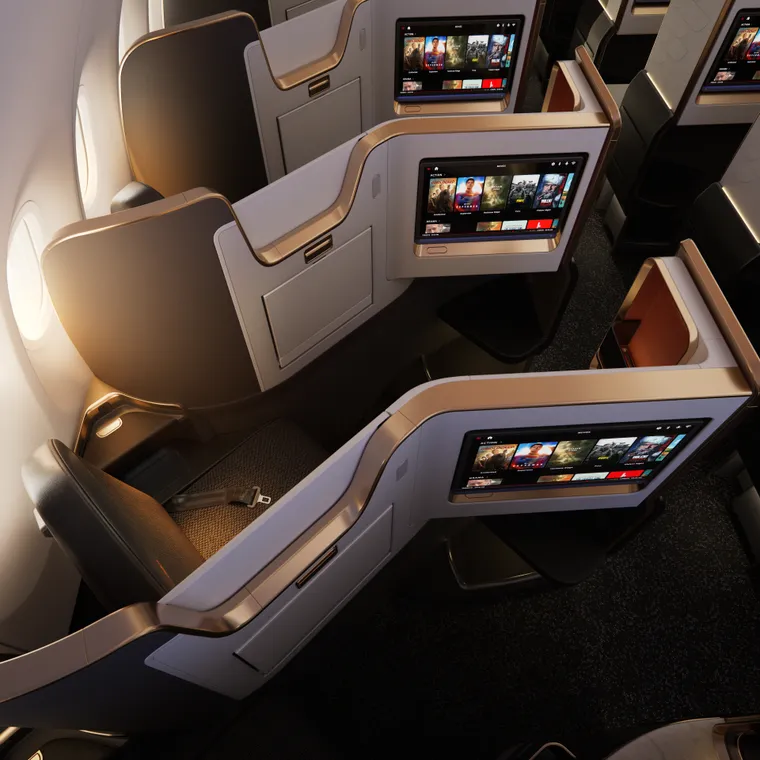
MONTRÉAL — As the longer-range versions of the Airbus A321neo — including the A321LR and now especially the XLR — fit into a growing number of airlines’ fleets, the cabin balance between the seats up front and the seats down back is telling.
Assumptions about the cabins, and indeed the missions, of these aircraft are evolving as more of them arrive. Some airlines like United are dedicating their premium versions to specific routes. Others like TAP Air Portugal are using them to tactically adjust between demand for cargo, overall passenger numbers and premium passenger proportions on key routes, while maintaining or increasing frequencies. And some are fitting them into seasonal and route-based niches within their wider operations.

Air Canada is one of the latter, executive vice president and chief operations officer Mark Nasr tells The Up Front in part of our wide-ranging interview as the airline uses its Glowing Hearted design aesthetic to redefine what it means to be Air Canada.
