
With the demise of Spirit, the bottom end of the US domestic first class recliner market is wide open, and local LCCs and ULCCs are moving to fill it.
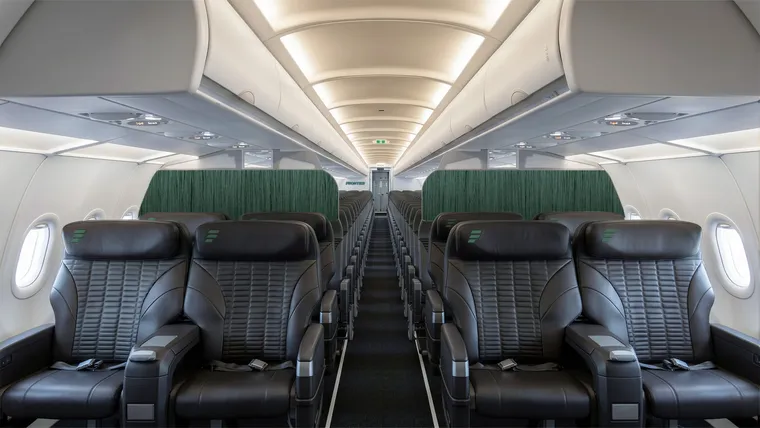
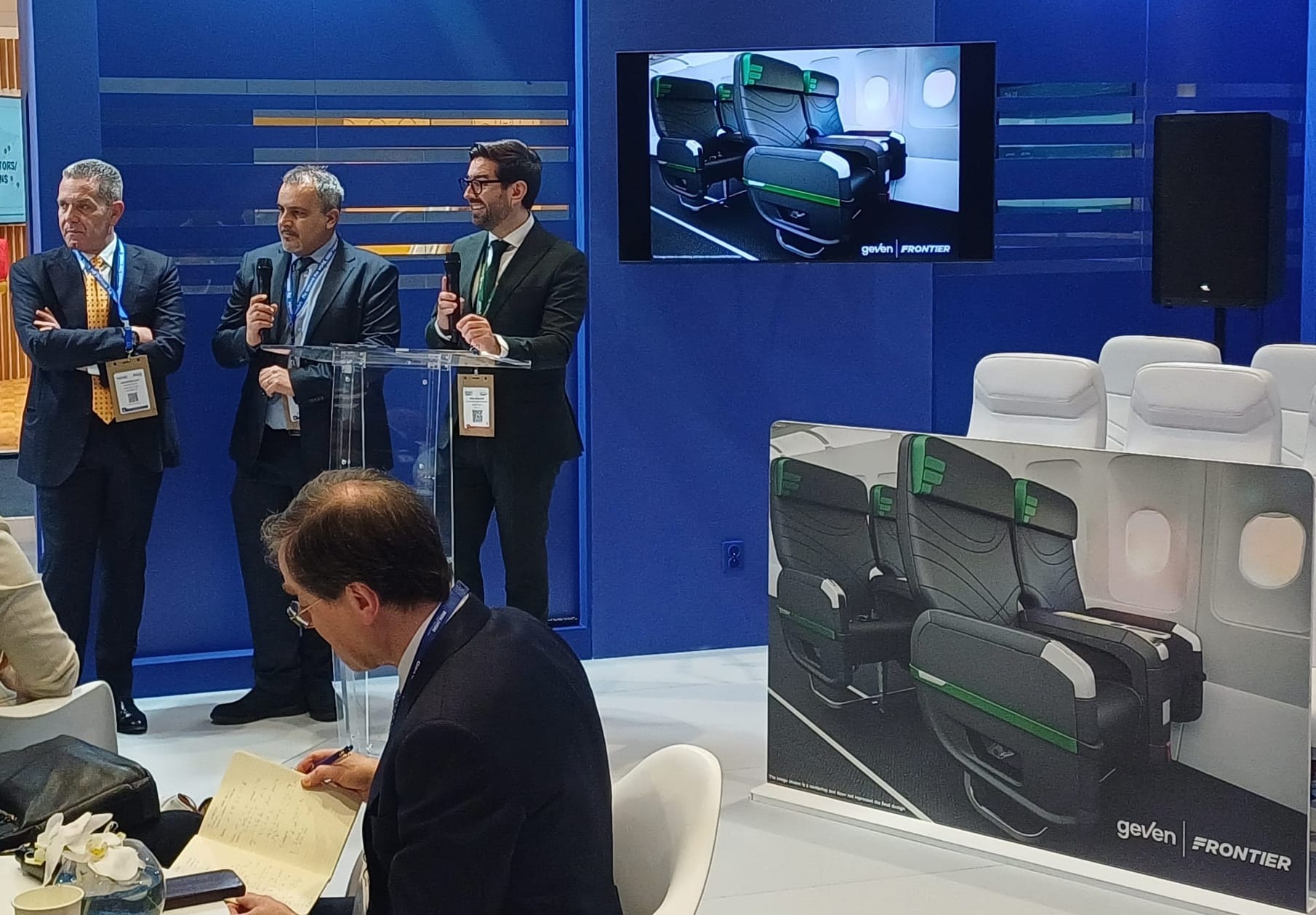
Two years after announcing them, and with the same amount of delay to the first installations, Frontier is now selling the eight Geven Comoda seats that it’s marketing as First Class at the front of its A320 family aircraft, for flights beginning 5 March 2027.
With no recline and no frills, Frontier is asking a really thought-provoking question that sits at the line between premium and luxury, and it’s a question that hasn’t been asked in the same way since Spirit Airlines introduced its Big Front Seat in 2007: what’s the bare minimum you can get away with in US domestic first class?
(We’ll refer to these non-reclining versions of seats marketed as US domestic first, shorthaul business or premium economy in some other markets, as “recliners” — for ease of comparison with and differentiation from other types of seat.)
Frontier’s lead-in pricing is keen, if a little complicated because of bundling. It starts at US$129 one way for the first class bundle on top of the base fare (seat, two checked bags, carry-on, and priority boarding) compared with $90 one way for the “premium” bundle (which includes all that but no checked bags). The gap widens once the advertised lead-in pricing disappears, though.
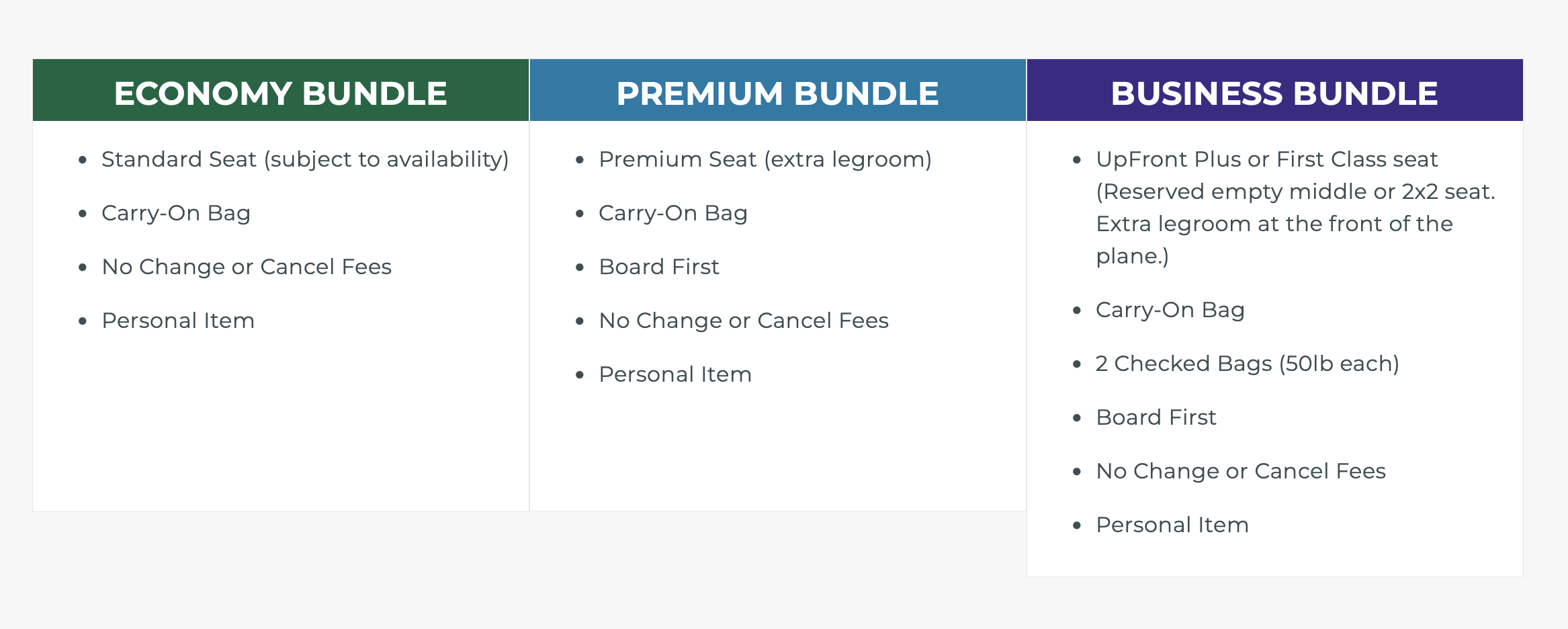
For an example Denver-Los Angeles flight we checked, unbundled first class seat pricing alone was $78 per passenger (the same price as the middle-seat-free UpFrontPlus), extra-legroom seats marketed as premium ranged from $35–52, seats near the front (“Preferred”) were $26–29, while standard seats down the back came to $15–18.
The basic geometry of the first class is compelling, with the usual 2-2 layout on an A320 fuselage is as wide as you’re going to get in a narrowbody recliner, given the extra width of the aircraft over the 737 and certainly anything smaller like an A220.
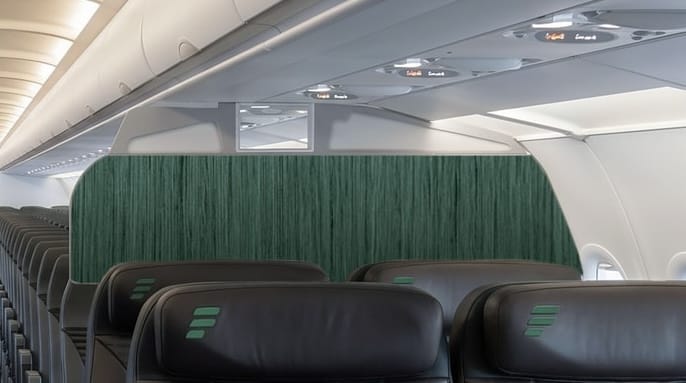
In pitch terms, the front row is the front row, and the second row gets 37” — but neither recline. While we only have one image, it appears that the only separation is a hanging divider, descending immediately behind row 2.
From appearances, this looks to be solid and is certainly opaque in the rendering, with its green stem motif. That’s fine, although could this have been a little more fun, given Frontier’s excellent animal tail liveries?
Notably, though, the seats look and feel quite different to what was initially announced, looking a lot less like a premium economy seat and a lot more like a big old comfortable leather first class product.
Most visibly, the gap between the two seats from the initial Comoda images, and indeed from similar Comoda seats being installed on German LCC Eurowings at roughly the same time, has disappeared, to be filled by a horizontal extension of the seatback.
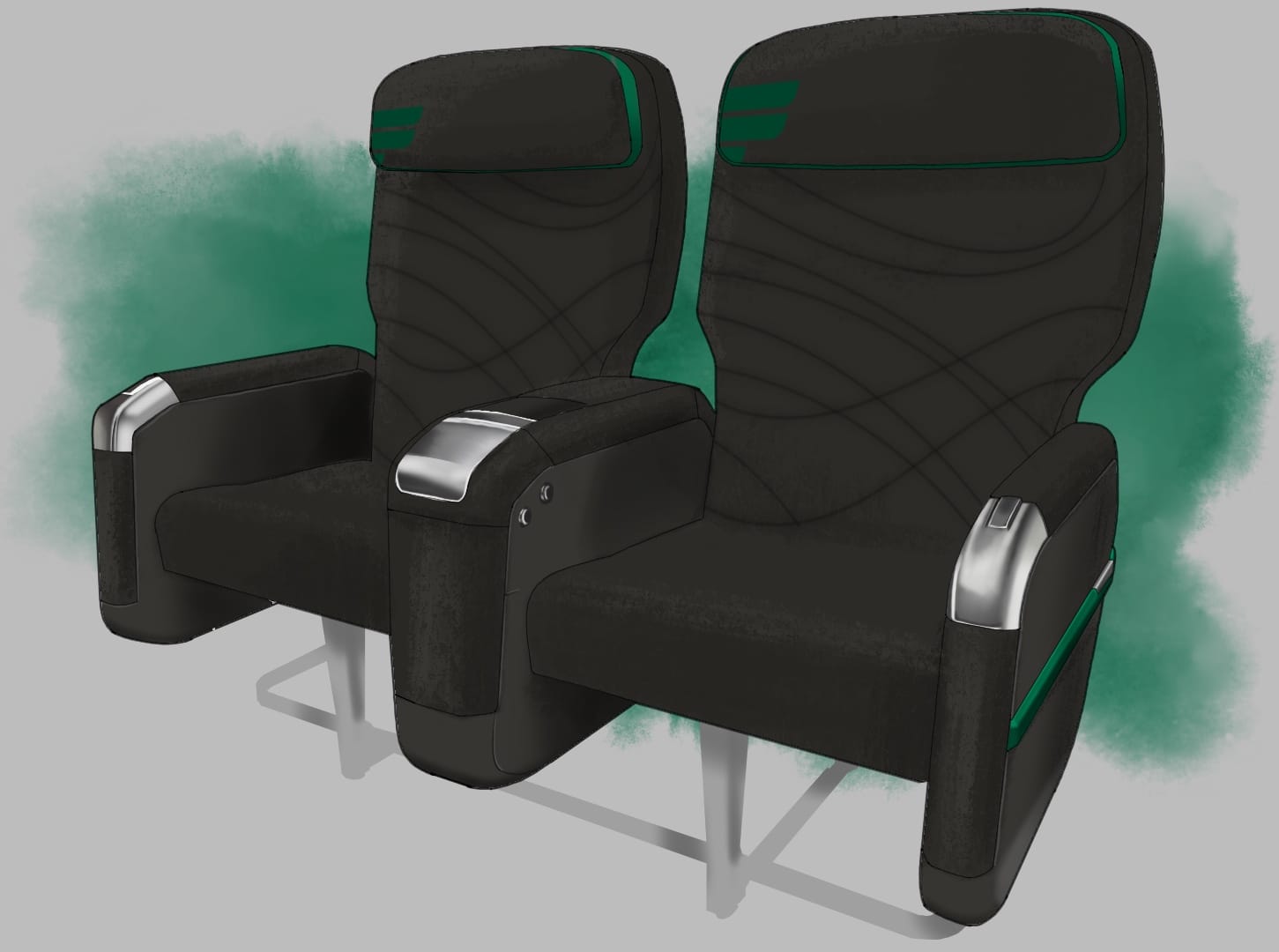
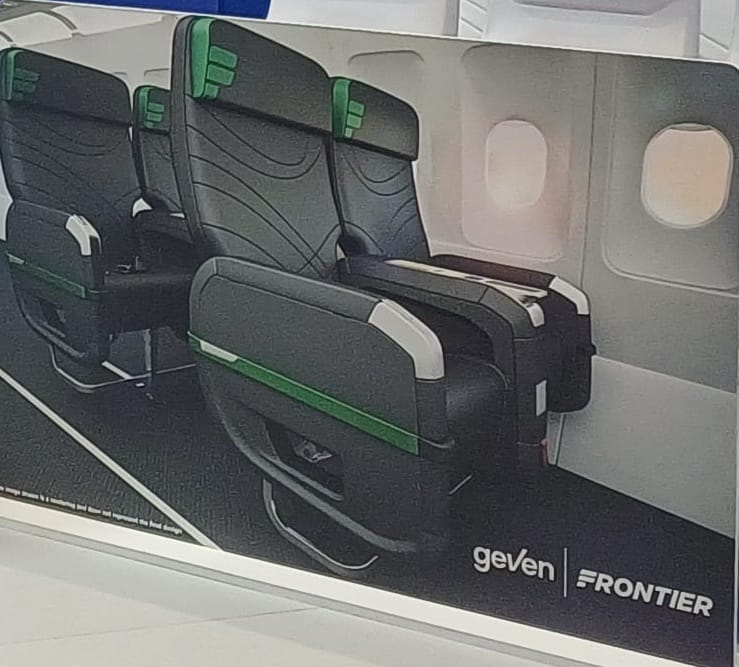
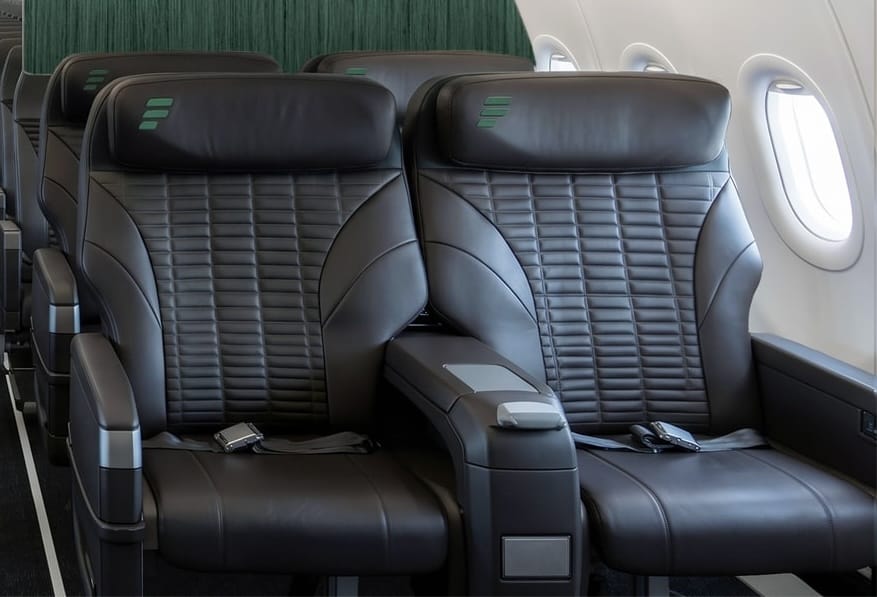
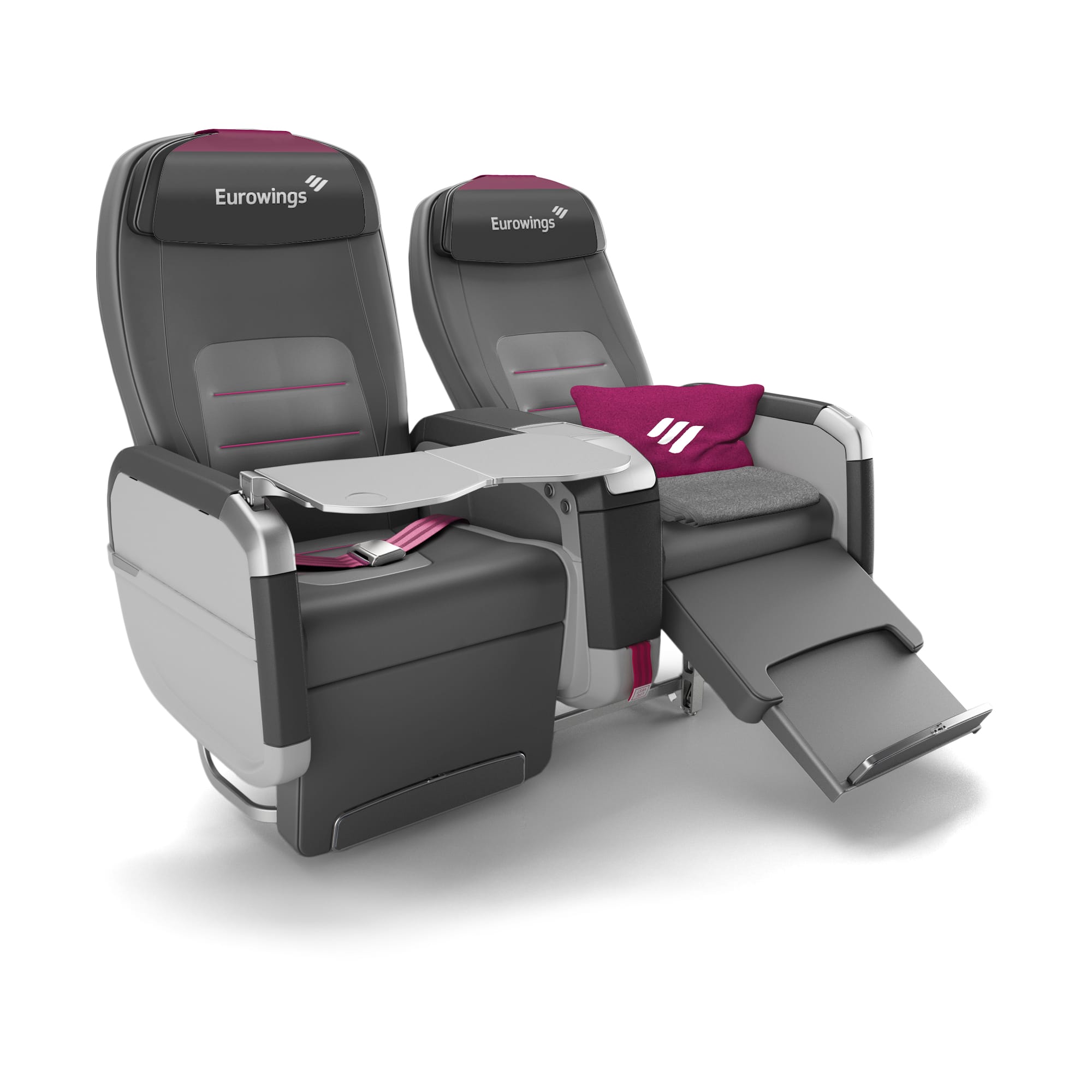
The evolution of this seat, and the contemporaneous Eurowings Premium BIZ recliners, is fascinating to observe. Images: Geven/Frontier, Eurowings
For some reason, they’re a bit reminiscent of what you’d get in the back of a US limo service black sedan — think a Lincoln Town Car — in the early 2000s.
While that’s quite the niche aesthetic memory, the idea stands: it’s a little more expensive than a taxi, not hugely more convenient, but a good bit more comfortable. Not the height of luxury, but a nice upgrade. Here, you’re still flying commercial, and it’s still a low-cost carrier, but its nicer.
It’s those changes to the previous visuals, though, that start raising questions. This newly released CGI is the third set of artistic or computer renderings of the seat we’ve seen, and we’re curious as to why. Let’s dive in.
Do the delays, seat structure changes and the first-economy divider raise the spectre of seat certification issues?
The recliner product world, whether US domestic first, regional business class elsewhere, or international premium economy, is no strange to seat certification woes in recent years. Air Côte d’Ivoire took delivery of its first A330neo with rows behind row 1 blocked off — also a Geven seat, though the Forma fixed-seatback model — last year.
With renewed regulatory scrutiny on crash testing around occupant safety, what might have been a simple install as recently as five or ten years ago can get very complicated.
Any time that an airline wants to customise a standard seat model beyond the most simple colour, material and finish variations, it gets expensive. That’s especially true if the customisation affects part of the seat in the crash test dummy’s path when it comes to certification.
So airlines don’t change things on a whim — and that goes double for ultra-low-cost carriers like Frontier. So why has this seat so visibly changed since the seat model was announced in spring 2025, and taken such a delay since the announcement in 2024?
Cards on the tray table: we’re working off one new rendering that varies in unusual and non-standard ways from what was shown previously, but which also varies from other low-cost carrier versions of the same seat.
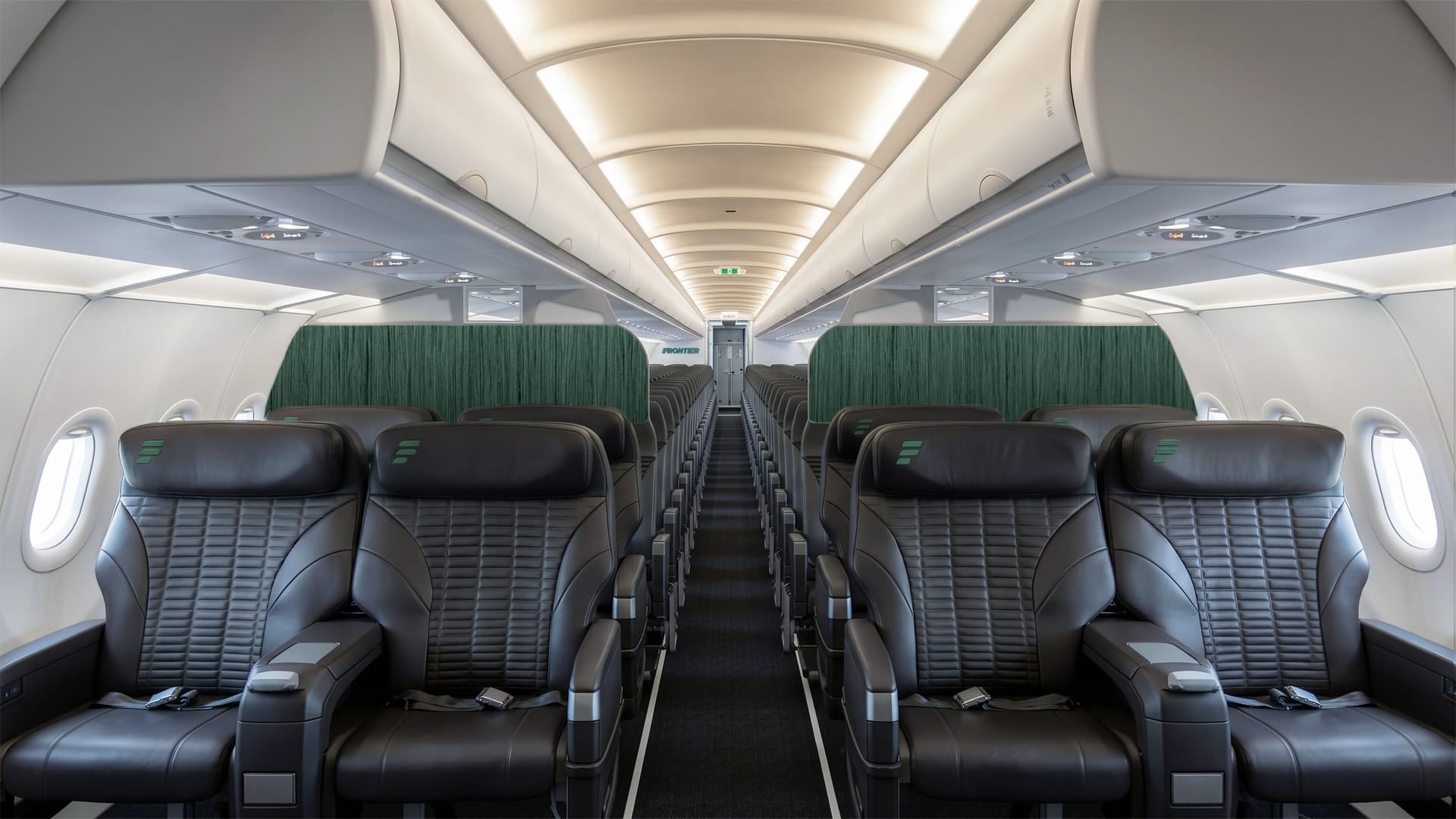
Every one of those variations has certification, timing and cost implications, including the gap-filling seatback change, the lack of recline, changes to the metal end caps, and more.
To be clear, Frontier did note in the small print of the 2025 visual that “the image shown is a rendering and does not represent the final design”. But that rendering does show a very standard-looking Comoda. Moreover, it shows a very standard-looking Comoda that has already seen some modifications: the standard Comoda has recline buttons.
The 2025 Frontier render didn’t have recline buttons, which suggests that the render wasn’t just thrown together at the last minute, but rather includes at least some level of Frontier-specific customisation.
So why would the seat change quite so much in the year and a half between the announcement and now?
The Up Front contacted Frontier with detailed questions, but we have not received any answer at the time of publishing. This article will be updated In the event that we do.
