
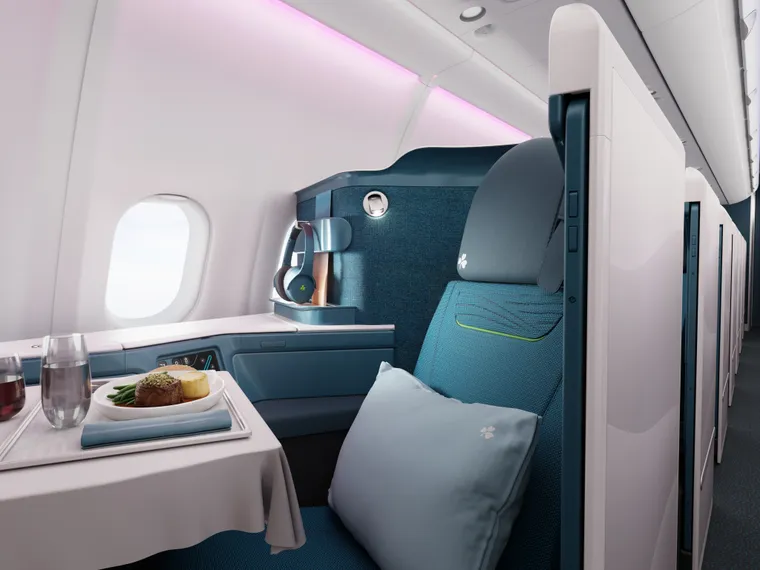
With bright new teal seats and green accents, Aer Lingus’ new retrofit cabins for its A330-300 fleet are unmistakeable. Upgrading the business class to a herringbone suite is a strong move, while the airline is also adding its first premium economy cabin behind doors 2.
But as much as the interior aesthetic is a departure from the neutrals-forward design status quo, the actual configuration of the aircraft and the balance of business, premium and economy seats are surprisingly economy-heavy and premium-light for a newly configured aircraft as we approach the end of 2026.
The split of 28 business class seats, 28 in premium economy and 238 in regular economy is clearly marked in the airline’s social video (seen on its LinkedIn). That’s more economy than British Airways offers on its new A380 layout, which seats just 215 passengers down the back.
So beyond the new Recaro R4 premium economy cabin — and herringbone suites like Collins Aerospace’s Elevation now flowing into Aer Lingus’ market segment — where does all this fit in to the niche IAG has carved out for the airline between its full service network carriers and the LCC experience?
Upgrading from Vantage OG to Elevation moves Aer Lingus towards the front of the pack
Collins’ Elevation doored herringbone suites are perhaps a surprising choice for Aer Lingus. Developed from the Super Diamond family of herringbone, the seat brings direct aisle access to every passenger on the airline for the first time — plus, of course, doors.
The new business class is a low-fuss implementation of Elevation, all of which face away from the aisle. It’s minimum-complexity in structure, eschewing a side storage locker for an open headphone hook and literature rack, with a single cubby with a lift-up lid as part of the side table.
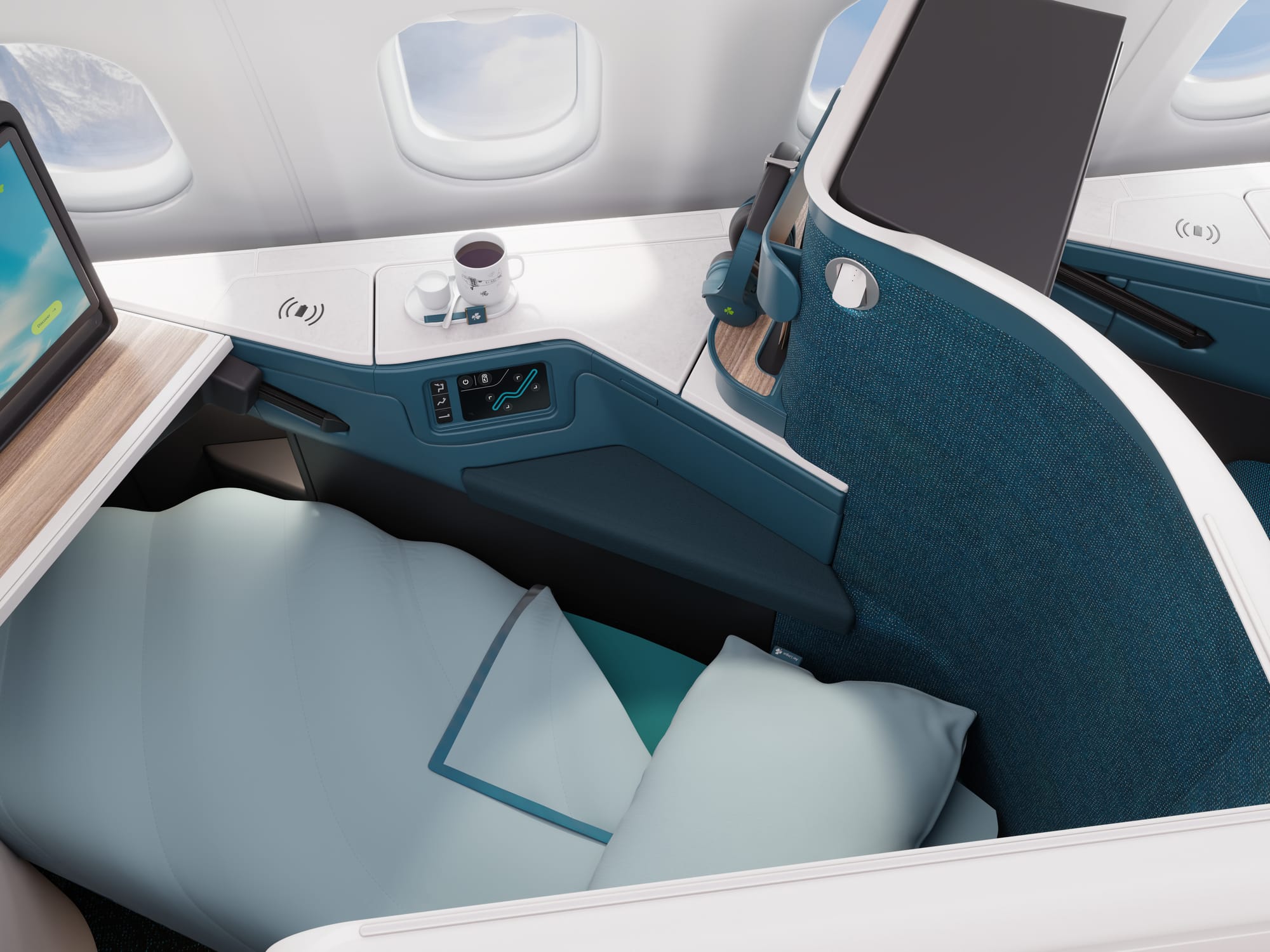
It’s easy to miss the higher shrouding lip at the rear of the seat too, giving a few inches of extra privacy that will be especially welcomed by taller passengers, whose eyeline can feel much more open than their more compact fellow travellers.
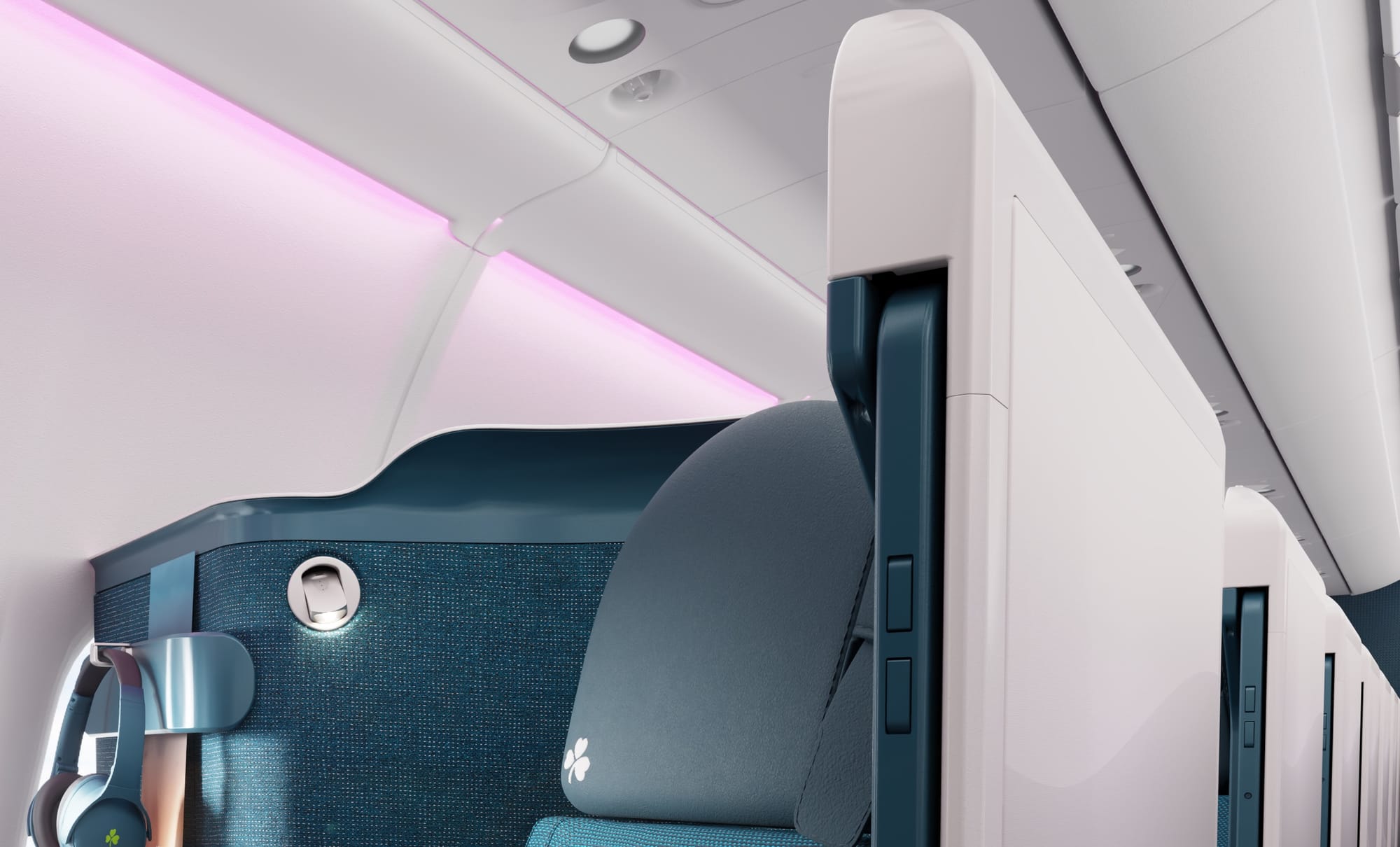
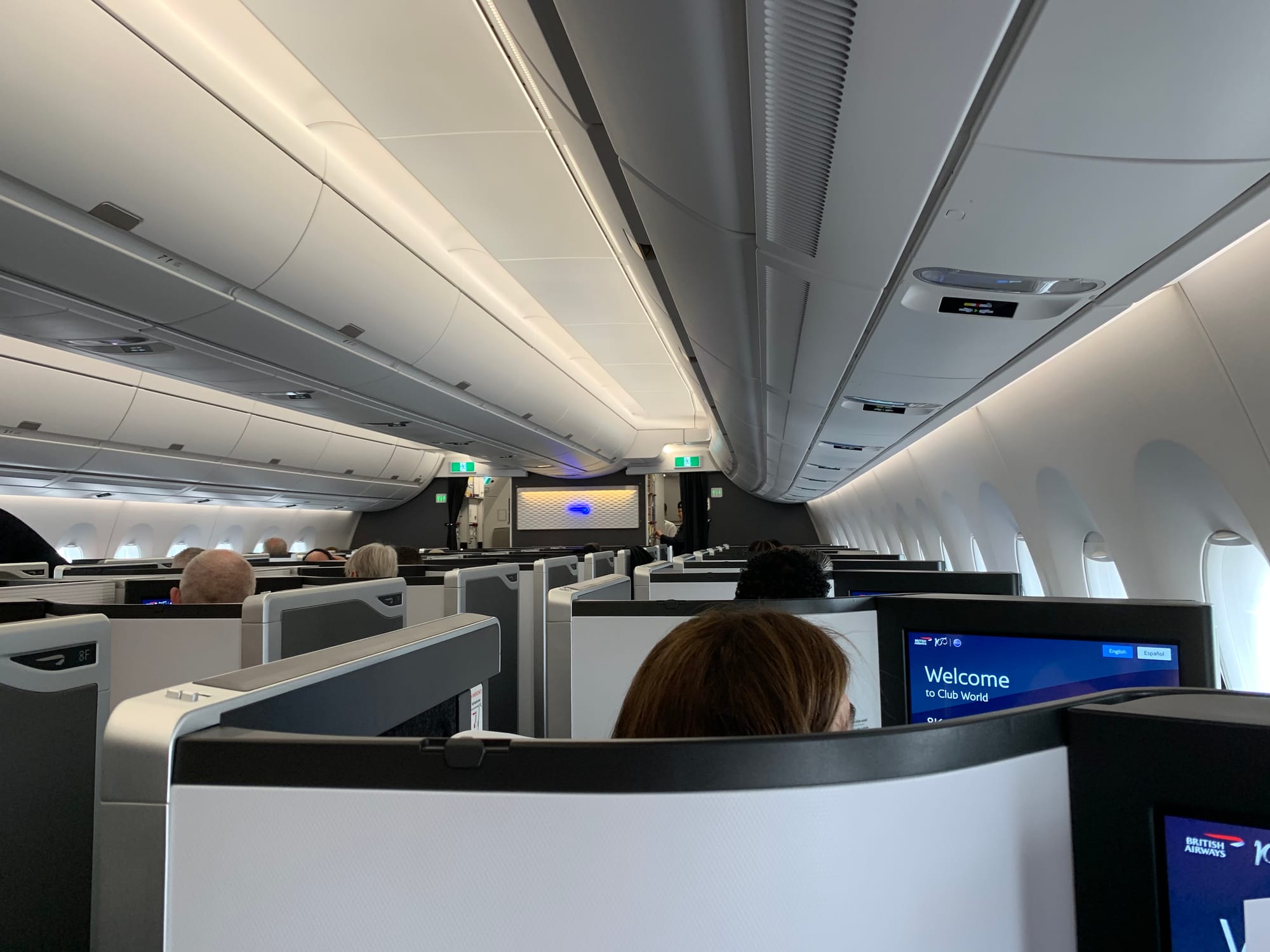
Aer Lingus’ shrouding is taller where it matters, compared with BA’s. Images: Aer Lingus (L), John Walton (R)
That’s one of the benefits of being a market follower in seat terms: other airlines’ programmes learn the lessons of the seat, which can be refined over its versions.
Elevation matches the current British Airways Club Suite, a product developed from Super Diamond on British Airways’ A350 in 2019, and which (as The Up Front understands the history here) was later developed into what is now Elevation.
This Aer Lingus version avoids some of the snafus learned by the BA seat: the surface cosmetic damage from the storage compartment flip-up lids scratching the side storage bin door, for example, which is a modern classic example of the complications of designing and certifying seats at pace.
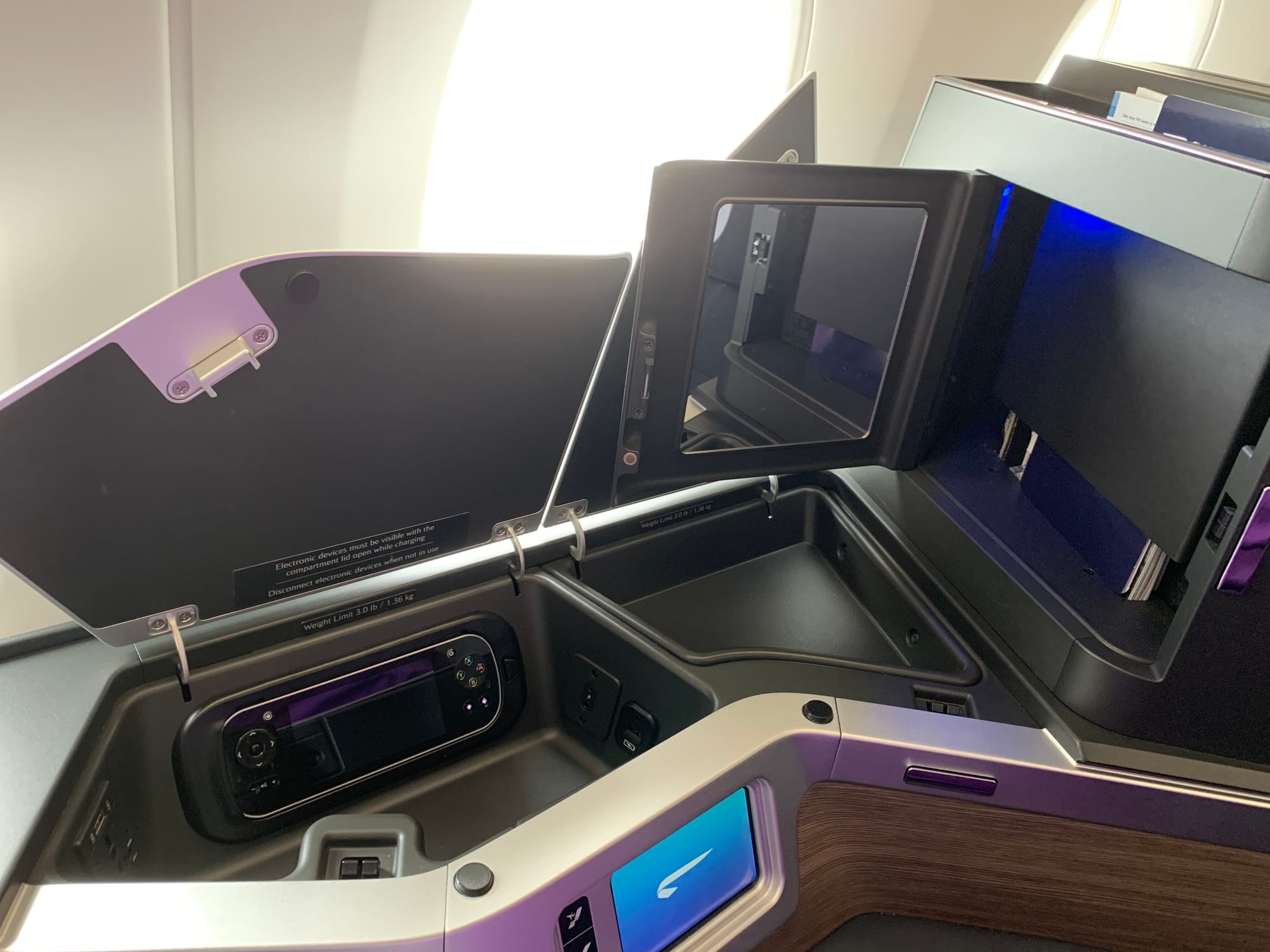
It’s notable in context that this level of business suite is now the widebody standard for an airline with Aer Lingus’ positioning within IAG alongside British Airways, Iberia, Vueling and LEVEL, and across the rest of the market.
In IAG terms, Aer Lingus’ model in recent years has always been towards the lower-cost end of the airline stable. Its Vantage OG seating (OG for original, the one with direct aisle access for 24 out of 30 seats on board) has reflected that, and indeed its A321XLRs will retain those seats in their alternating 2-2/1-1 configuration.
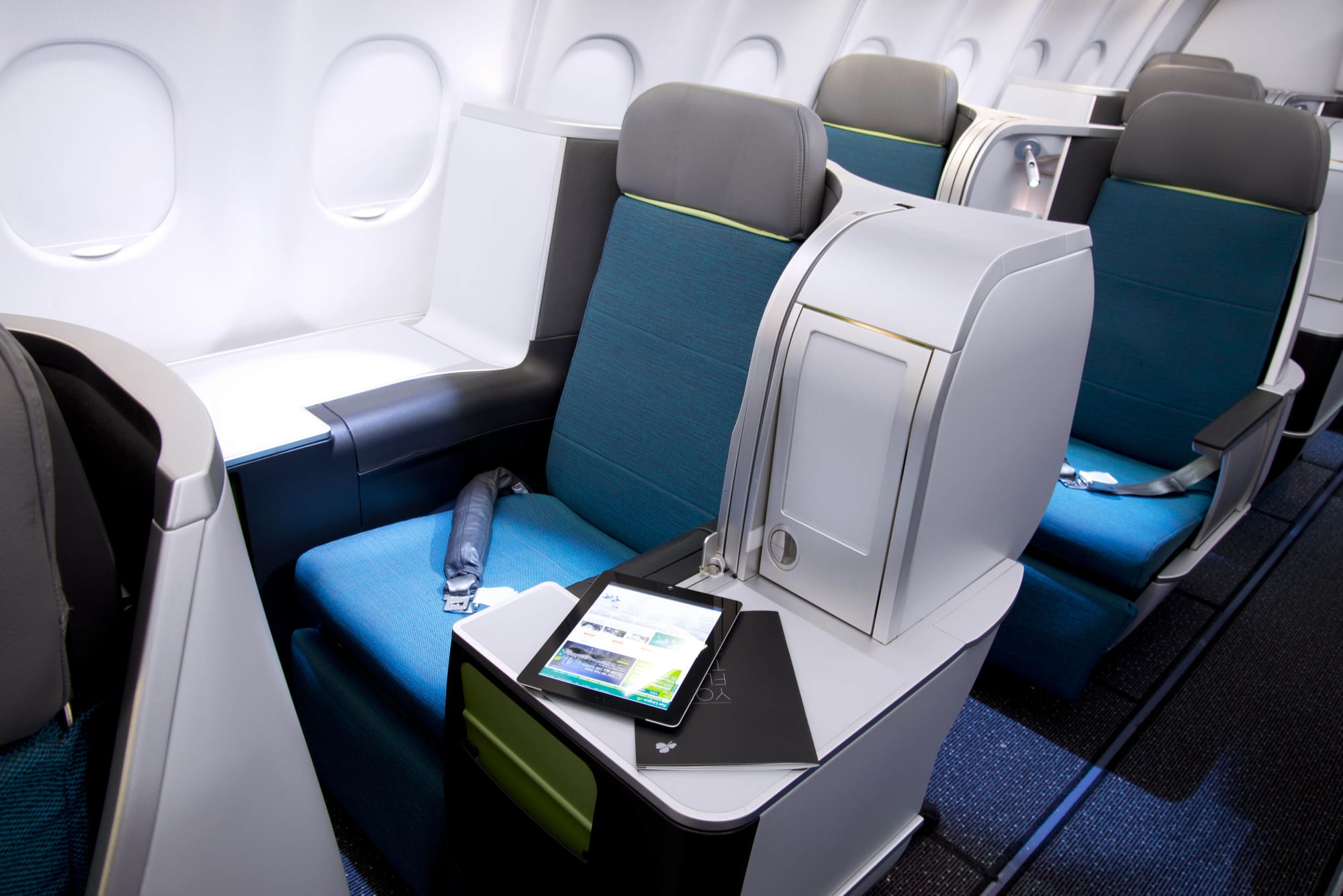
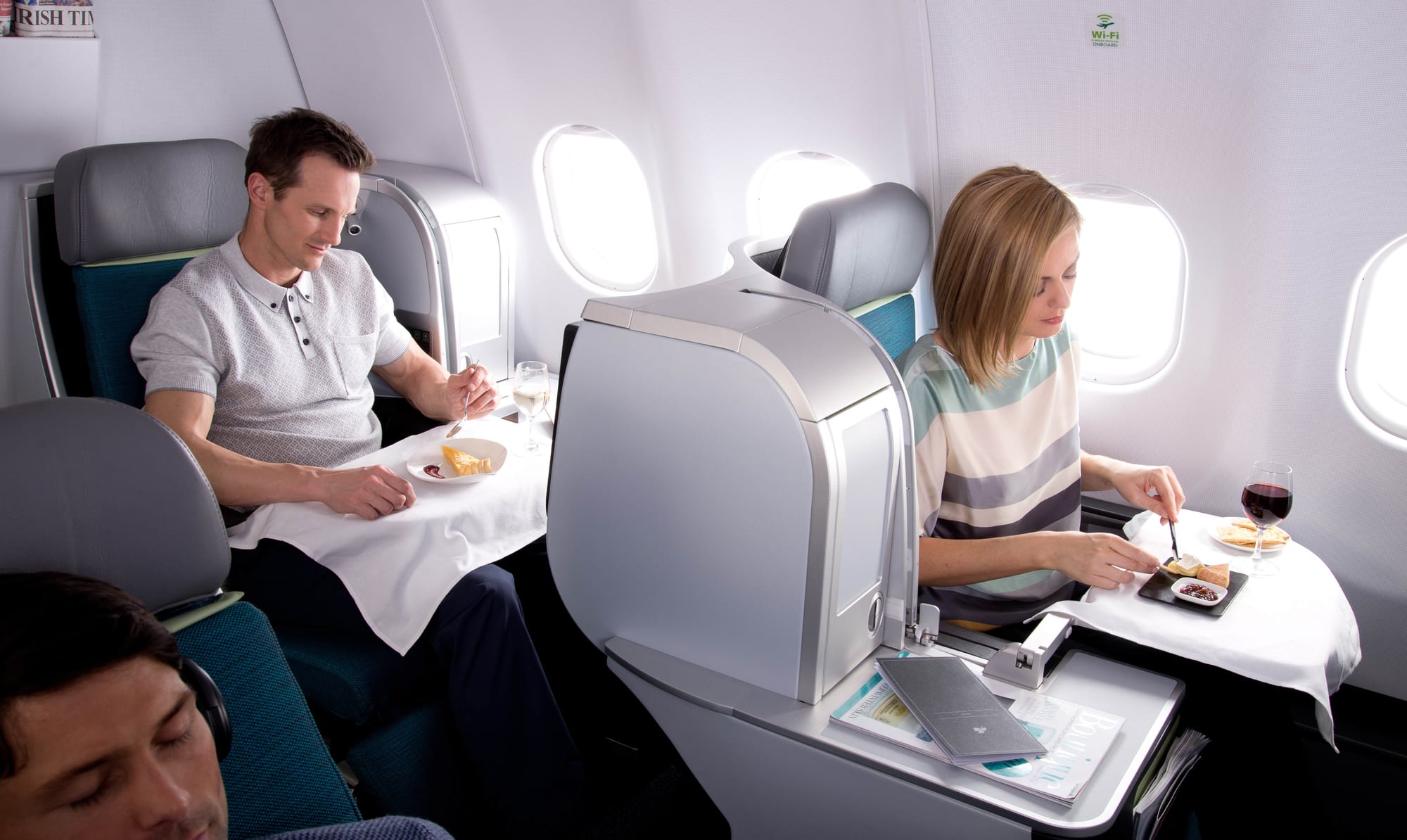
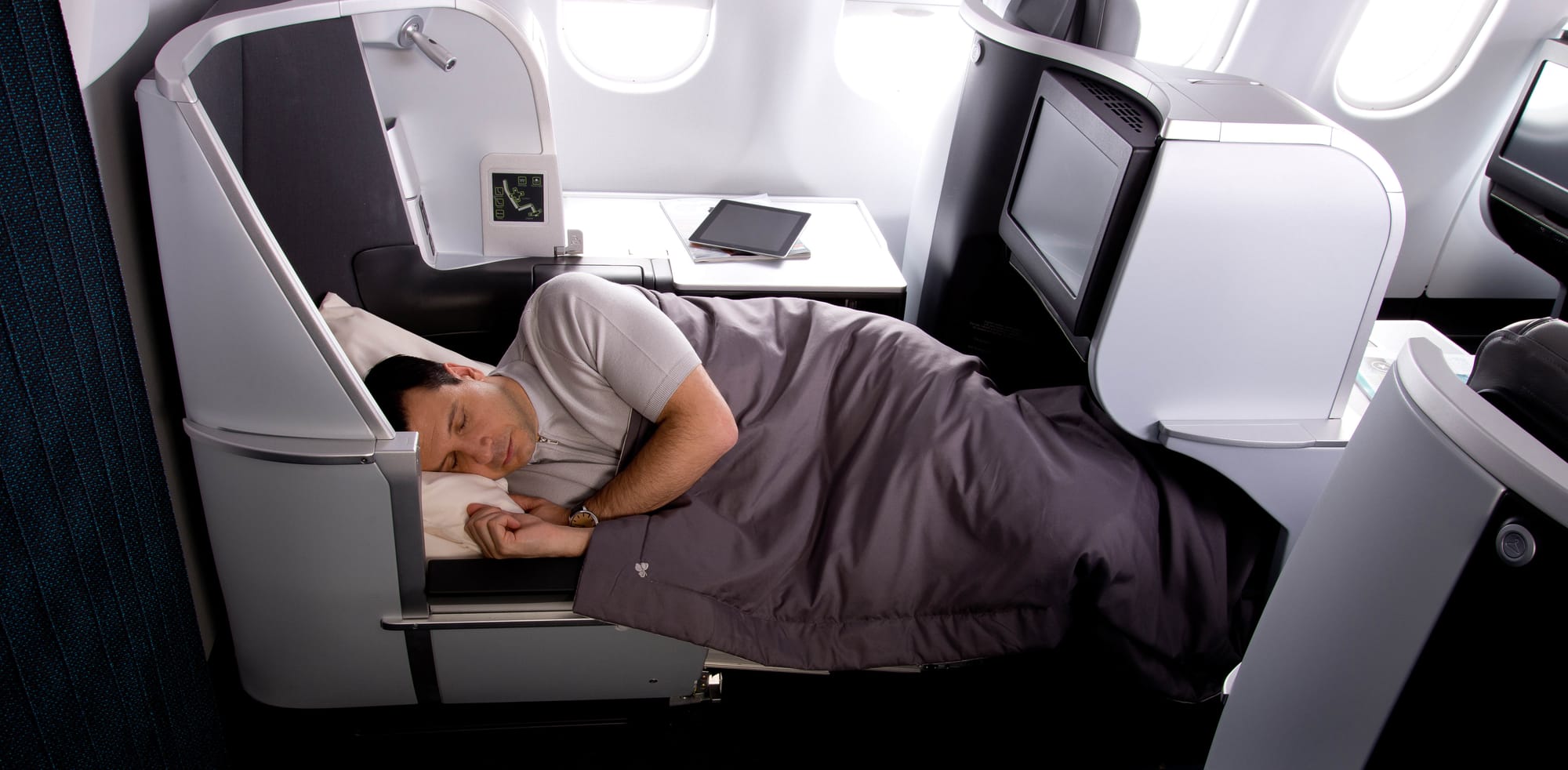
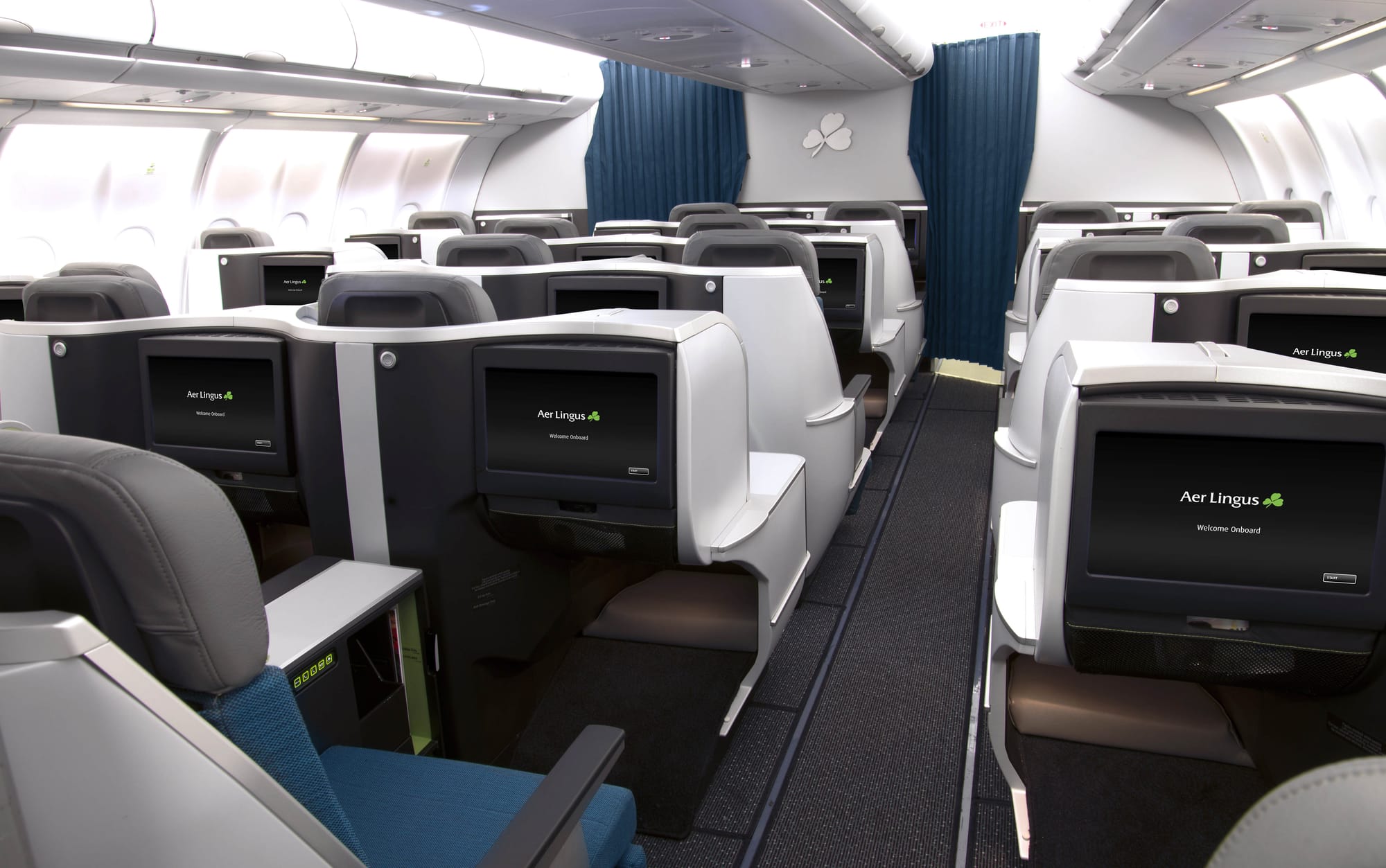
Aer Lingus’ seat cover aesthetic is continued from Vantage OG, but in terms of space, function and privacy the new Elevation is, unsurprisingly, superior. Images: Aer Lingus
Given the majority of Aer Lingus’ longhaul routes are to the nearer side of the US, and with the specific layout choices it made with Vantage OG’s arrangement of singles vs doubles vs throne seats, it could probably have held out for a few more years with the existing product at its existing positioning.
Studying the detailed LOPA (layout of passenger accommodations diagram) and renderings of the new cabins, it’s notable that there’s no studio class in the front row here, despite Collins long offering the option on the platform.
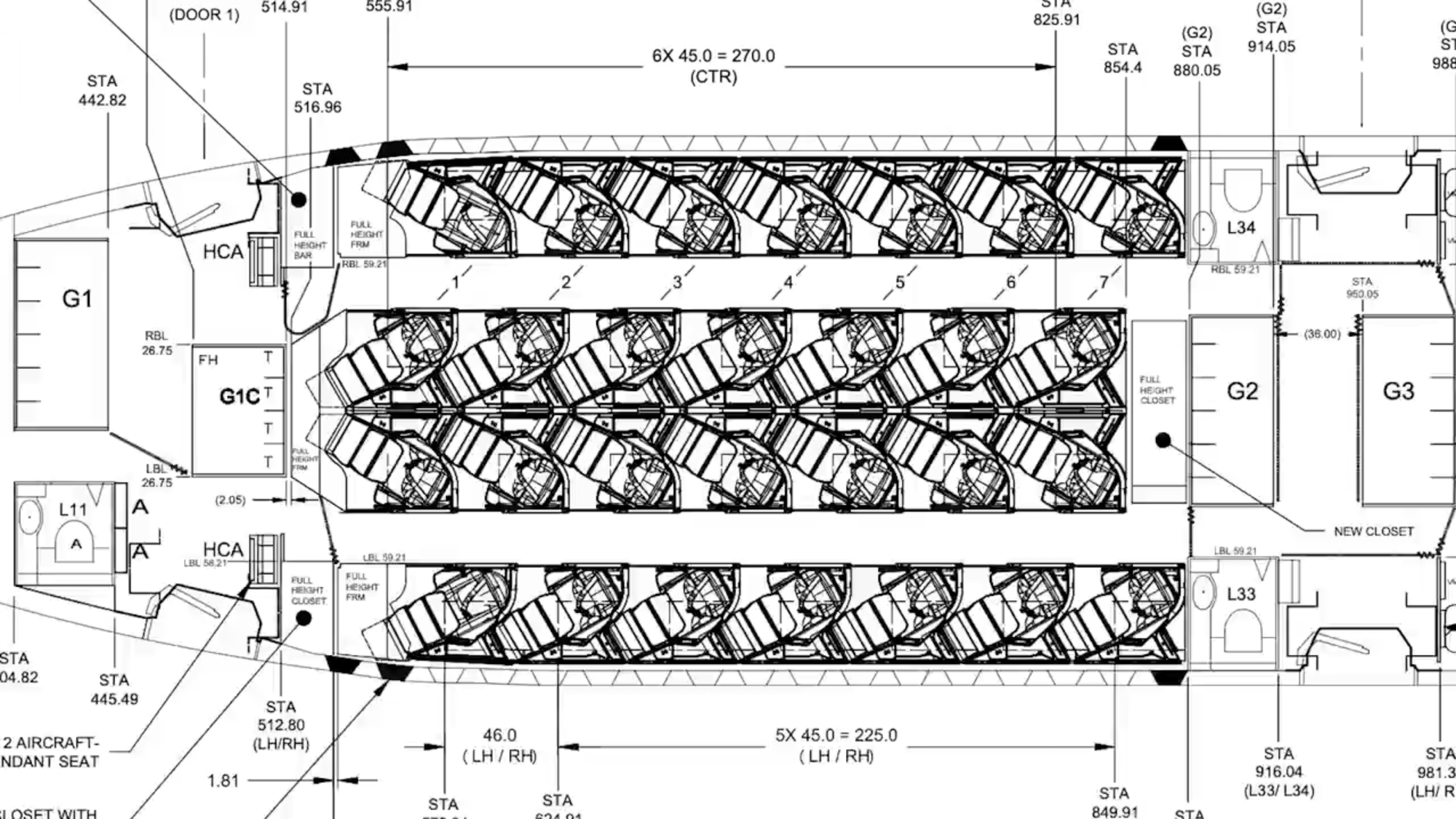
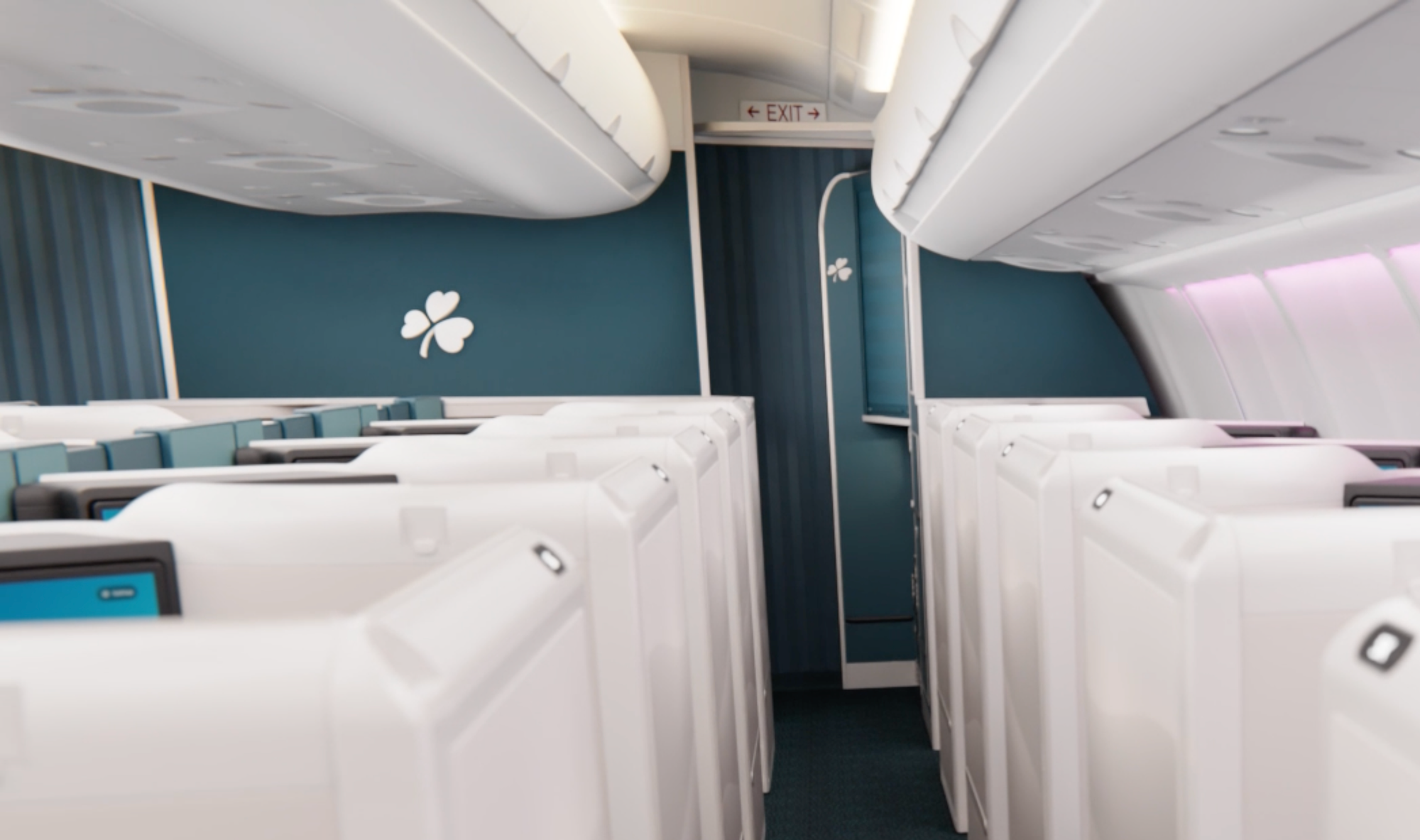
With the visibly marked “Full height FRM” (Front Row Monument) structures ahead of row 1, and from the looks of the renderings, there’s no studio class here. Screenshots: Aer Lingus
This genuinely feels like an oversight: not only is studio class proving very lucrative, but Aer Lingus is also missing an opportunity for IAG to experiment with merchandising and provisioning a studio class option via ancillary revenue.
The airline already segments its economy class into five separate seat selection categories, in which seat pricing varies depending on the seat bundle and, in some cases, route length. Prices here are from the cheapest bundle and shortest routes:
- Extra legroom, at the exit row or bulkhead, from €115
- Preferred, immediately behind, from €77
- Front, not quite at the front but behind Preferred, from €62
- Standard+, in the middle, from €47
- Standard, down the back, from €33
Aer Lingus is clearly putting time and effort into ultra-granular market segmentation down the back, so not doing so up front feels like a missed trick.
With premium economy finally arriving on Aer Lingus, where will the passengers come from?
Aer Lingus is also joining the premium economy party with a 28-seat cabin immediately behind doors 2. It’s a fairly standard modern implementation of the Recaro R4 seat, offering recliners with privacy wings at a 38” pitch in the standard 2-3-2 layout for an A330.
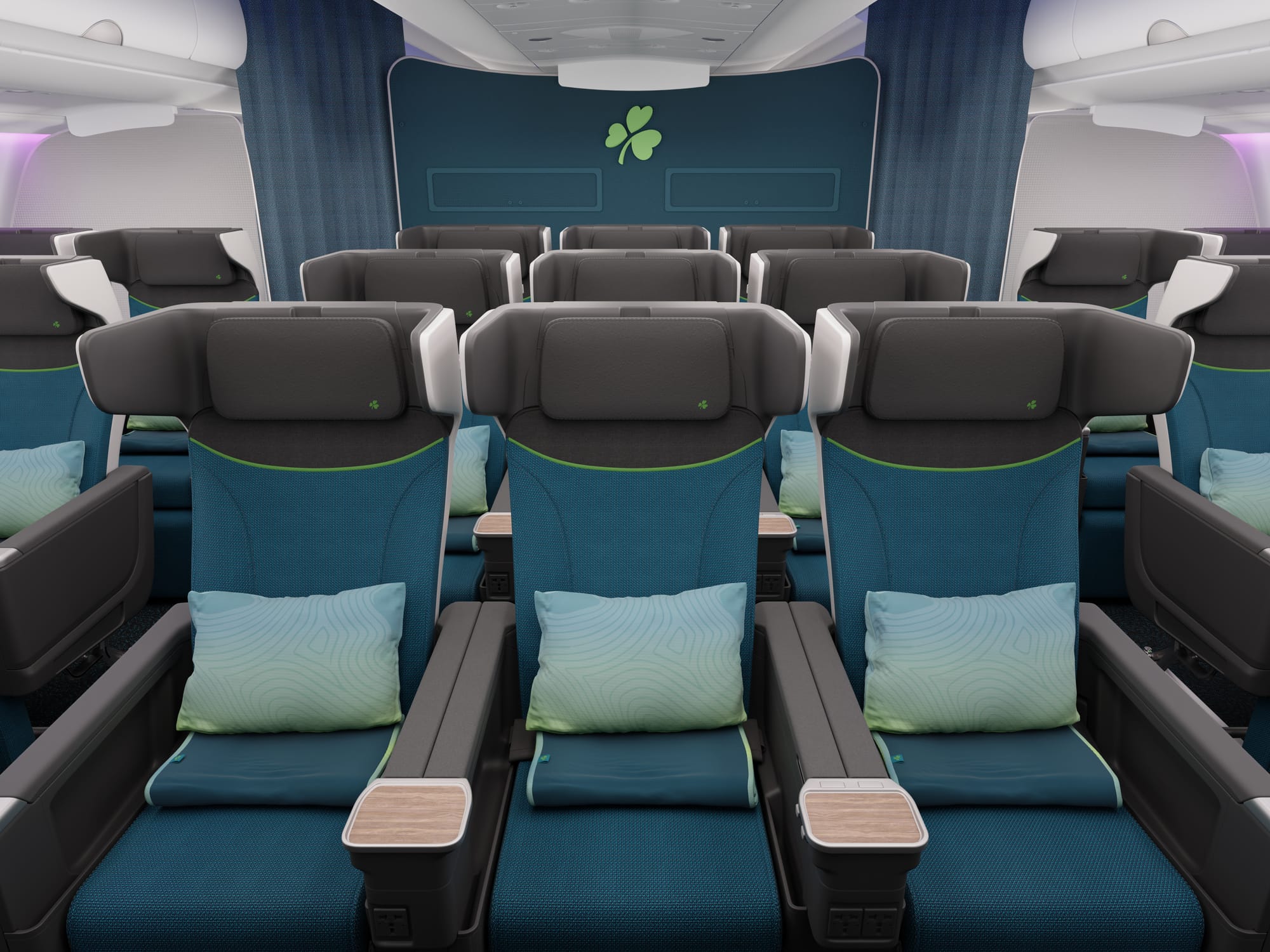
Each seat will have a deployable legrest, which is increasingly becoming a must-have for the current generation of premium economy cabins.
Inflight entertainment screens are a relatively small 13” Panasonic Astrova monitor, though — a good 2–3 inches smaller than the state of the art.
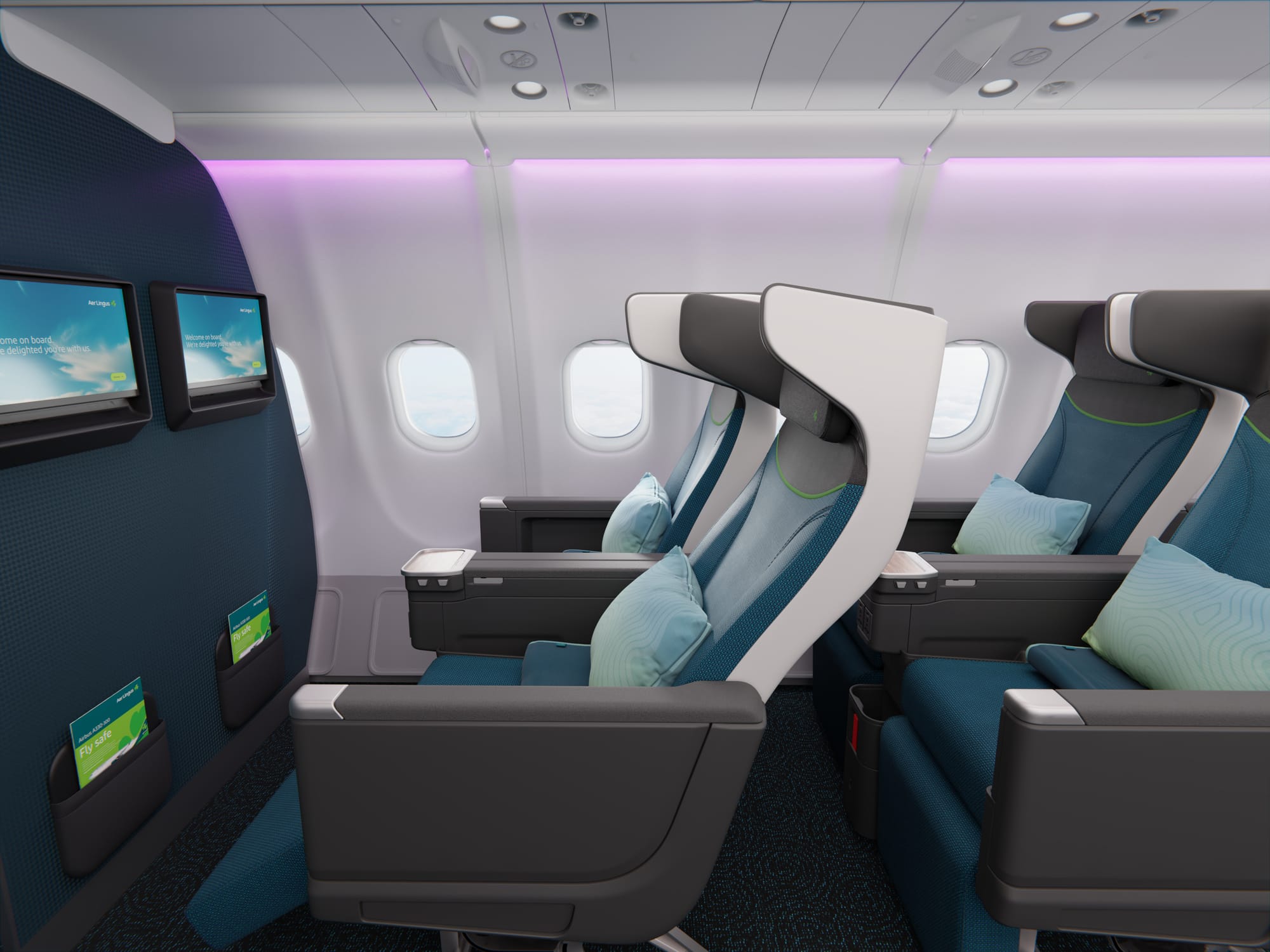
Premium economy is a big move for Aer Lingus, long a holdout even within IAG. Iberia is considered a late mover here, and even the Spanish carrier announced its cabin in 2016 and started flying it in 2017, while low-cost sibling LEVEL launched that same year with premium as the top offering onboard.
Aer Lingus’ premium economy drivers are affected by its geographic position here, with relatively short transatlantic flights as its longhaul bread and butter.
JFK-Dublin flights come in at well under six hours most days, depending on tailwinds — 5h9m is the fastest recently shown on FlightRadar24 for EI104 — and once climb, meal services and descent are taken into account, that’s just a couple of hours for proper sleep.
That both means that the case for economy travellers upgrading into premium has been weaker here than for airlines with hubs deeper into Europe, and that there’s a corresponding market for business travellers and upmarket leisure passengers deciding that there’s not a big enough benefit to business class by comparison, risking cannibalisation of business demand.
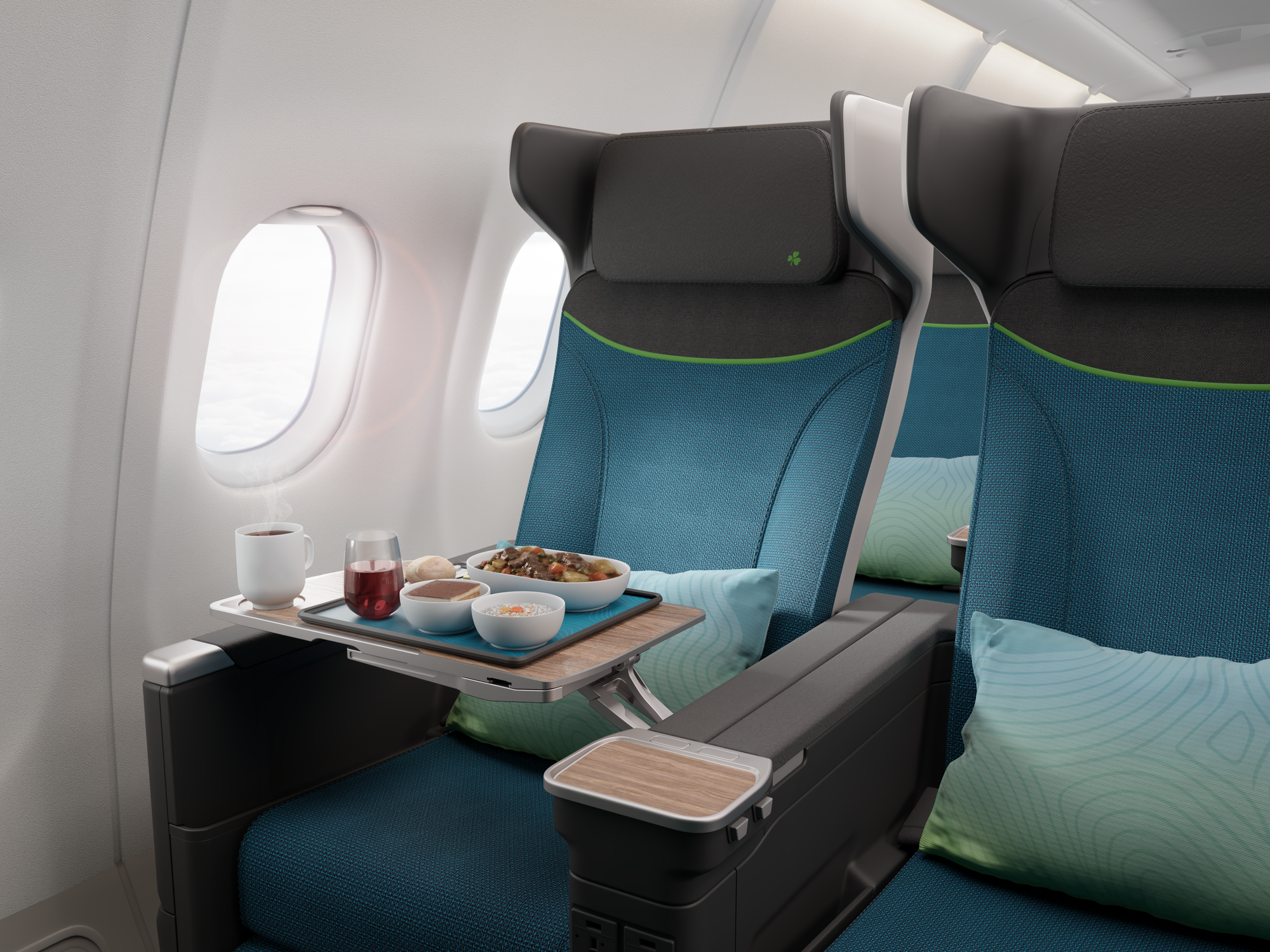
It will be instructive to see where Aer Lingus’ market for premium economy comes from here, and how that differs by route. Will it be premium leisure passengers upgrading from economy? Business class travellers downgrading on shorter legs? A newly stimulated market segment? Will the airline need to offer more non-seat bells and whistles — baggage allowance, meals, airport priority services, miles, and so on — to attract passengers?
Does the unusual consistency of the stand-out teal across all three cabins help or hinder — especially with new premium economy?
The CMF (colour, material and finish) and overall aesthetics are attractive, leaning heavily across the aircraft towards the teal that is a key part of the Aer Lingus brand, which is a smart choice even in what feels like the Year of Teal in new cabins.
It’s fresh look that stands out from the crowd, with a large amount of bright white in business class, a bit less in premium economy mixed in with a harder-wearing charcoal grey, and more of the charcoal in economy.
Economy also features a pleasant pop of fabric on the top of the Recaro R3 (formerly CL3810) seat at eye level, which breaks up some of what might otherwise be rather a lot of that grey.
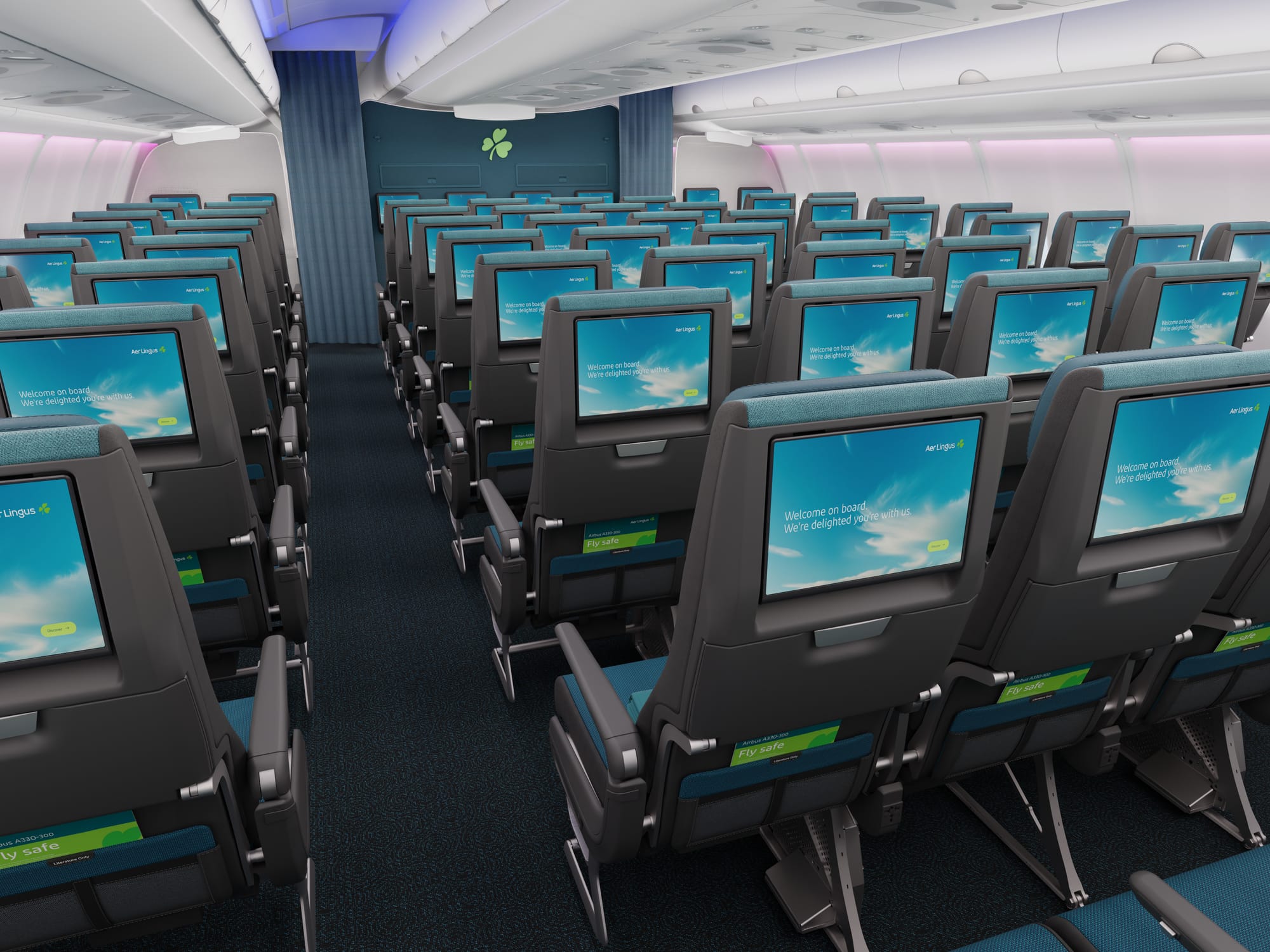
Unusually, there is little visual differentiation between business, premium economy and economy, apart from there being more white up front and more charcoal down the back.
There’s little to no difference, for example, in the main seat cover fabrics, accent colours and core shapes in business, premium and economy. Passengers will be able to see past the cabin dividers to the next class back in the plane, and might end up wondering why their more expensive seat doesn’t have a more expensive look and feel.
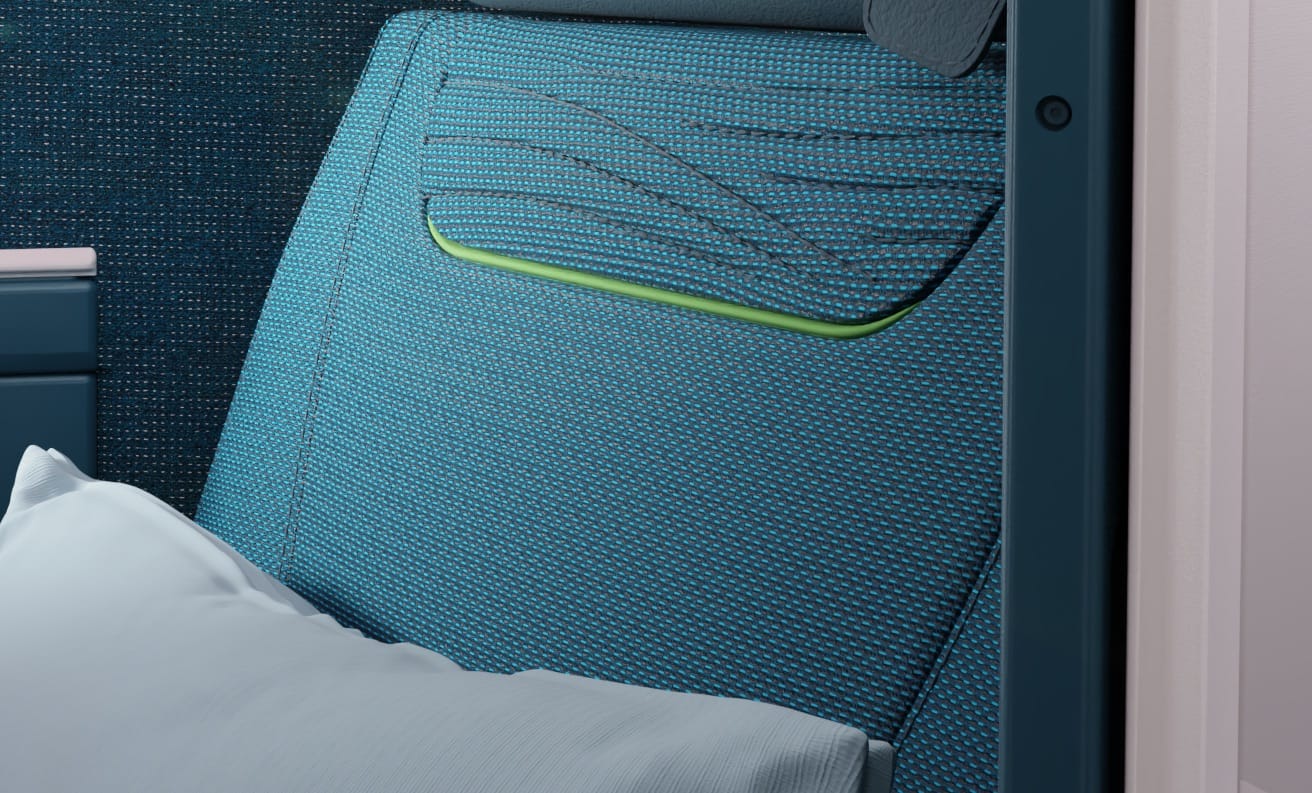
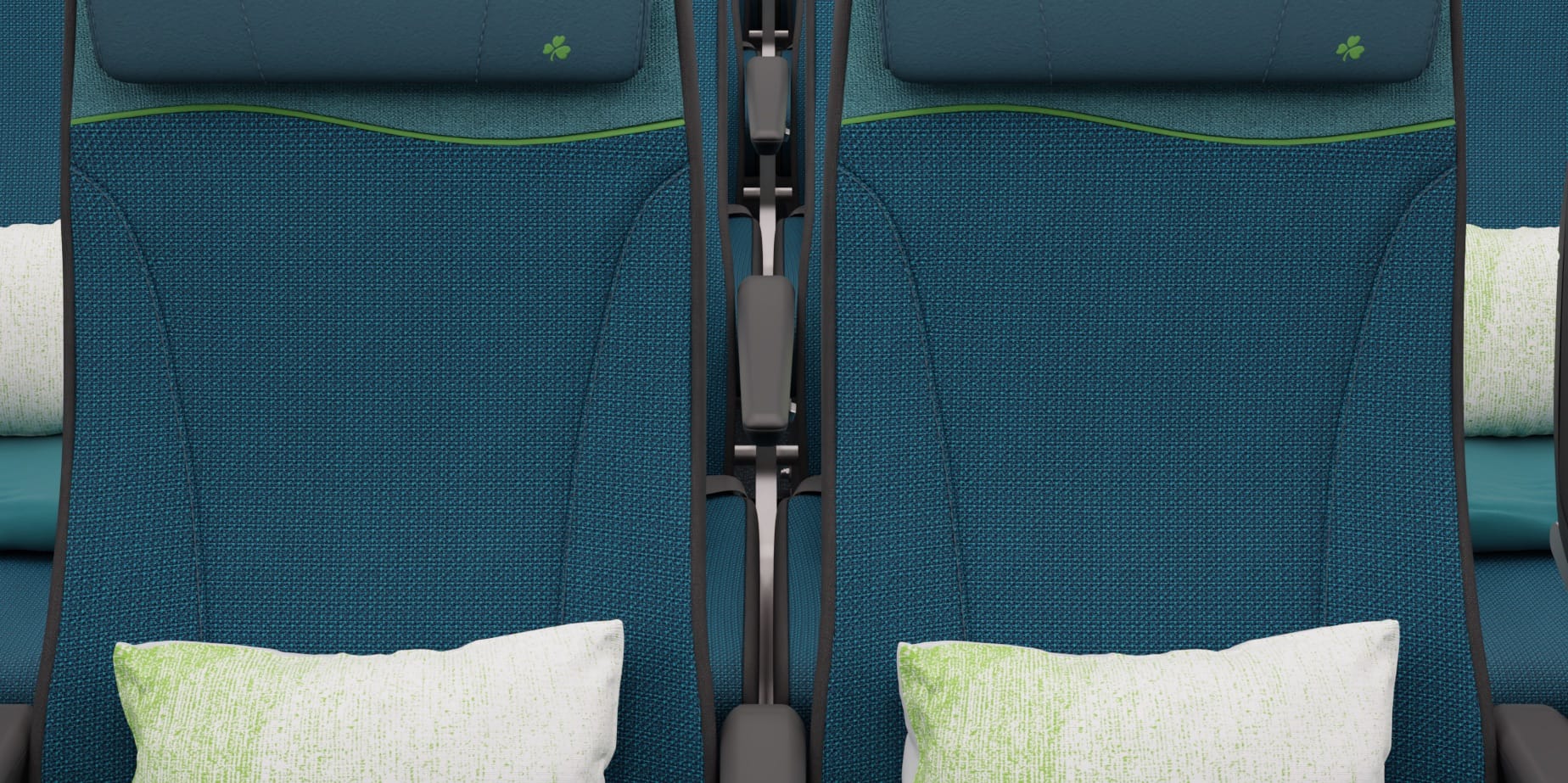
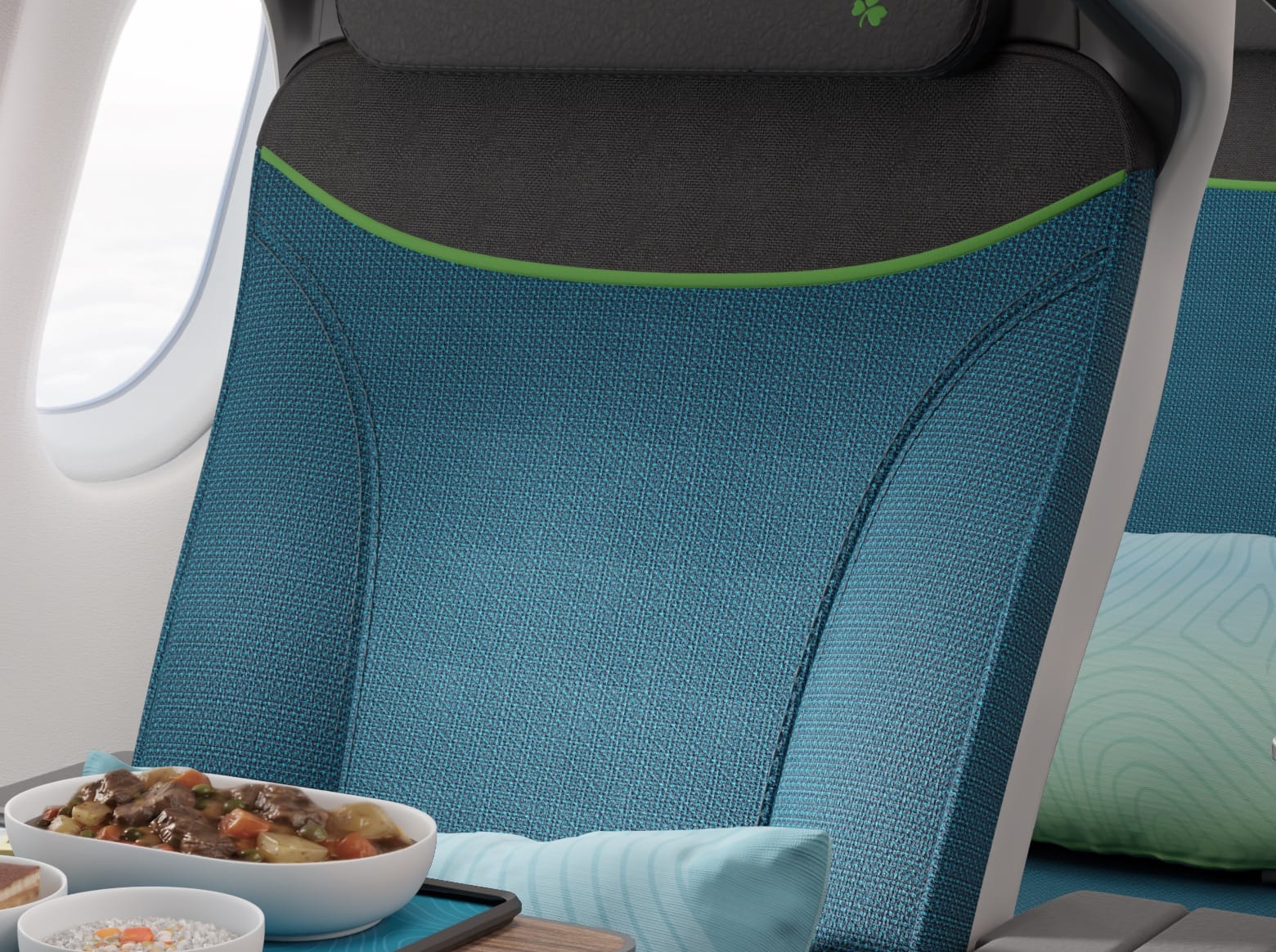
Few airlines carry across the fabrics, accents and colourways between their cabins to this extent. Images: Aer Lingus
British Airways, for example, doles out a humorously British amount of the herringbone pattern based on class in its new A380: lots in business, a medium amount in premium, and a little bit in economy.
Based on the discussions we have with aviation fabric suppliers, it wouldn’t seem like there would be particular minimum order quantity economies of scale to using the same fabric on the economy, premium economy and business class seat covers.
The differentiation-coherence curve is a complicated one to draw, of course. Singapore Airlines earlier this month went all the way in the other direction, with too much differentiation and little coherent visual narrative throughout the aircraft.
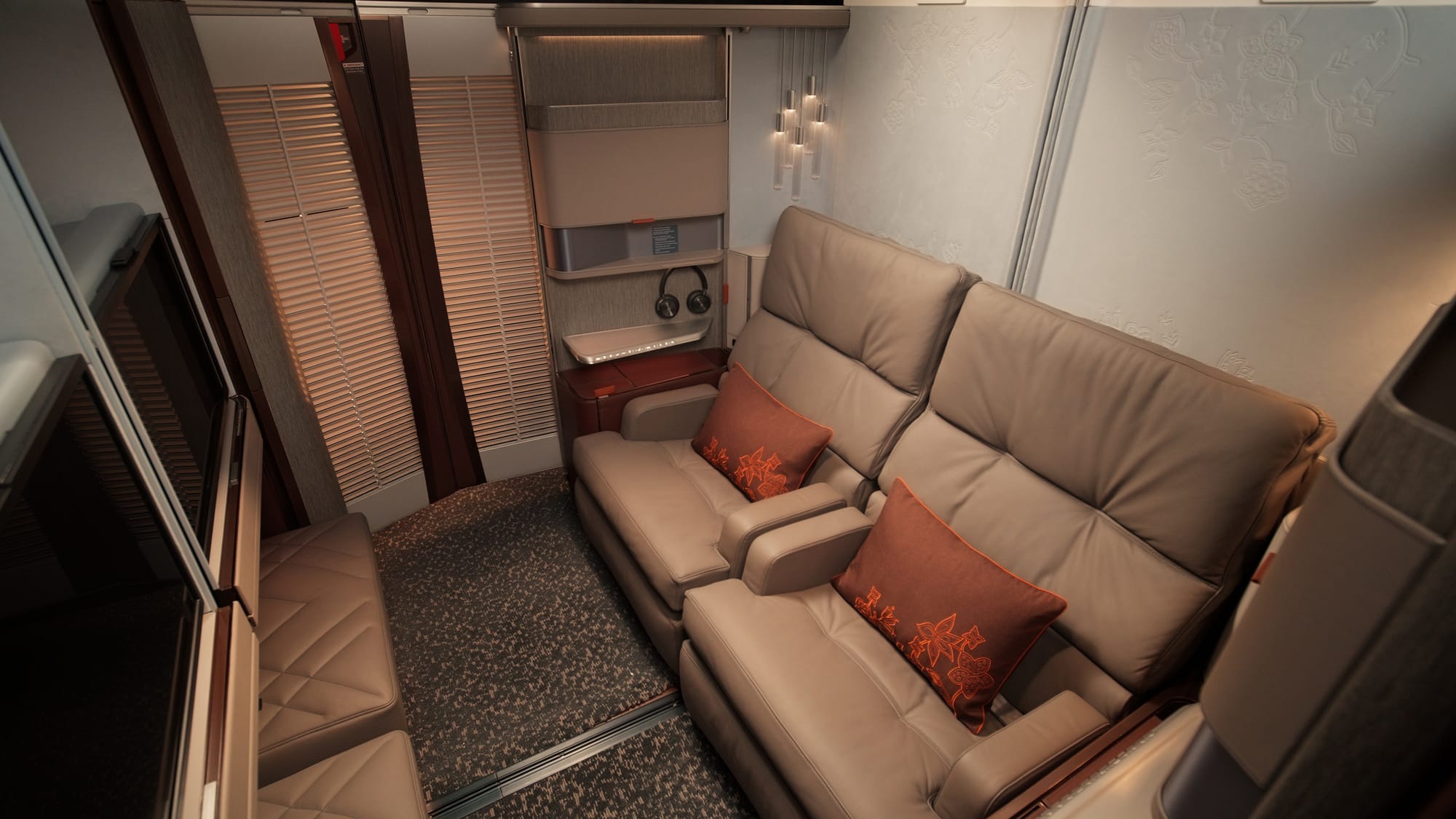
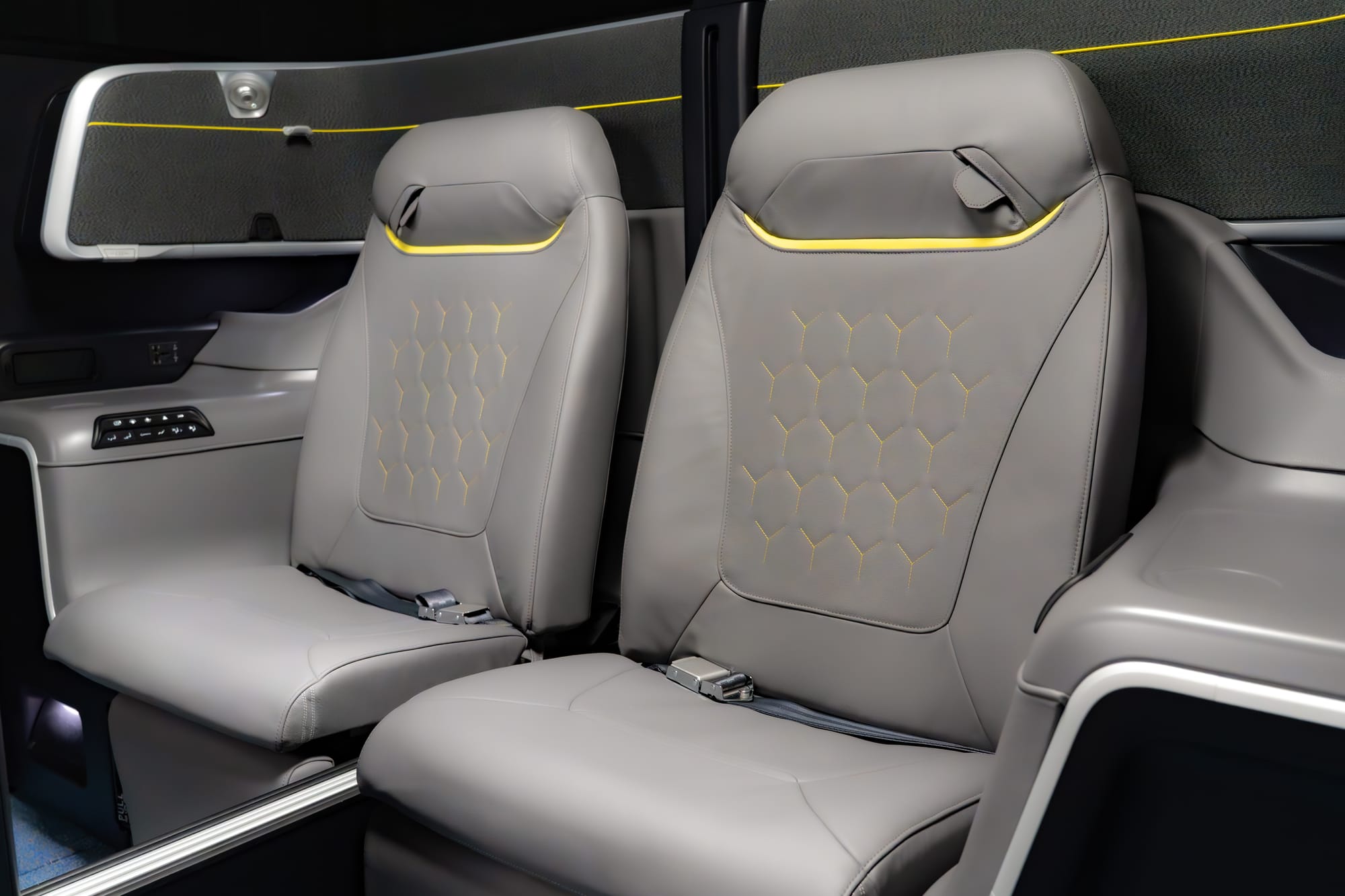
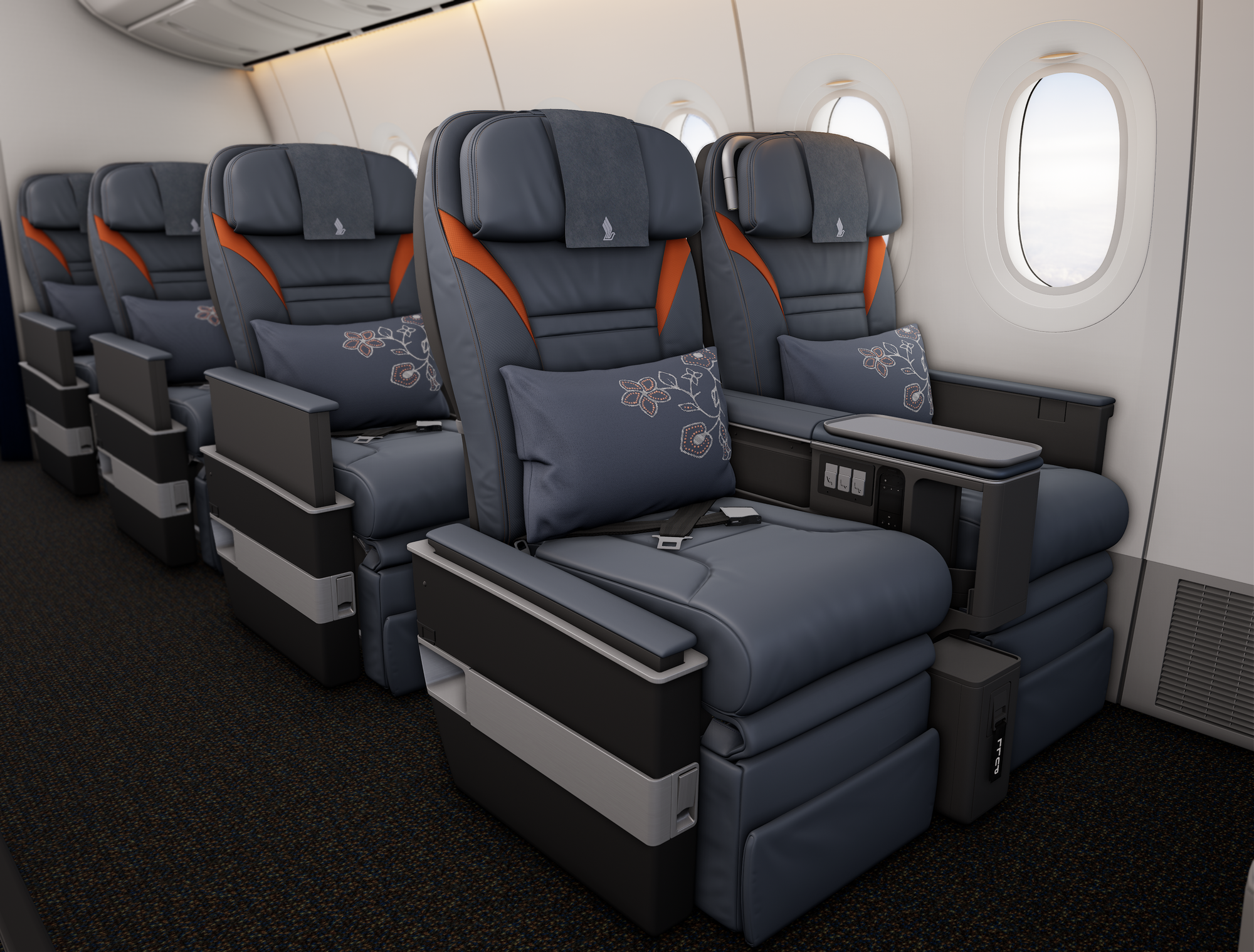
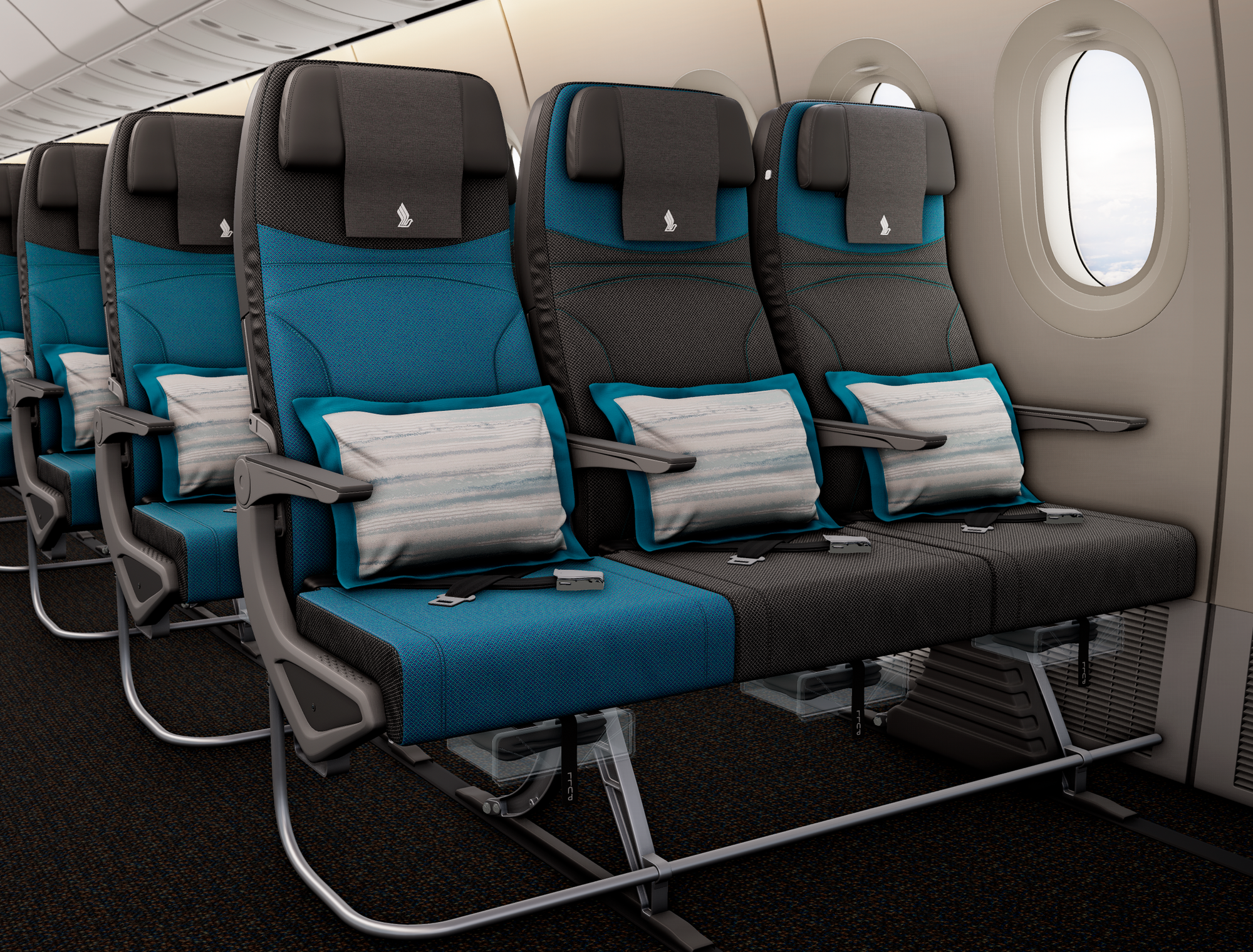
SQ, meanwhile, went to the other extreme, resulting in opprobrium that seemed to take the airline by surprise. Images: Singapore Airlines
Aer Lingus, by contrast, feels more like too little differentiation, although the benefit is a fully coherent visual narrative.
The other concern with the CMF is the amount of bright white in high-impact and high-visibility places: the door structure, seat shrouds, table lip, and entire side table assembly. Not only is that harder to clean than something darker in the neutrals palette, it makes every ding and scratch more noticeable.
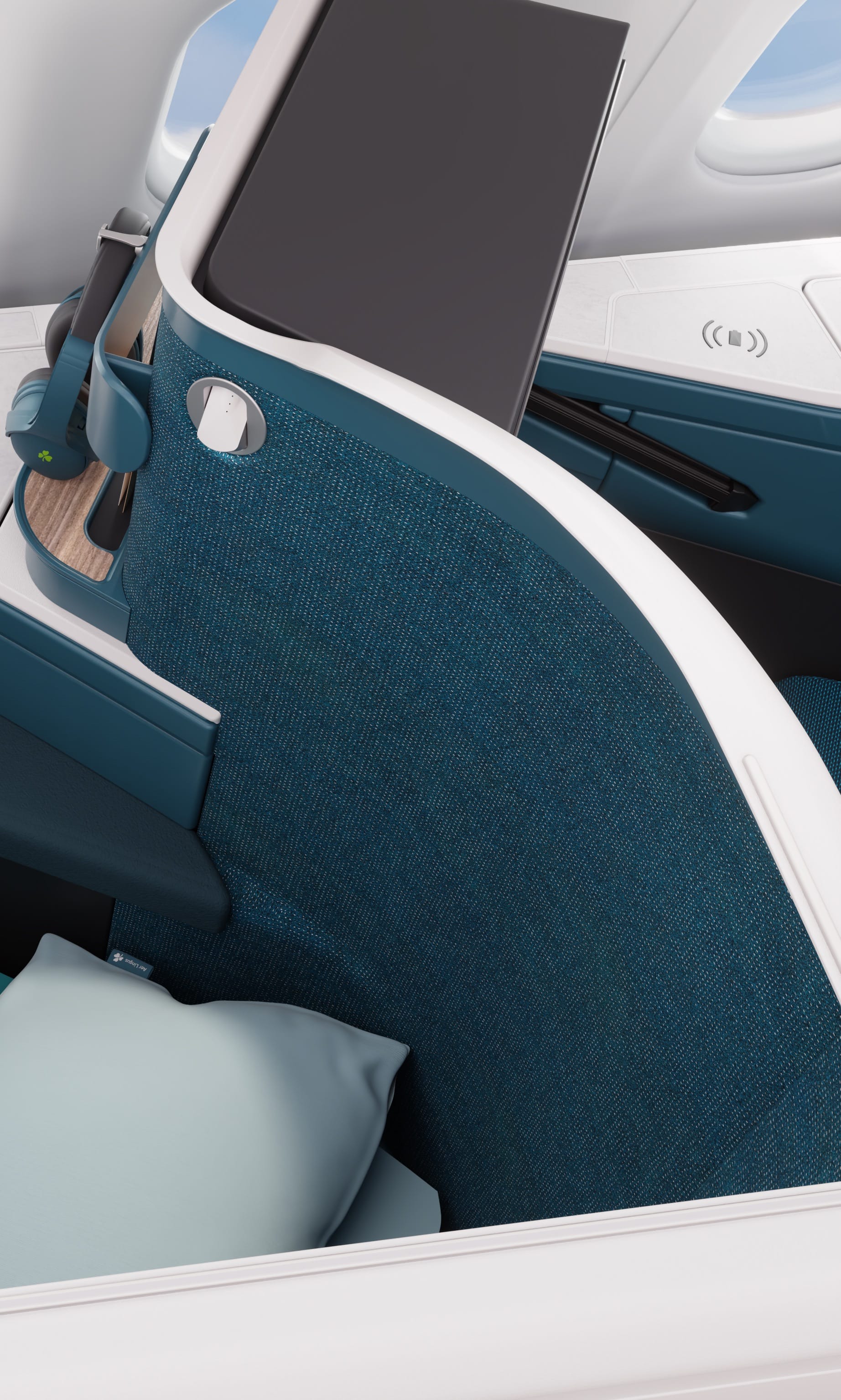
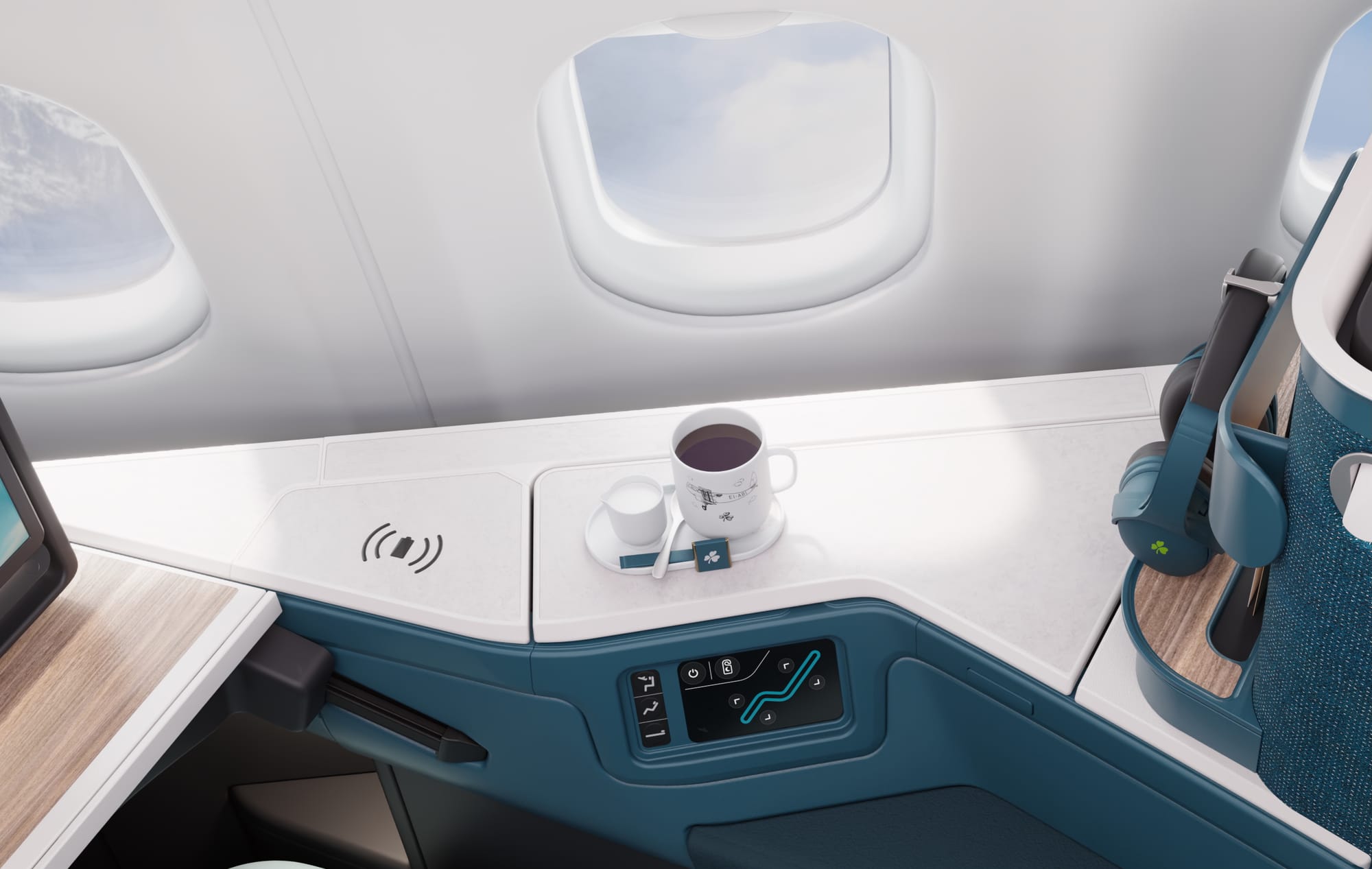
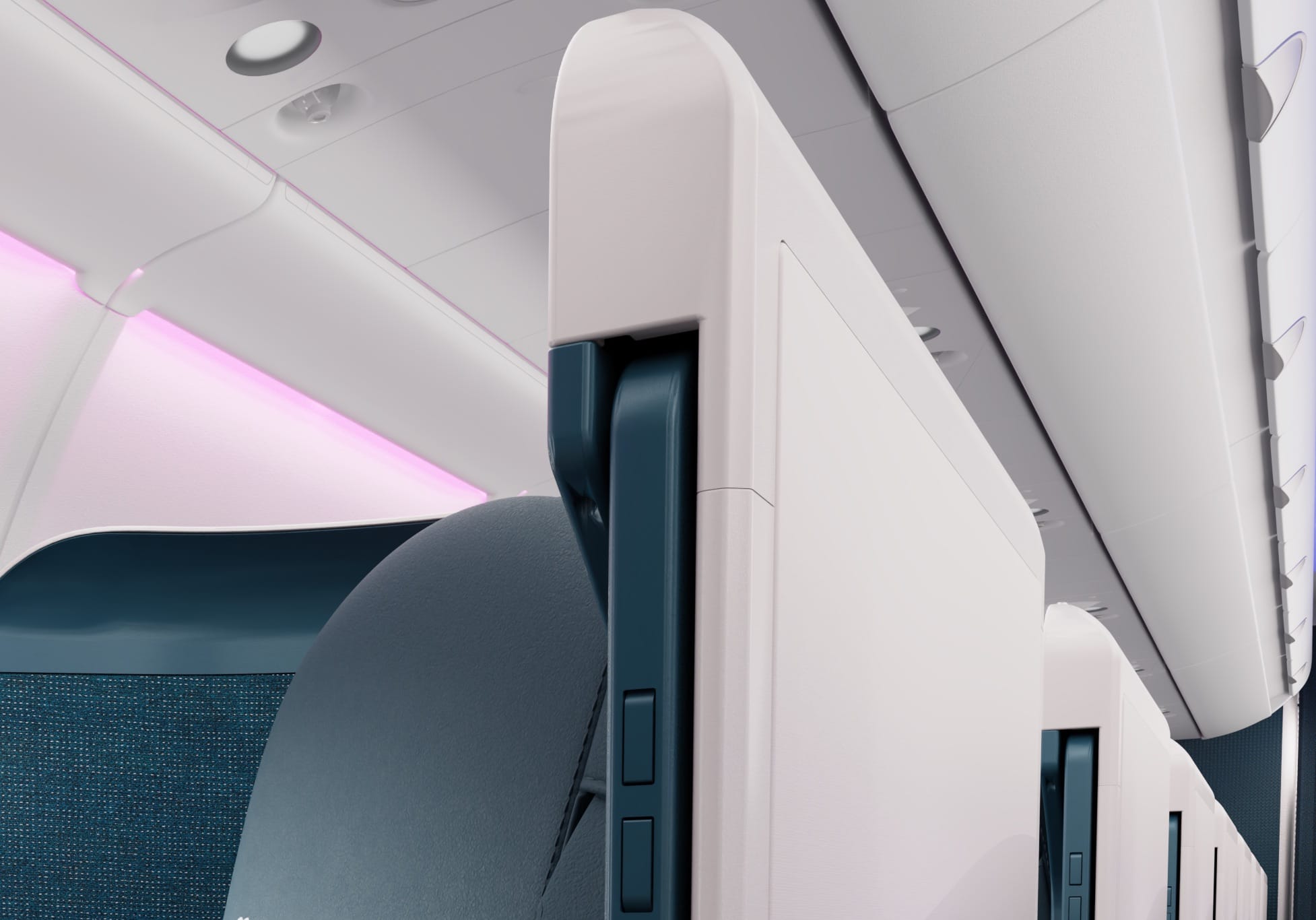
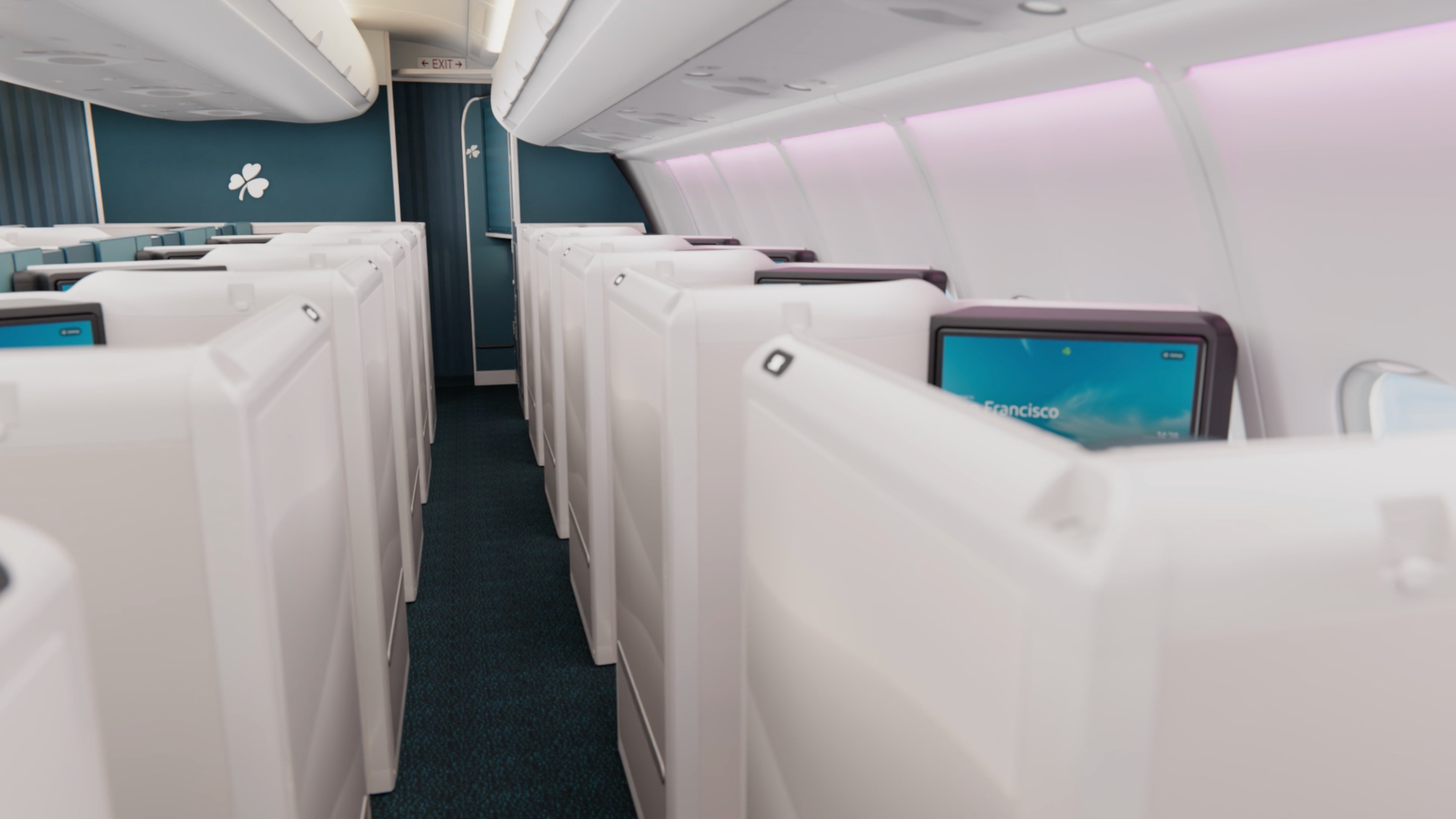
This is a lot of white thermoplastic and metal to keep clean and keep maintained. Images: Aer Lingus
This kind of hard product choice would be a harder fix if it turns out to be complicated to maintain, but the seat fabric differentiation would be relatively easy to upgrade. Botany Weaving, after all, is Dublin-based.
The soft product is a curious mix too, from what looks almost like a placeholder level of plainness in the pillows and bedding to an absolutely delightful custom-made mug-and-saucer-and-milkjug combination.
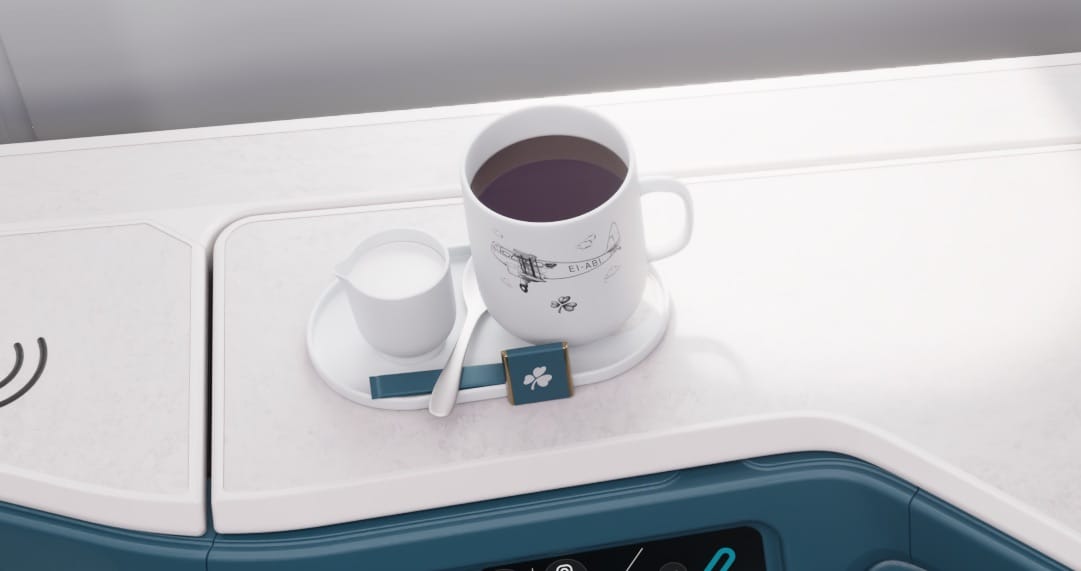
The mug with the iconic vintage biplane — Aer Lingus’ de Havilland DH.84 Dragon Iolar from 1936, which the airline just finished restoring — is deeply charming. The way it is thoughtfully presented on a saucer that also has a spot for the milk jug is visually satisfying, as well as useful in turbulence or simply to catch drips.
Rhys Jones at Head for Points has some further (and real-world) images from Dublin of the new soft product range.
What Elevation suites and premium economy tell us about the industry and wider IAG positioning
Aer Lingus didn’t make it clear which of the airline’s A330s this retrofit will cover, and the airline operates both the shorter A330-200 and stretched A330-300.
We did the window counting on the LOPA in Aer Lingus’ quick-cut social video, and this is showing an A330-300 — but the ten retrofits announced don’t cover all of them.
Presumably, the retrofit will focus on the newest ten of the widebodies, which — fun fact — includes the last A330-300 ever built
