
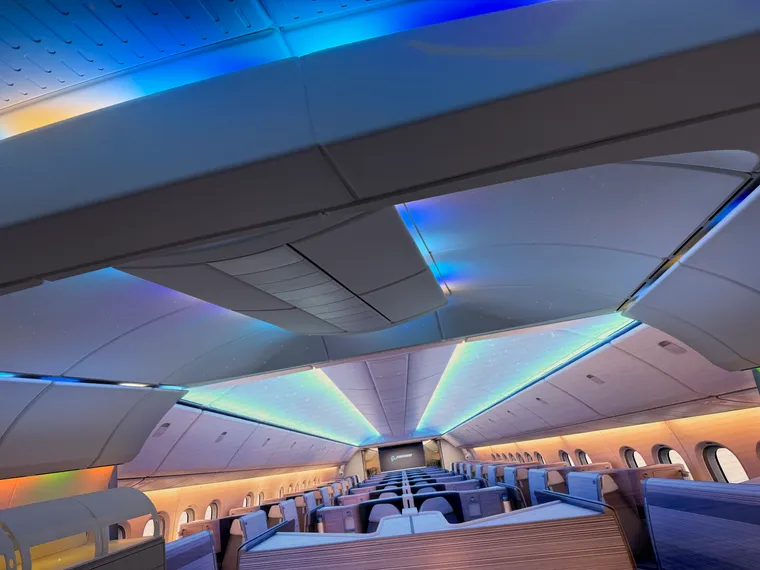
Business class is the profit engine of airlines that offer it: the golden goose that lays the golden egg of longhaul travel.
At its inception in the late 1970s by Qantas and/or British Airways (as so often, which airline came first is a question of definitions) business class began to develop from just a nicer experience in economy class seats to much, much more.
Fifty years later, the experience for short-to-medium haul travel in Europe is still very much that — it even has its own nickname, Eurobusiness — but the rest of the business class world has changed massively, all the way through to high-walled, doored off suites that eclipse many first class products still flying.
But with the recent airline trend towards unbundling, unbundling-then-rebundling, business-minus, basic business, and some frankly deceptive marketing, airlines risk destroying passengers’ understanding of what business class is, and what a business class ticket includes — and doing so in a way that’s hostile to their most profitable customers.
It’s the aviation version of retail shrinkflation: the package looks the same, or even bigger, but it’s shaped a little differently, puffed up with empty air, and loyal customers feel cheated at the end of it.
Airlines mess with what business class fundamentally means at their peril
Along with its new BlueHouse lounge in Boston, JetBlue is the latest airline to unbundle its business class fare structure with a new lead-in, cut-down basic business class fare, Mint Base.
The point of these fares is multifold. It’s not necessarily to sell more basic business class tickets, instead using them to game the comparison websites’ and travel agencies’ lead-in displayed fares, either to undercut the competition or to make passengers pay more to select what used to be standard.
I had an even more complicated European version of this when booking flights with Lufthansa for AIX next year. I’m faced with the choice of Business Comfort, the gold-highlighted Business Comfort Green for an extra €30, Business Flex for a further €70, or Business Flex Green for €20 on top of that.
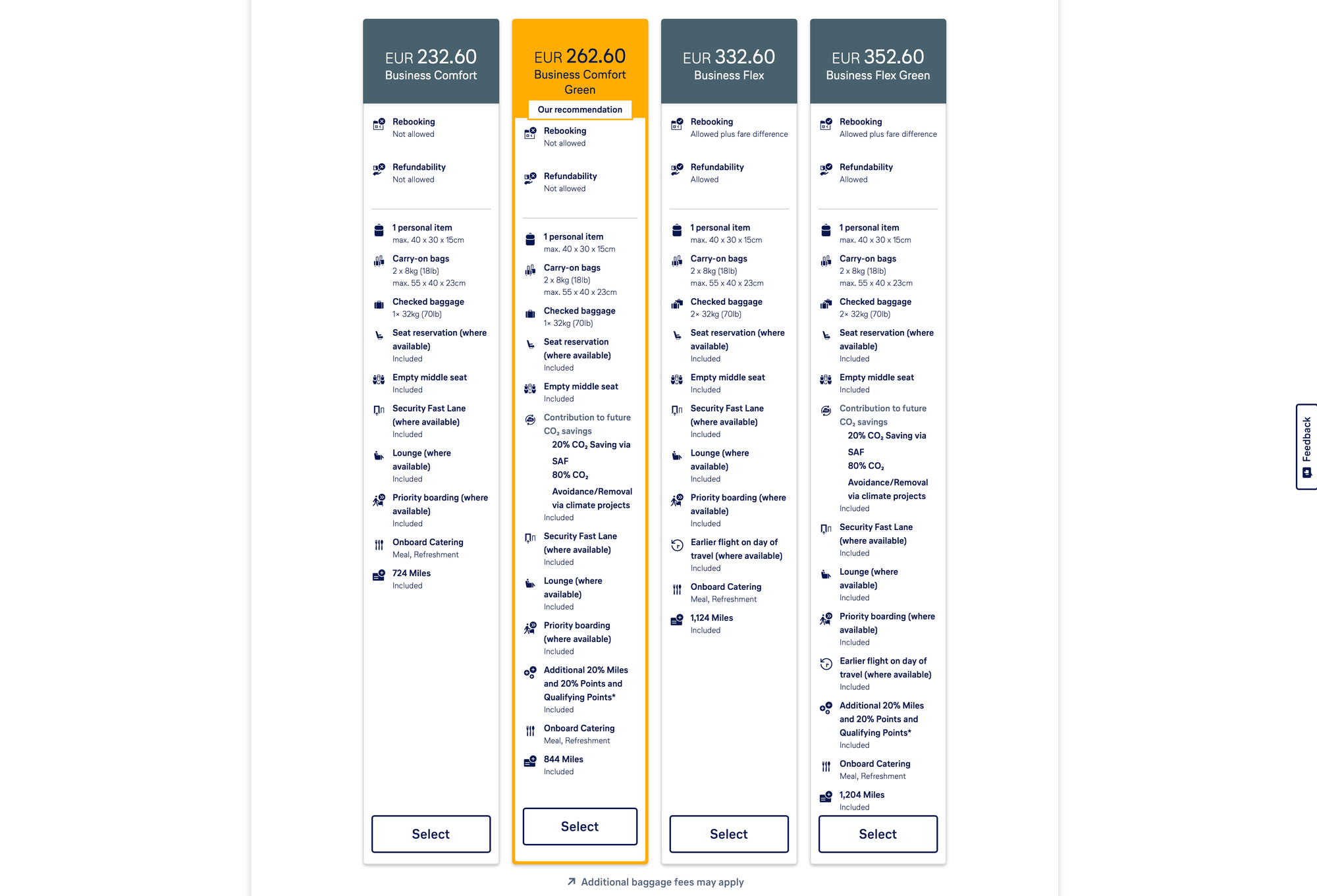
The design of this screen makes it inherently impossible to easily compare between classes. Miss the tiny small print where it says that anything below Business Flex only gets one checked bag? That’s new this year: it used to be two checked bags in entry level business class.
Four of the ten key elements of the Business Comfort fare are also listed as “where available”, which is a frankly outrageous cop-out that lets the airline simply not deliver what it’s advertising to passengers.
Lufthansa doesn’t want to pay for an outstation lounge or fast track? Sorry, it said “where available”. Its third-party gate staff can’t be bothered to do priority boarding? That’s only “where available”, even though I can’t think of a single example of an airport where priority boarding would not be available, or a reason why.
And don’t forget the “additional baggage fees may apply” disclaimer for the entire section at the bottom of your choices either.
The problem is that every time an airline changes what business class means — which not-just-the-seat elements of the unbundled business experience it includes, and who gets what — it inherently creates problems and disappointment.
