
Philippine Airlines’ new A350-1000 is well worth some time to consider from an industry perspective — not just because it’s a new flagship for the airline and has some touching personal meaning for its management, but for what’s onboard, throughout the aircraft.
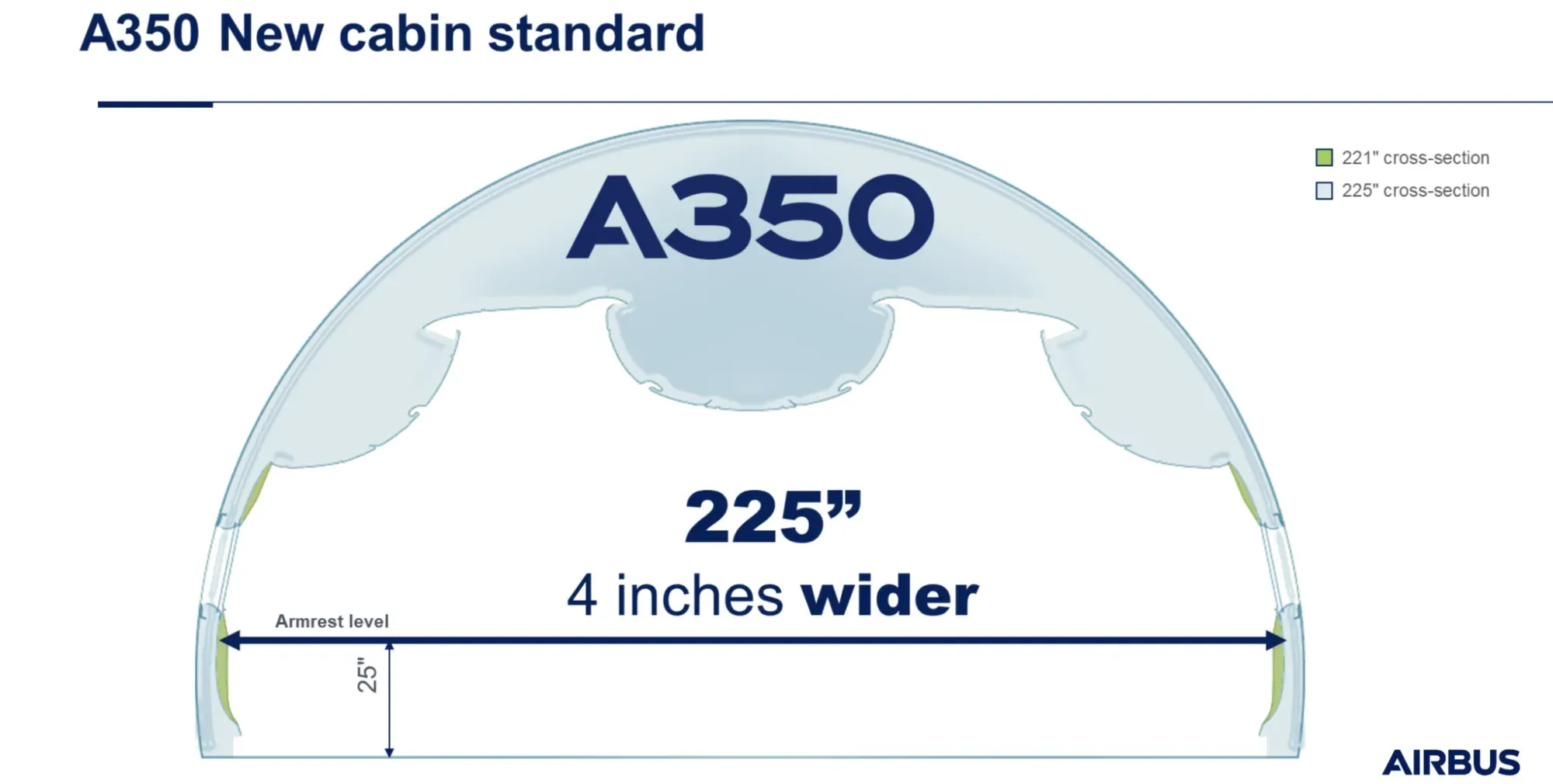
Starting at the back, perhaps the widest significance comes from this being the first A350 with Airbus’ A350 New Production Standard cabin (NPS) to feature a 3-4-3 economy seating layout, with NPS’ four inches of extra width at armrest level. It will be a bellwether to see how ten-abreast is tolerated by economy passengers.
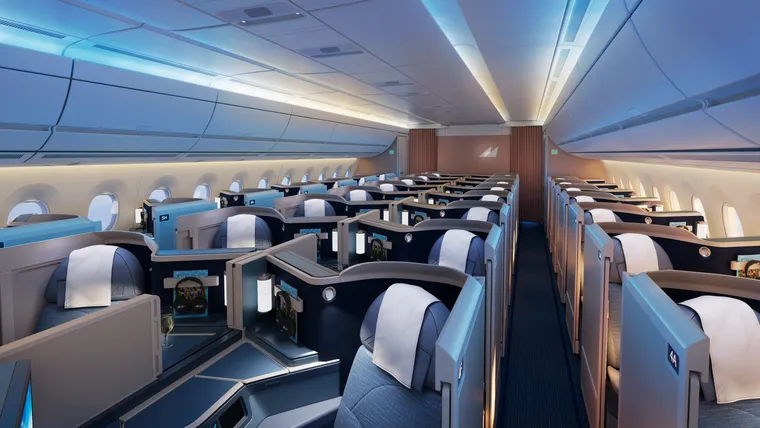
Further forwards, and indeed throughout the aircraft, it’s impressive to observe how design partner LIFT Aero Design has used colour, material and finish (CMF) to to create a recognisable and remarkable aesthetic across hard products that are relatively standard: Collins Aerospace’s Elevation outward-facing herringbone, a successor to Super Diamond, and its MiQ recliner.
LIFT’s work is quite the CMF masterclass here, and enables Philippine Airlines to punch well above its size and weight to attract passengers — as well as bringing relevant and cleverly applied cultural elements to a national carrier’s cabins.
Putting the product and design in their context, PAL’s choices within the aircraft are notable
Philippine Airlines has a total of nine A350-1000s on order, which the airline plans to use for “fleet modernisation and network growth”, specifically on its “transpacific routes”, it says.
PAL currently has ten 777-300ER aircraft, including two in a former Garuda configuration with Stelia Solstys staggered seats up front, but the rest offer a now-elderly 2-3-2 flatbed that I believe — and so does aeroLOPA — is Zodiac (now Safran) Aura.
On board are 382 seats, making this quite the dense aircraft, mainly because of the amount of economy seating:
- 42 Collins Elevation business class mini-suites between doors 1 and 2
- 24 Collins MiQ recliners in premium economy behind doors 2, in a 2-4-2 layout
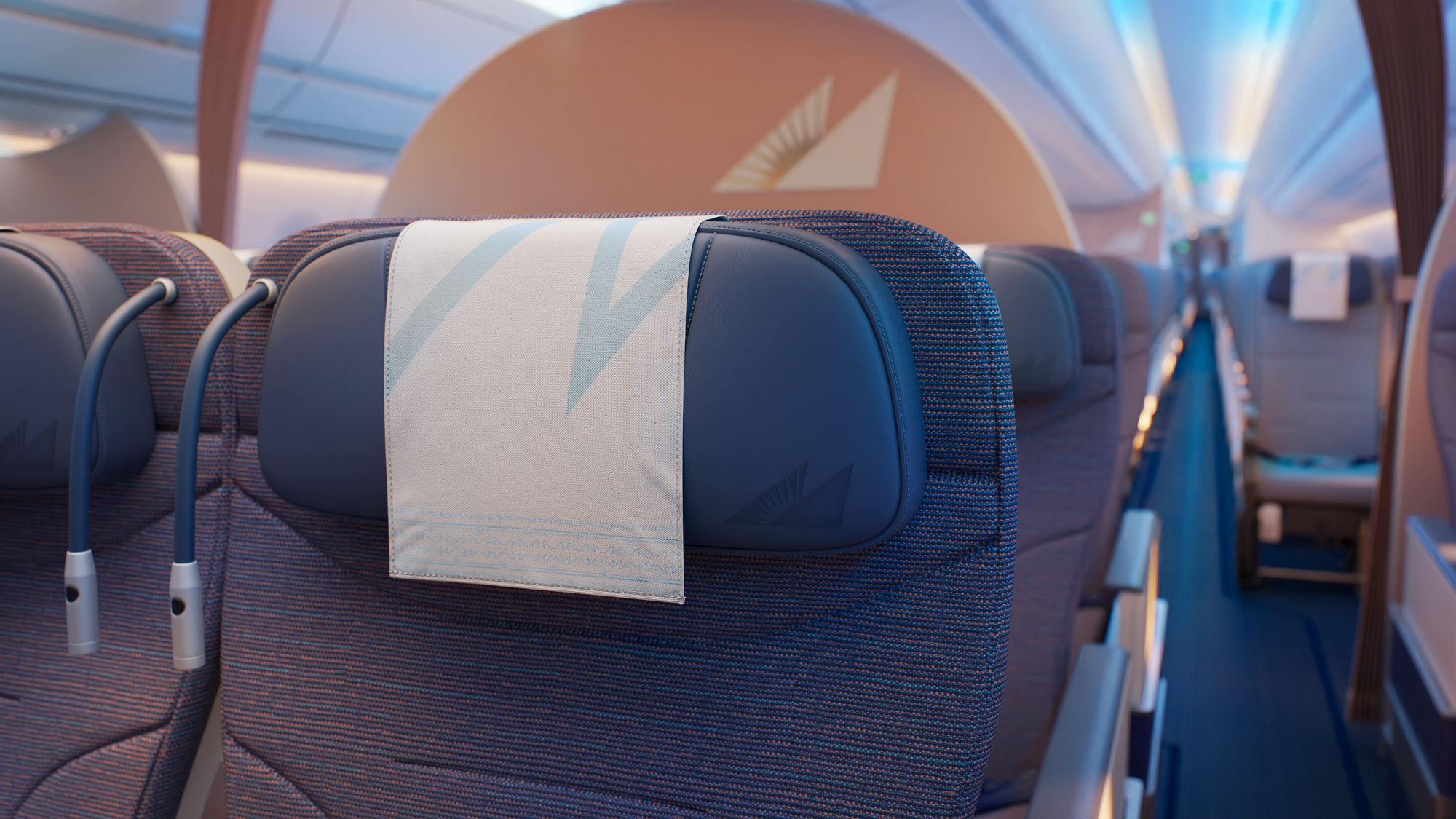
- 316 ZIM economy seats in the ultra-high-density 3-4-3 layout behind premium economy
It’s striking that PAL stuck with the same number of premium economy seats as on its A350-900, even while business class grew by 40 percent and economy by 31 percent — and, most notably, that economy growth comes while also moving from 9-abreast to 10-abreast seating, which would presumably spur demand for comfort-sensitive passengers to upgrade.
Given the positioning and that there is a simple partition between premium and regular economy, however, PAL could fairly easily increase its premium economy to 32 seats by adding a row or even two if demand is solid. Clearly, it won’t have a full grasp on the transpacific demand for premium economy in its markets given that the 777-300ERs don’t offer the cabin.
Also noteworthy: the space optimisation of the more modern A350-1000 means that PAL has more seats overall on its A350-1000 than on its 777-300ERs, even though the business class seats are much improved, and that there’s a premium economy cabin.
The number of business seats remains constant compared with the 777-300ER at 42, with of course the higher spec of a direct aisle access seat. There are 12 fewer economy seats, but an entire 24-cabin premium economy cabin. The extra real estate comes not just from the ten-abreast economy cabin, but from optimised front and rear galley areas, including rear bulkhead movement, which are all part of the NPS package.
The economy class situation is a fascinating move of the passenger experience needle, and certainly one to watch. The seats are ten-abreast, which is one of the physically narrowest economy class seats on the longhaul market.
The seat width (or rather lack of width) is equalled only by a nine-abreast A330 — as seen on hometown competitor Cebu Pacific’s ultra-high-density 459-seater A330neo, incidentally also designed by LIFT Aero Design.
3-4-3 is a change for PAL from its A350-900s, and one that’s enabled by Airbus’ New Production Standard from the early 2020s that slims down the sidewalls by around 4 inches at armrest level.
An evolution of a well-received — and well-considered — custom aesthetic serves PAL remarkably well, even with relatively off-the-shelf hard product
Design-wise, PAL’s A350-1000 is more than just a continuation of the well-received A350-900 cabin, also created by LIFT Aero Design, but which was one of the casualties of the COVID shutdown.
PAL has two -900s of its original six-aircraft fleet left, with the other four having been returned to their lessors some five years ago. Those aircraft now operate, with only minor CMF changes, as one of Lufthansa’s A350 subfleets out of Munich, and will eventually end up with cost-cutting leisure subsidiary Discover Airlines.
“The A350-1000 is part copy-paste of the -900, part new generation,” LIFT’s managing director Daniel Baron tells The Up Front from Tokyo. “The seat colour schemes and fabrics in all three classes are the same as the -900. This is part of a harmonisation program whose aim is to have a unified look across the various fleets. At the same time, given the new seat hardware on the -1000, it was also important for the new flagship to communicate ‘forward-thinking evolution’.”
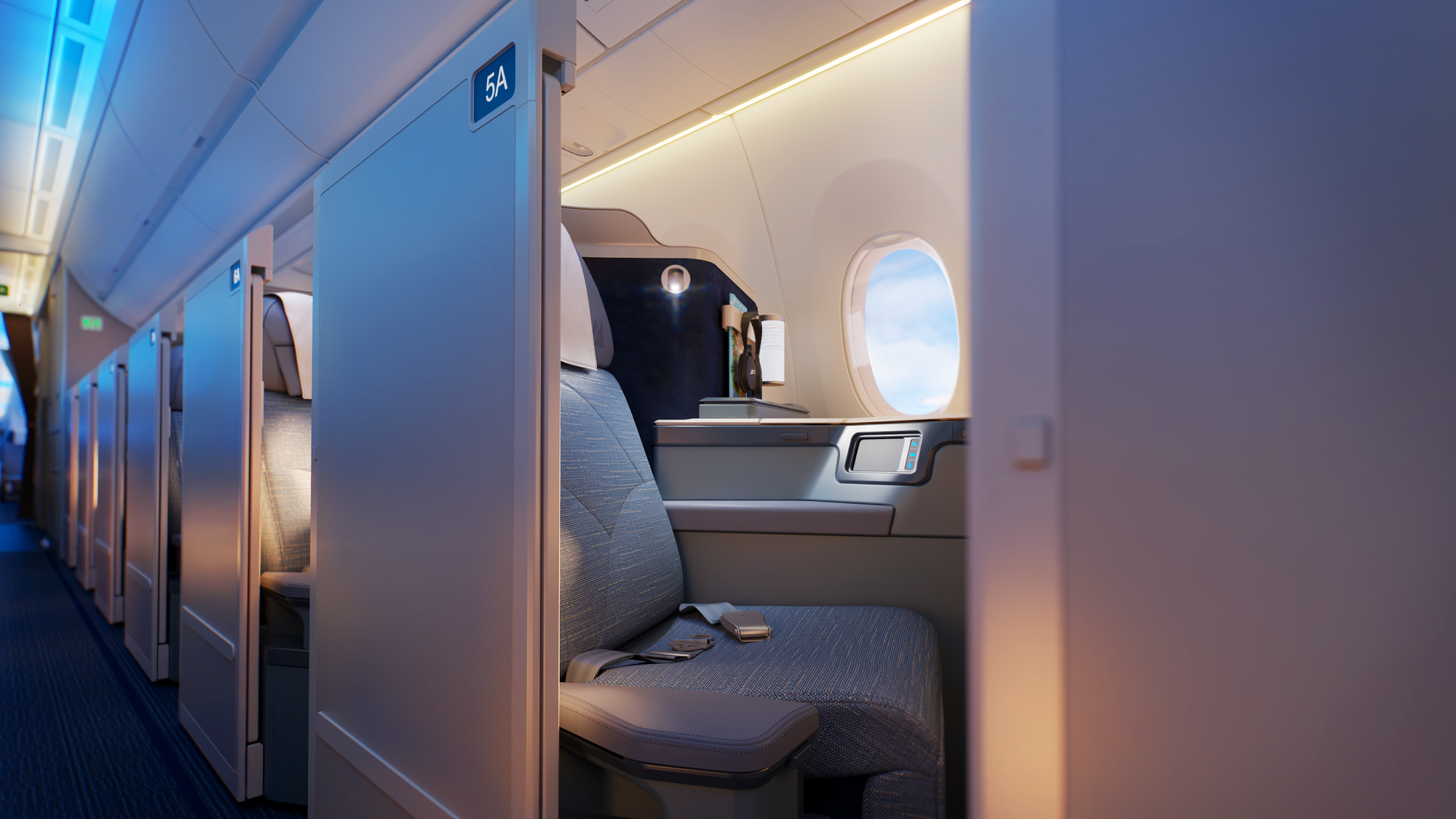
One example of the harmonisation approach is the set of blues used in the business class seat environment. With blues, one risks of course a ‘Florals? For spring. Groundbreaking.’ situation — one can practically hear Meryl Streep drawling, “Blue. On an airplane seat.” — but the blues within this palette are, even if slightly, outside the norm, and succeed in creating a distinctiveness for PAL.
“The two defining colours on the business class seats, Collins Elevation, are champagne gold and slate blue. This is a copy-and-paste from A350-900 and A330 seats, which are from Thompson, for the purpose of harmonisation,” Baron explains. “Different seat geometry and materials resulted in a slightly different look, but overall the links are clear, which is the point. A relatively dark and calming shade of blue has long been part of the PAL palette. Ironically, in a world of nonstop grey and beige, PAL’s slate blue helps it stand out and reinforces ownership of a colour associated with ‘established’ and ‘reliable’.”
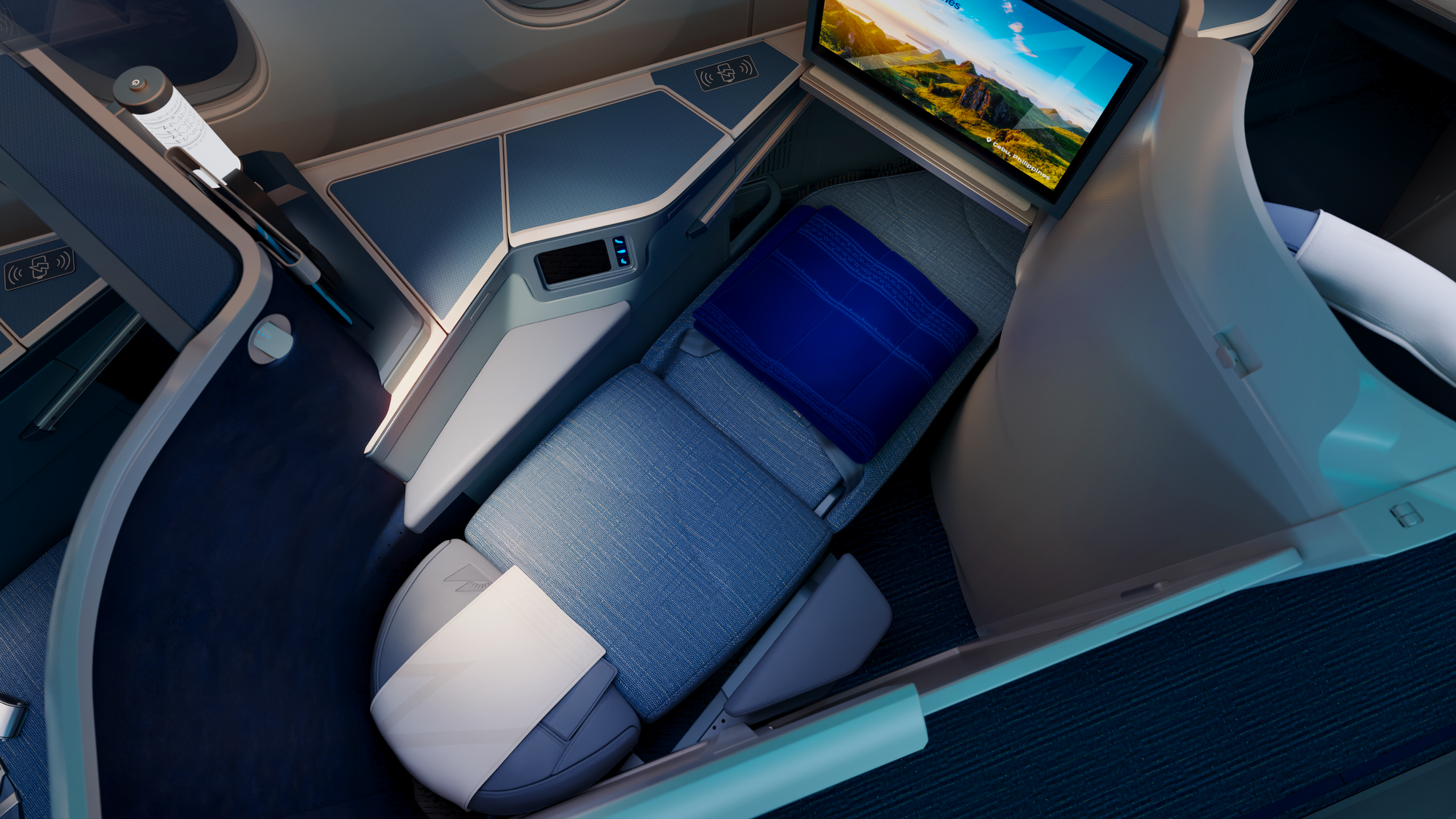
This visible evolution, ensuring that new aircraft feel both fresh and part of a brand and experience story, is an obvious benefit of a long-term partnership with an airline — which PAL and LIFT certainly have, dating back to the airline’s initial 777-300ER aircraft.
“When we designed the cabin of PAL’s original batch of 777s, we created the ‘coastal’ theme for forward/rear partitions in each zone. It is an abstract view of an island coast from above in three shades of light blue. Years later, beginning with an A330 retrofit program, we developed the ‘barong filipino’ pattern for partitions. Barong are traditional shirts worn by filipinos in both casual and formal situations, so the pattern communicates ‘already home’.”
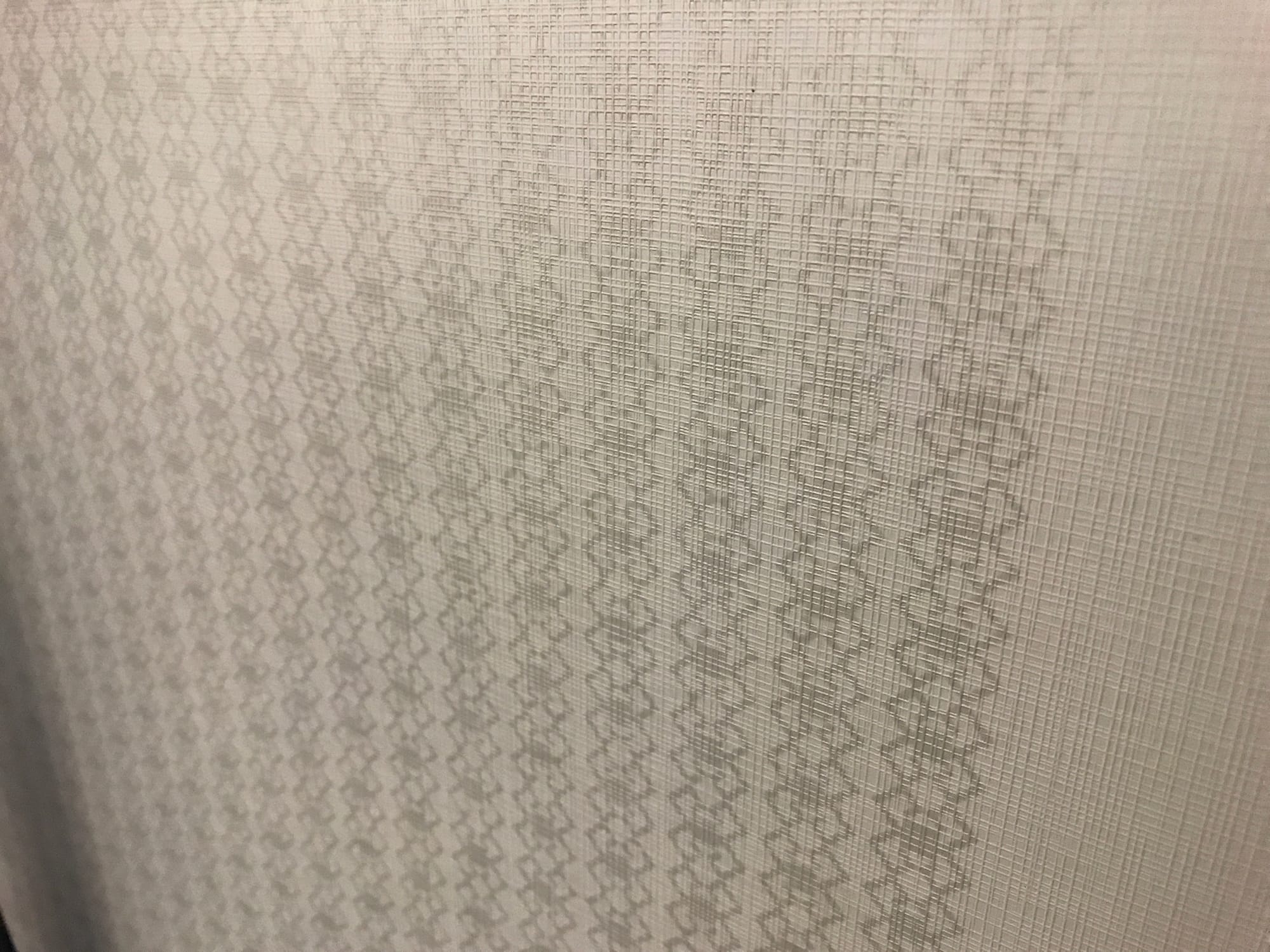
The barong motif is exactly the kind of scalable, repeatable — and culturally relevant — pattern that is incredibly useful in cabin interior design, applicable on everything from partitions to seat elements. Viewed at a distance, it adds welcome texture, while viewed up close it also adds cultural familiarity and implies natural elements on what is often a cabin made from engineered, not natural, materials.
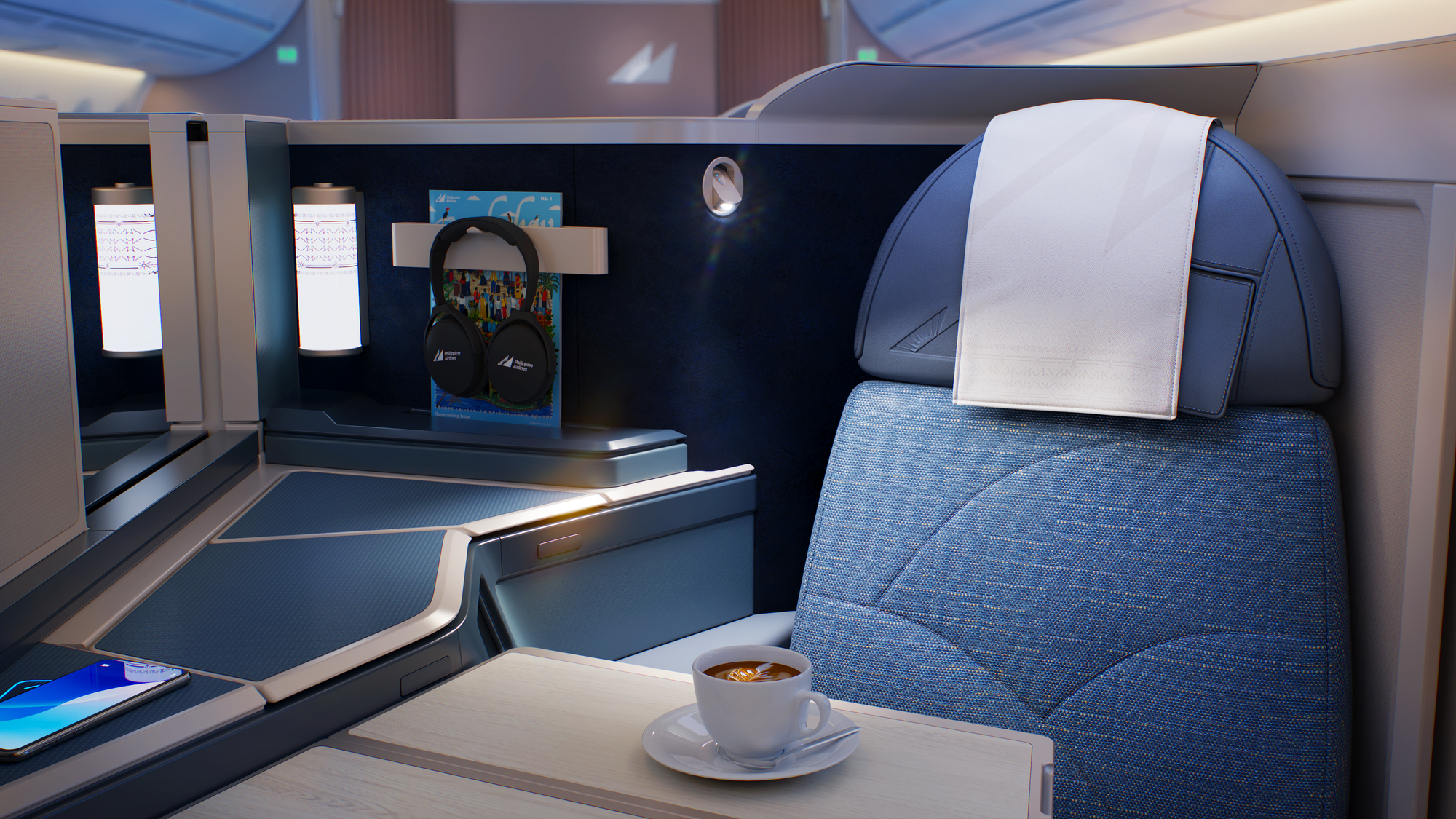
LIFT also returns to the multi-tone, multi-angle effect fabrics it used to great effect on earlier PAL programmes, applied with great effect in economy in particular.
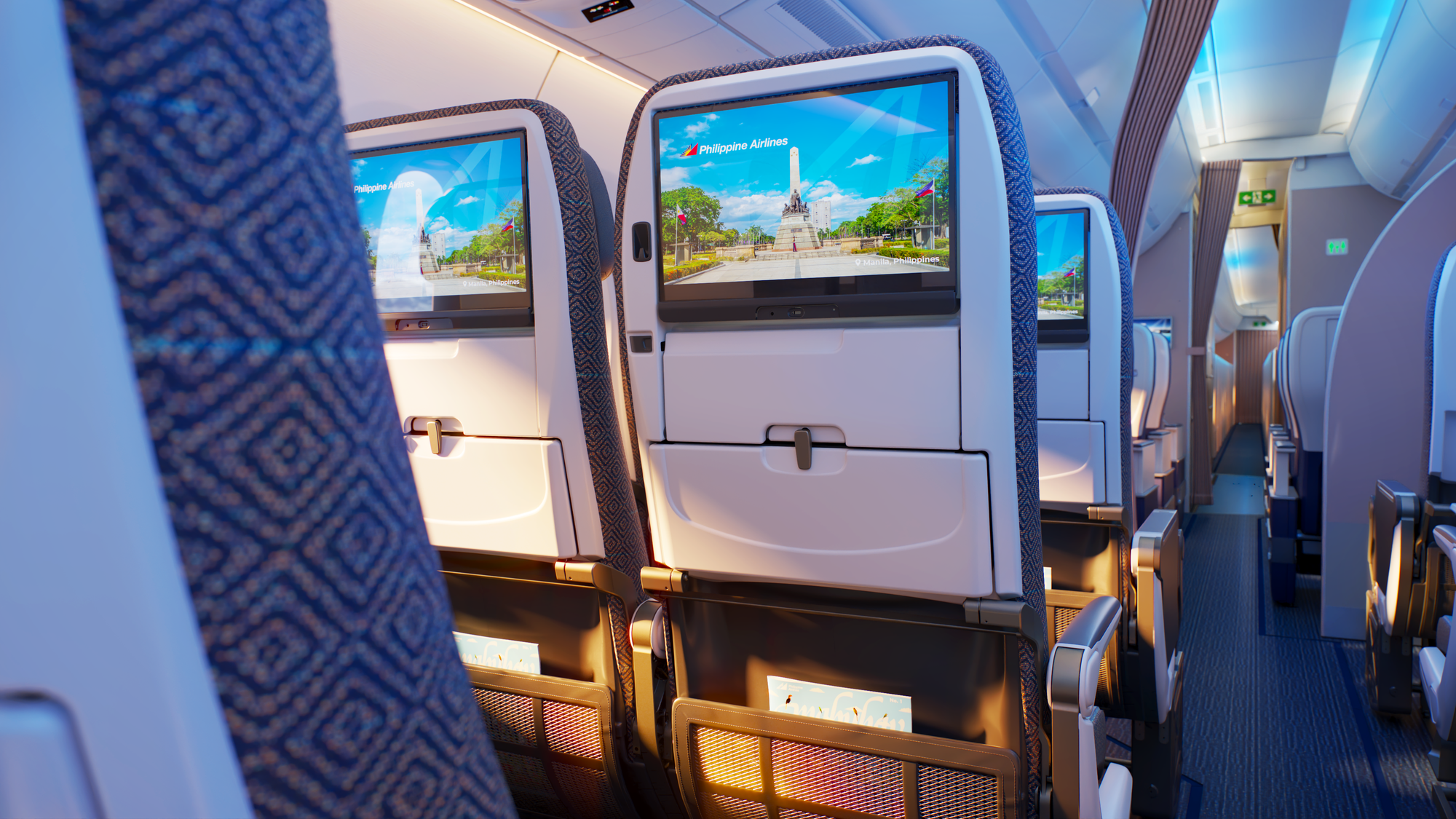
The diamond pattern on the side of the seats both looks attractive and breaks up horizontal lines on the seat fabric that might otherwise draw the eye towards the serried ranks of open cabin ahead.
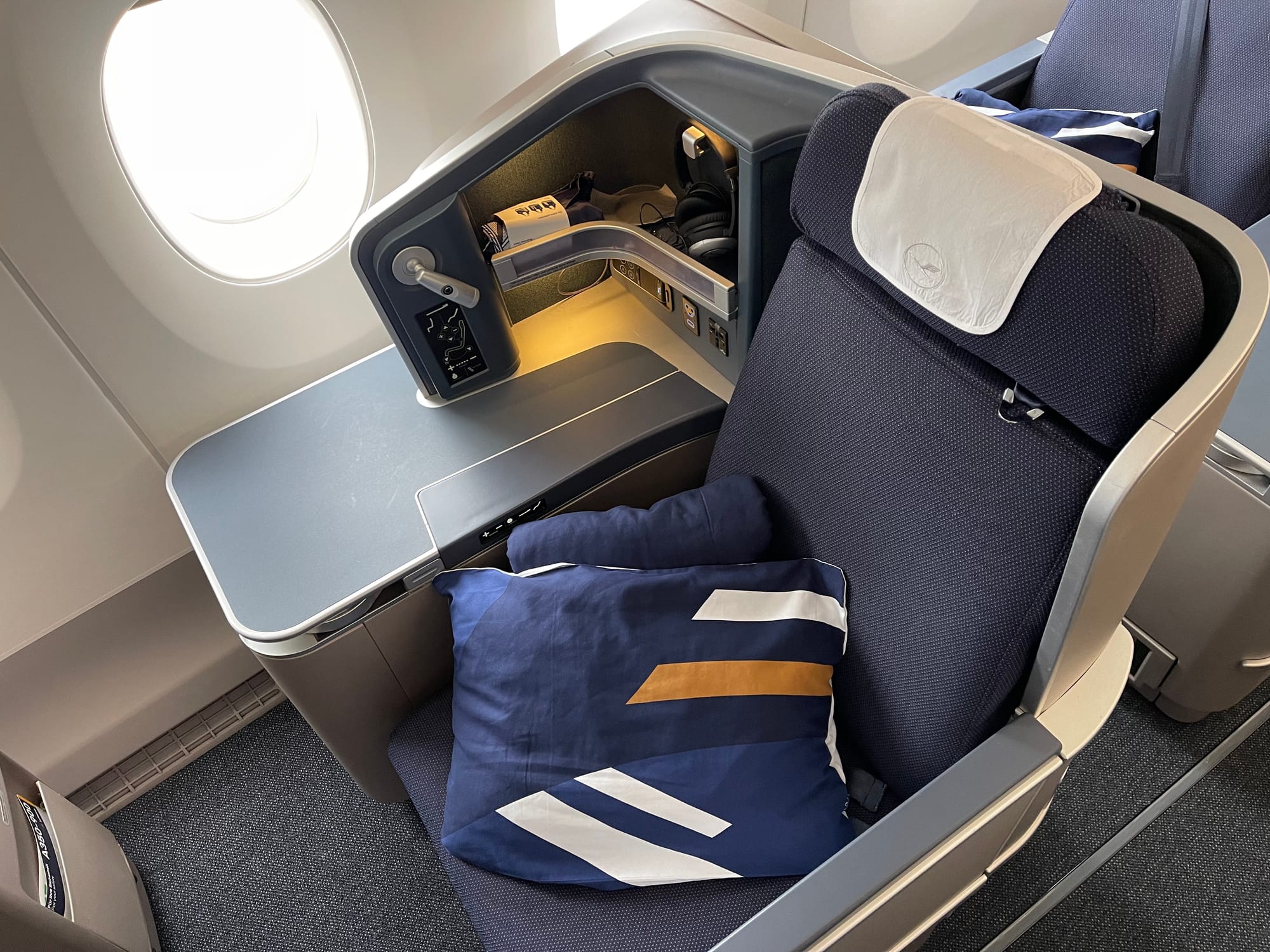
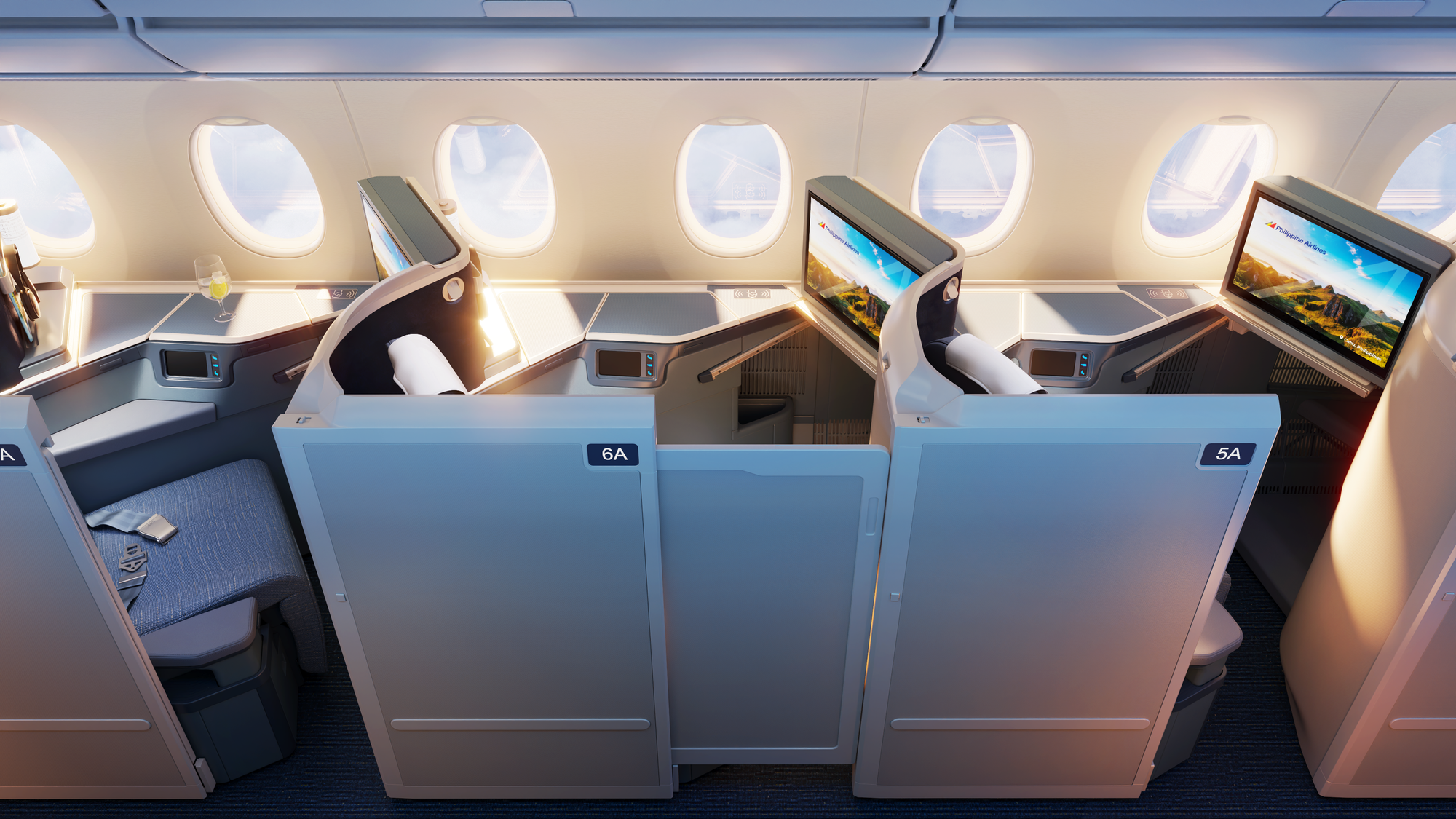
Getting back to business, the hard product of the Collins Elevation suite has also seen smart choices. While the seat itself is nothing unusual — indeed, this is a fairly stock product used by many airlines now — the customisation choices around the shrouding, particularly next to the window, mean that each seat essentially has two full windows, rather than one being blocked by a side storage cupboard or other element.
Light on the greige, please: lessons to learn on how to avoid boring, repetitive cabin views
A key challenge for airline cabin designers is to reduce the wide expanses of white, grey and beige visible from airline seats, especially on monuments, galleys, lavatories, and sidewalls — while minimising as much as possible expenditure on elements that, in fairness, are non-mission-critical or out of eyeline.
LIFT has executed this particularly well, especially when it comes to the expanses of the cabin monuments.
“The -1000 sports a fresh look with ‘PAL sunrise’ on partitions,” Baron explains. “It is a delicious peach-bronze solid colour on horizontal brush texture, exuding warmth and making a quiet statement of poise and elegance.”
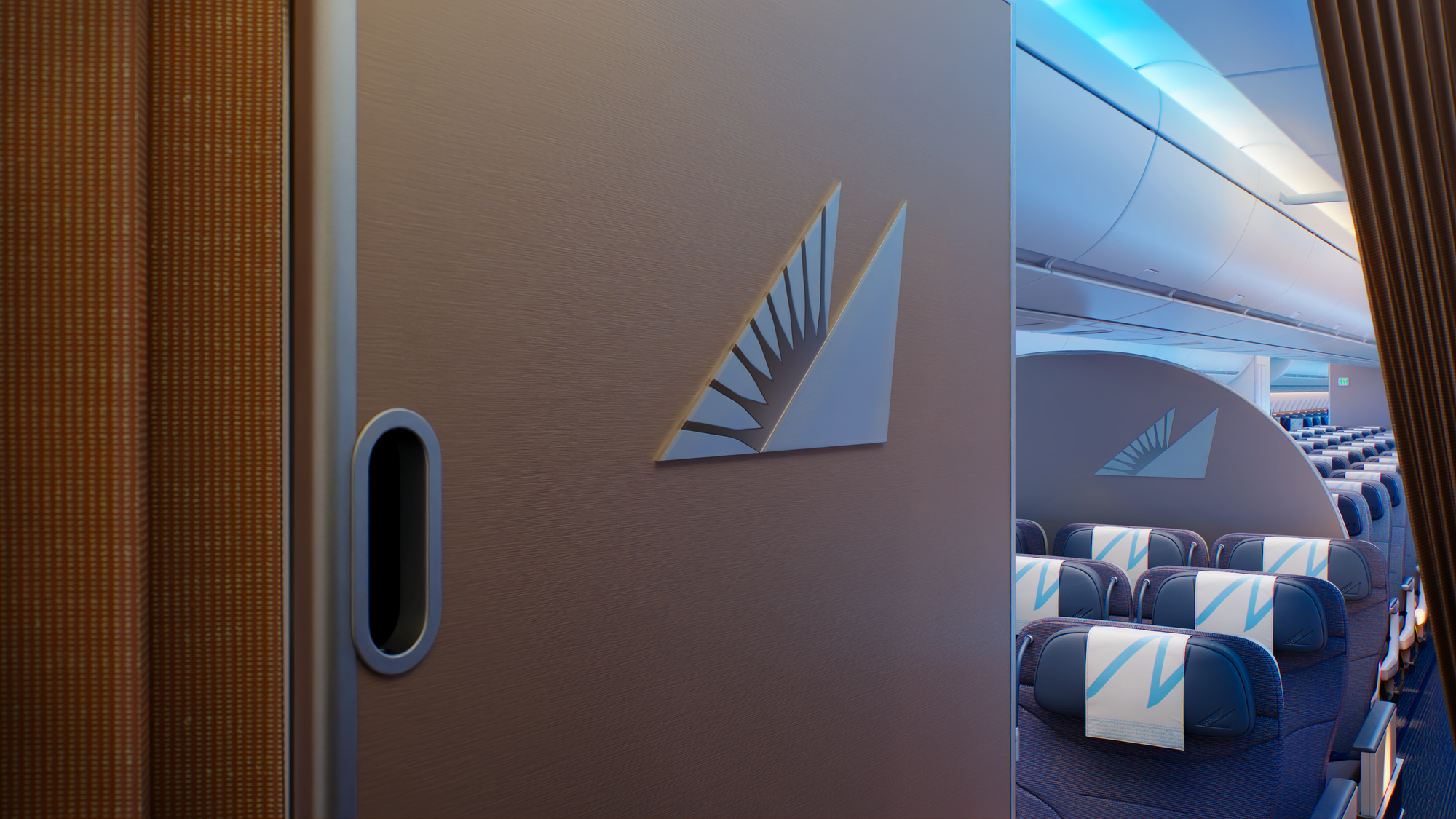
This brush texture is surprisingly effective to add visual depth and a natural feel to the cabin as well, especially when it combines with other textures within the cabin like the textured orange and yellow curtains.
“In the grand scheme of things, partitions in a warm colour may seem trivial, but they play an important role in accurately communicating PAL’s DNA of care from the heart with clear differentiation from the surrounding sea of white and grey,” Baron emphasises.
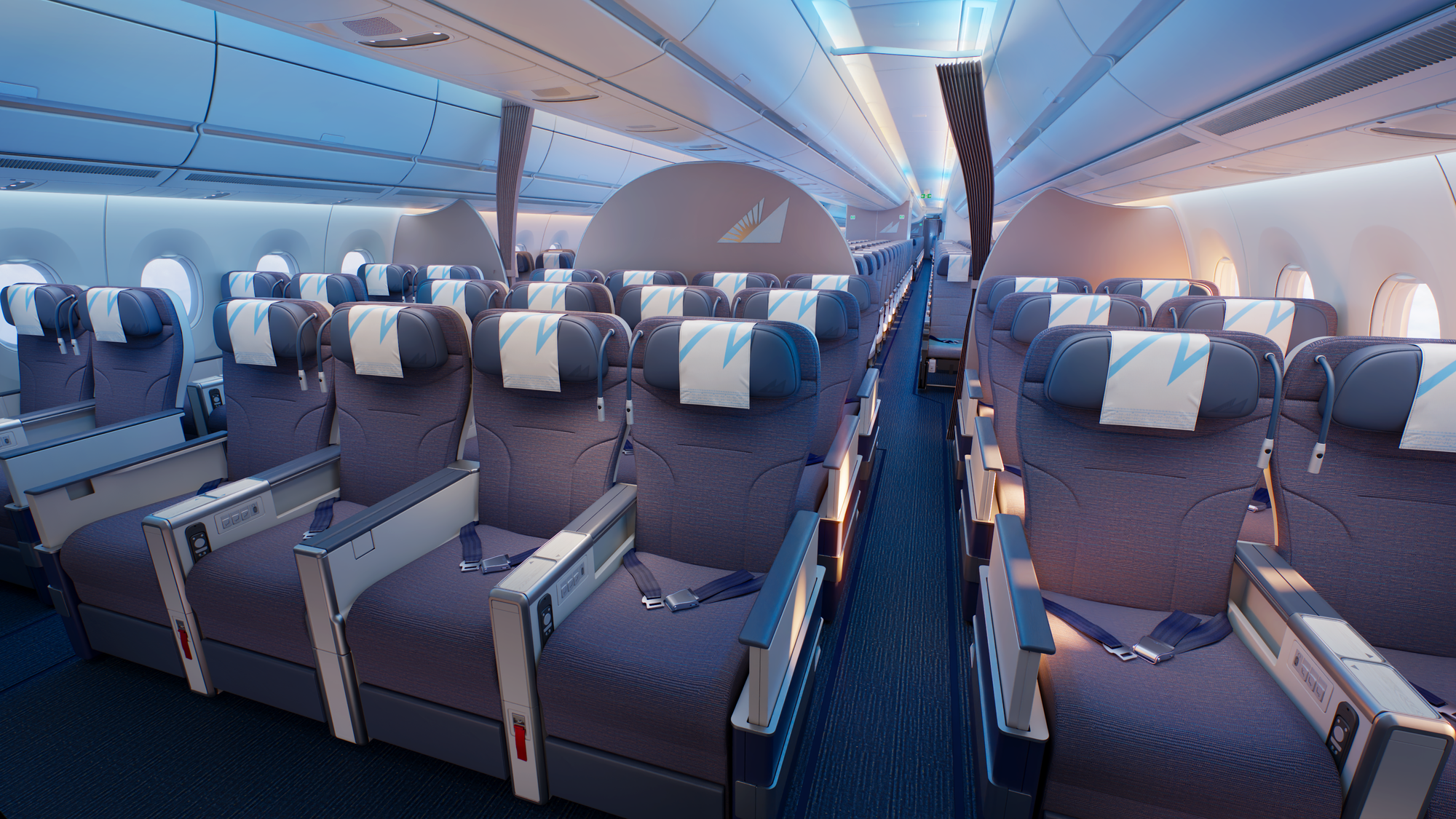
This attention to detail continues with the carpet, often something of an afterthought even in premium classes, but here too LIFT has done proper thinking about the Lantal deep dyed carpet, in its hues of blue with light orange accents.
“In every program for every client, we explore multiple design directions for carpet, and this program was no exception. The concepts ranged from a geometric pattern well known throughout Asia to more way-out-there abstract approaches,” Baron says.

The carpet stretches throughout the aircraft. Given the challenge of the A350’s length and the resulting visual lines, especially aft of doors 2 as premium economy transitions to economy, it’s impressively effective in breaking up what has in other instances resulted in an almost tunnel vision optical effect.
The pattern choice and its perceived randomness also brings benefits around both installation and MRO: “as a design studio, for us the bottom line is ensuring that the carpet design is complementing the brand story, is unique to PAL and is easy to use — in other words, without pattern matching complications or maintenance headaches later,” Baron explains.
The orange also catches the mood lighting well — and here LIFT has created something quite exceptional.
LIFT’s custom mood lighting — often underutilised even today — creates distinctiveness, helps with visuals, and adds service relevance
“PAL’s A350-900 has 12 mood lighting scenes,” Baron explains, noting that “the A350-1000 provides 24, of which PAL has used 22 slots. For both programs, we wanted to craft scenarios that truly reflected PAL’s positioning as a full-service brand as well as the soul of the nation.”
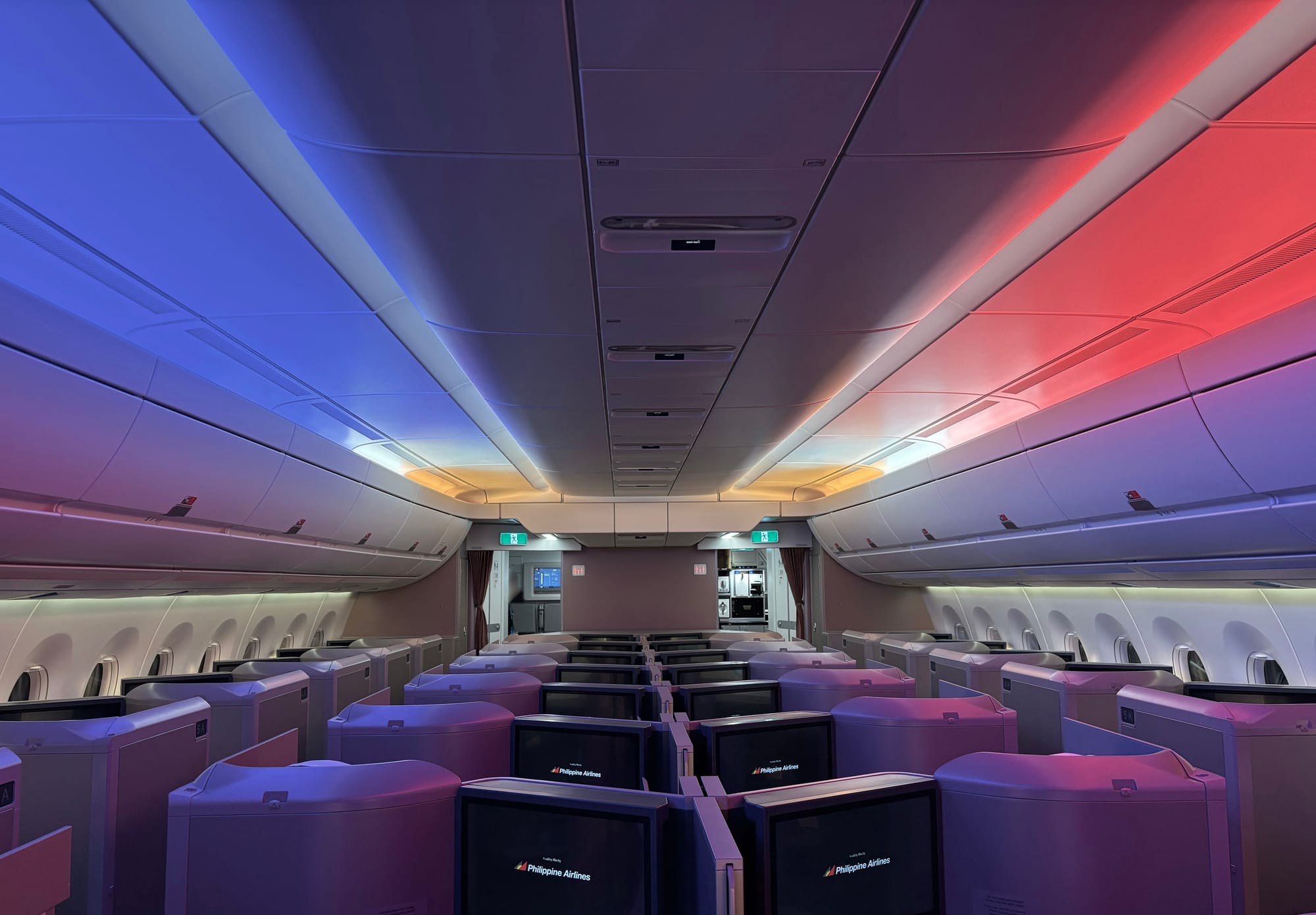
This is reflected both in the more visibly striking options like the country’s flag — “a dynamic scenario that opens with yellow on the ceiling at the front of each zone”, where red and blue lights wash in an unfurling sort of way — to the way the lighting can be used to break up the long expanses of the A350-1000’s stretched cabins.
To that end, “we defined a unique ‘curtain effect’ visual element for the sidewalls of many of the scenarios,” Baron says. “During meals on long-haul flights, it functions as a ‘candlelight dining’ effect in bronze. We spent a good amount of time getting the bronze just right, and the result is sultry sidewalls plus a ceiling above aisles that actually appears metallic.”
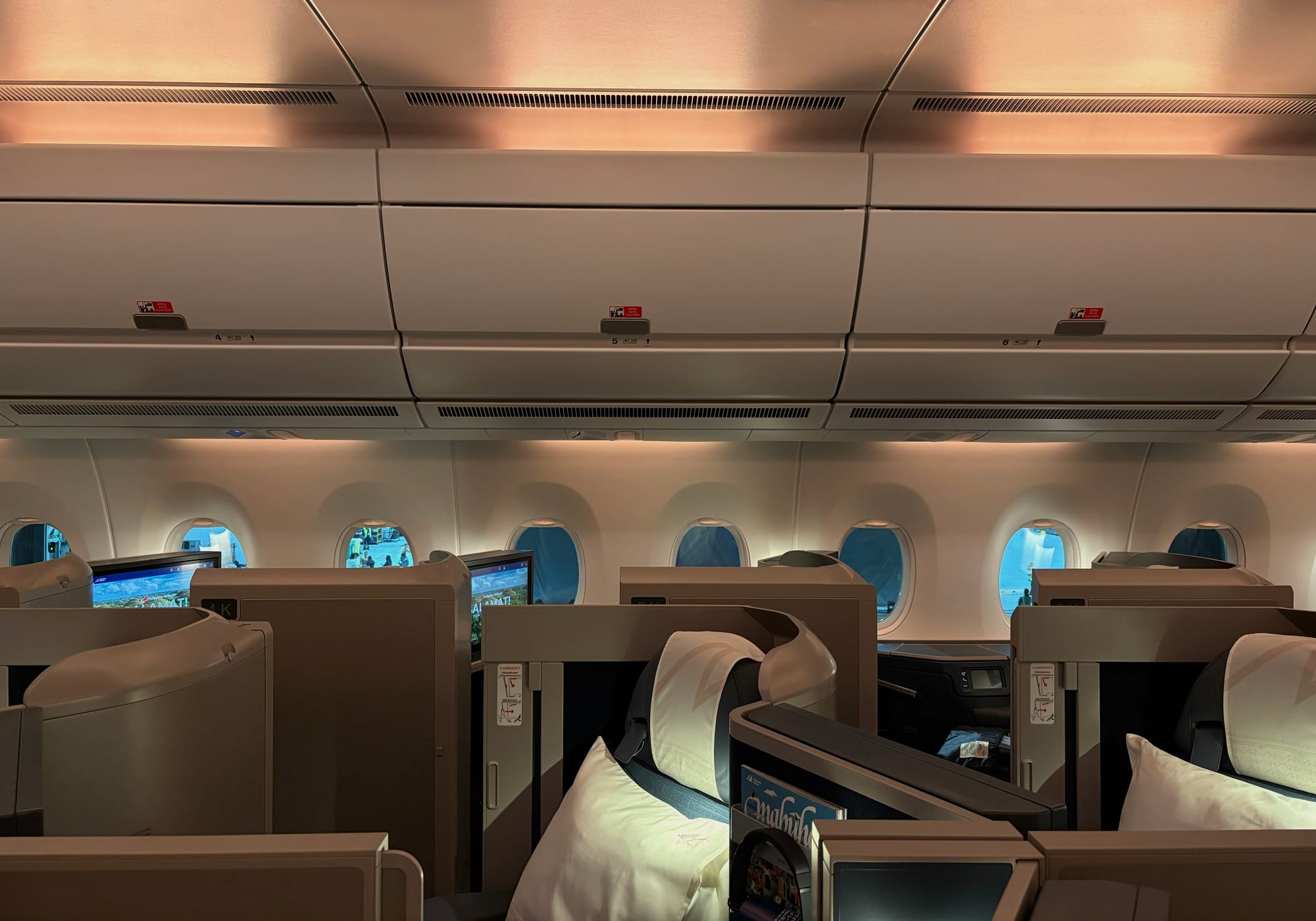
The way this curtain effect breaks up the A350’s cabins is especially smart, but the addition of options like the “Ocean” scheme in blues and greens adds ripple effects to, once more, subtly soften the tunnel effect of Airbus’ longest in-production jet.
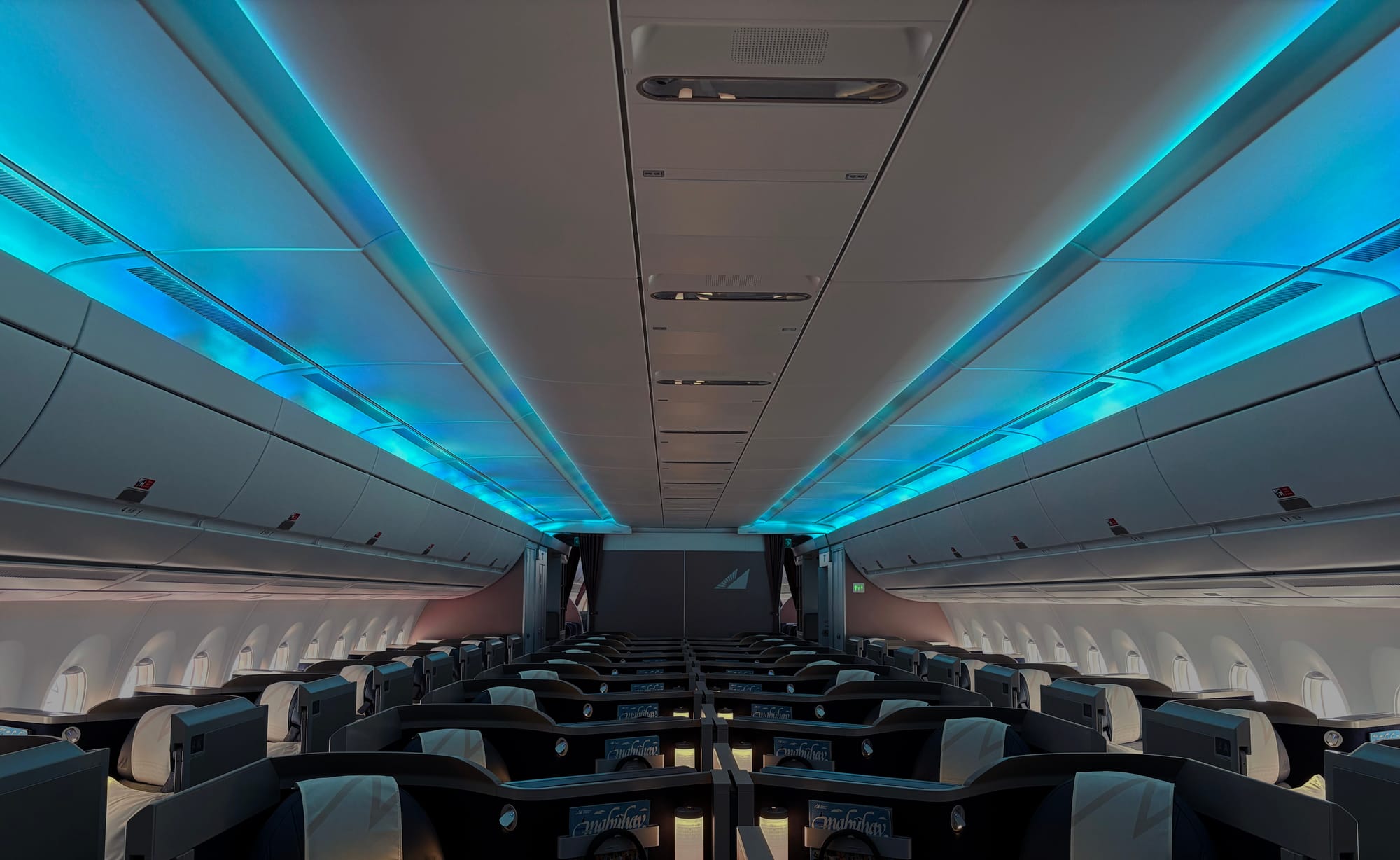
Mood lighting might sound like a nice-to-have, but in addition to the way that it can emphasise the wider brand and improve the overall aesthetic, it’s remarkable how the use of mood lighting scenarios can change the way the crew interact with the lighting system.
All too often, even on modern aircraft equipped with mood lighting, crew will turn all the lights all the way on in bright white for service, even when other options — such as dimmer light, warmer colour tones — are available.
Creating scenarios means that a crew manual can specify those scenarios as one element of the service playbook. The trick, of course, is to ensure that the crew all follow the playbook.
Beyond “what can you do with blue?” — PAL’s A350 sets a strong design bar, challenging larger airlines with larger teams
LIFT’s work with Philippine Airlines has long impressed in the materials expertise, design relevance and understanding of the cabin environment — within supply chain constraints — that it shows.
This latest A350 cabin continues to do so, and builds upon it with new design elements even within a hard product envelope that is increasingly optimised for space, and in many ways is more challenging than the cabins that came before it.
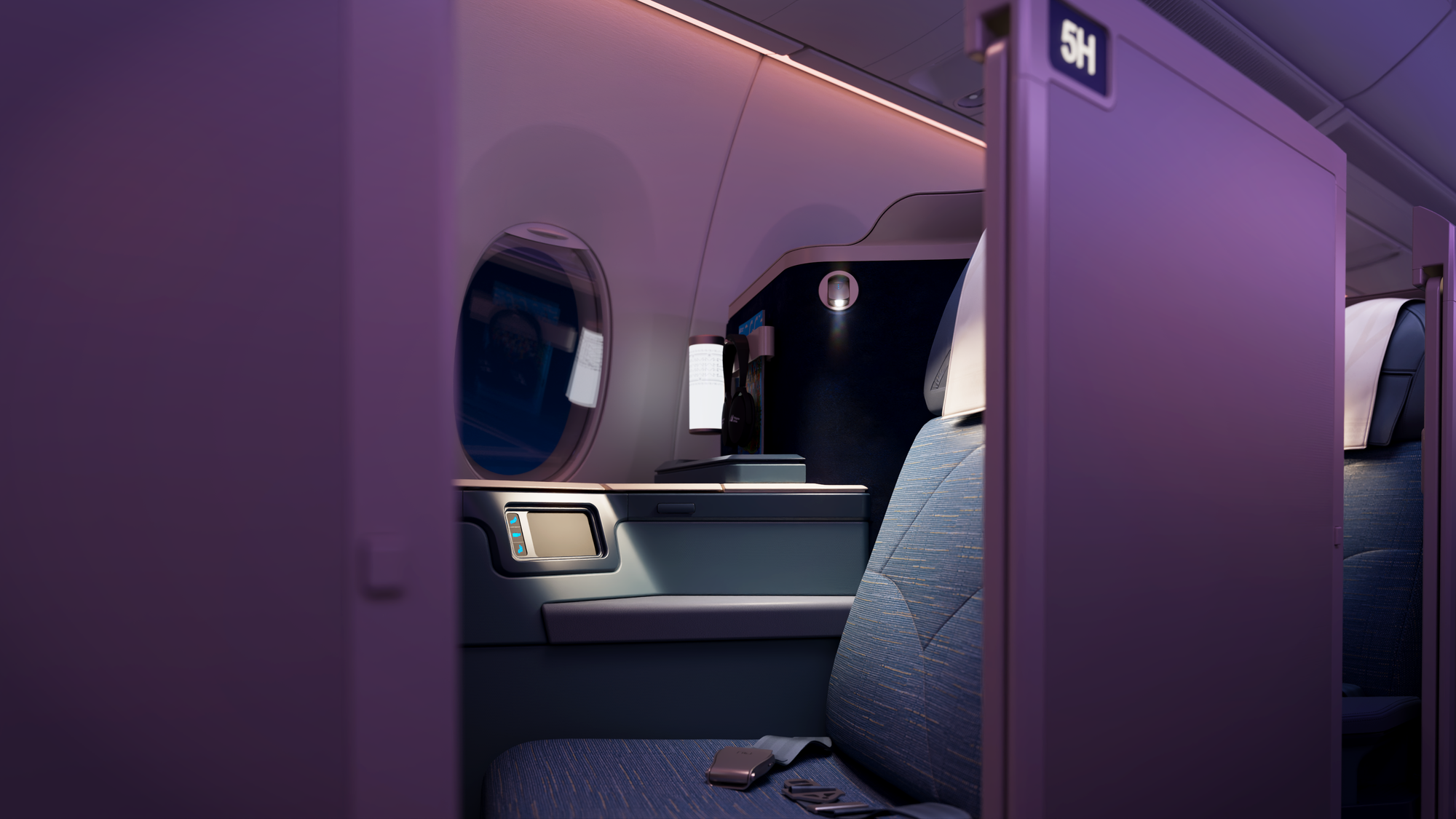
That all this excellent design work has come about for a relatively small order of nine aircraft is especially impressive, and PAL is showing other airlines that blue doesn’t need to be boring. In many ways, it reminds me somewhat of the ambition shown by Air Côte d’Ivoire’s A330neo cabins: distinctive, premium experiences are certainly possible to create, even for contextually small shipset widebody programmes.
We’re glad you enjoyed our latest deep-dive feature article! If you’re a subscriber: thank you for funding our independent aviation journalism, bringing our work to a wider audience through publicly available articles like this one. If you haven’t yet joined us, subscribe today at Premium or Business level, supporting our work and unlocking our many subscriber-only features!
