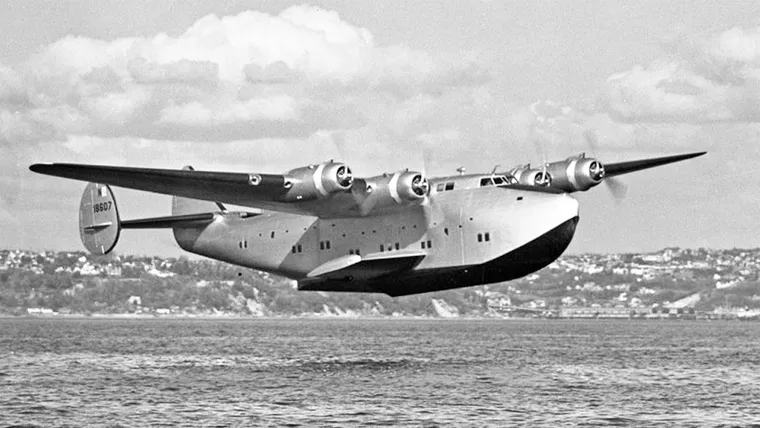
We conclude our series looking at one of the most stunning, yet near-forgotten, acts of skill in civilian aviation history: the round-the-world flight of the California Clipper in December 1941. You can find the first part of this series here.
Fourth Officer John Steers stood at the front of the boat and looked out over the river Nile. The California had landed on the river here, near Khartoum, on the 29th December. It had not been an entirely pleasant experience.
To complete their unplanned accidental circumnavigation, the crew had always known they would need to carry out several river landings. It wasn’t possible to cross Africa without them.
The journey to Khartoum was made even harder by the lack of military-grade aviation fuel at Bahrain, their last stop before crossing over to Africa. It had forced them to fly, once again, on lower-grade fuel that the California had never been designed to fly on.
The biggest risk a sea plane faced during landing was hitting something. That something might be a rock (on the surface or below), a sand bank or the rising sea (or river) floor. Such a collision would rip through the California’s hull and wreck her, likely costing the crew their lives. This was one reason their journey so far had been hard. It had involved landing in places where a clear channel for sea plane landings had not been defined.
They had been able to mitigate this risk at sea by landing further from shore. This reduced the risk of hitting something, at the price of a longer taxi along the surface to their intended berth.
On rivers, this wasn’t an option. Not only was the chance of hitting an obstruction far greater, but the ability to land further out and taxi in didn’t exist. On top of that, you now had to worry about things like your angle of approach and crosswinds. A river had banks. If the wind pushed you into the bank on landing, or your angle of approach wasn’t right, then this too could prove fatal.
Luckily, the Nile at Khartoum was wide. There was also a facility here already set up for sea planes, with a stretch of the river marked out as cleared for landing. This was why the California had specifically aimed for it. Their landing had been stressful, but ultimately successful.
At Khartoum, the RAF had again fallen over themselves to be helpful. They agreed to provide military-grade aviation fuel for the next leg of the California’s journey. They also confirmed the existence of a Pan Am facility at Kinshasa (then Leopoldville) in Congo. Ford had hoped the rumours he had heard about this back in Los Angeles were true. It was new, and there was no guarantee it was well supplied, but it at least meant they had something to aim for on the other side of Africa.
It meant that if they could reach Kinshasa, then the crew knew that for the first time since leaving New Zealand they’d be back within the protective arm of Pan Am company territory. To get there though meant getting out of Khartoum and that was easier said than done.
All of the problems the California had faced landing, it would face taking off as well. There was a new problem, too. The aircraft would be much heavier taking off than landing, due to the amount of fuel required to reach Kinshasa 1,800 miles away. For take-off it needed a far longer ‘runway’ than it had for landing. More than was currently marked out in the Nile.
That was why Steers was out here in a boat with a couple of willing RAF volunteers: to find a long enough stretch of river from which the flying boat could launch. By the afternoon, Steers had done exactly that. He’d found a channel about three miles long that was free of all possible obstructions. He returned to Ford and shared the good news.
On New Year’s Day 1942, the California Clipper raced down the Nile. Heavily laden with fuel, she took some time to break free from the surface. From the pilot’s seat, Ford gently rocked her back and forth until she finally climbed slowly into the sky.
As they began to climb though, a loud hammering noise began to pound through the cabin. Once again, John Parrish was sent back to the navigator’s dome to check. He was soon back up front with a report. Number one engine had lost an exhaust stack in the take-off. This wasn’t something they could replace. The question was whether to turn back or not.
Ford and Rothe, the California’s chief engineer, debated the problem. The loss of the cover wouldn’t affect the engine’s performance, but it would increase the risk of fire and the level of noise. They decided to push on. For the rest of the journey they’d need to keep a man stationed on permanent watch in the navigator’s dome, watching for engine fire.
Leopoldville. 7,833 miles to go
Crossing Africa in a regular commercial seaplane would likely have been daunting to any other crew by this point. For Ford and those on the California, it now barely registered as unusual. They already done the same thing now over Australia, India and the Middle East. For them, this extraordinary act had now become almost ordinary.
What was distinctly less ordinary, was the challenge they soon realised faced them at Kinshasa.
Ford later recalled the exact words that chief engineer Swede Rothe confronted him with after they’d landed and he’d run the maths.
“Skipper,” said Swede, “I’m not sure she’ll fly.”
They’d found the Pan Am base at Kinshasa exactly where the British had told them to expect it. As with Khartoum it meant landing on a river — the river Congo this time – but they’d pulled this off successfully in the channel that the base staff had already marked out. They’d also been delighted to discover that there was a supply of military-grade aviation fuel at the site. Anticipating the California would likely aim for Kinshasa, Pan Am logistics had sent this ahead. As they had hoped, they were back in company territory now, and they now had the company’s vast support network now firmly backing them up.
The problem was the distance the California Clipper would have to cover to complete the next leg of its flight.
Natal, in Brazil, was the nearest practical point of landing for her on the other side of the Atlantic. There was nowhere they could safely land and refuel inbetween. But it was 3,480 miles away.
According to Boeing, the maximum posted range of a Boeing 314 like the California was 3,600 miles. This was a theoretical figure. No 314 had ever attempted to fly that far. Nobody ever seriously thought Pan Am would attempt it. The number was based on a fuel load vs take-off weight, neutral winds and a lot of on paper calculations. Not practical experimentation.
Swede Rothe and his engineers were now, arguably, the world’s experts in running a Boeing 314 to the edge of her limits. In this single flight, they had already covered 25,000 miles. Based on her performance and fuel consumption so far, Rothe thought that Boeing’s numbers were wrong.
Rothe believed that they would need 5,100 gallons of fuel onboard to reach Natal from Kinshasa, more than the Boeing 314 was meant to carry. Luckily, her fuel system had redundancy built in. She had larger tanks than she needed, to allow the crew to move her fuel around and distribute it evenly at all times. This was what had allowed them to run a mix of low and high quality fuel, earlier in the height. They could keep it separated in the tanks and switch between fuel sources (or mix it) as required.
By filling all her tanks to their limit they could squeeze onboard the 5,100 gallons Rothe now calculated they needed. This would just lose them tank flexibility though. It would also put them 2,000 pounds over gross weight.
Ford didn’t need Rothe to explain the problem this created.
The physics of an aircraft’s take off are brutal and absolute. Taking off requires enough speed to overcome everything else trying to keep the aircraft on the ground: weight, surface friction and gravity. You need enough power to create the speed necessary to overcome all of those things. But there is one other factor as well:
Air temperature.
“Density altitude” is something all pilots are familiar with. It is the combination of air pressure and temperature that sets the magic, moving point at which your speed is enough to overcome all the other factors trying to keep your aircraft on the ground. And, as they’d discovered when they’d arrived here at Kinshasa, the density altitude here was not good. It pushed the magic crossover point for take-off way up.
With the amount of weight Rothe said they needed to carry, it was possible the California couldn’t hit it at all.
The take-off
When they landed the day before, both Ford and Mack noted the strong current in play in the Congo river — at least six knots by their estimation. Now, taking Swede’s reservations on board, they decided to try and use that current to their advantage. Mack taxied the California Clipper upstream as far as they dared.
They needed as much space as the river Congo could give them. Even more than they’d needed at Khartoum.
And, at the end of this stretch of river, the only stretch long and clear enough for them to attempt a take-off, sat the Congo gorges. The gorges are a large network of rapids set between winding hills, strewn with rocks and sudden drops, including the Livingstone Falls.
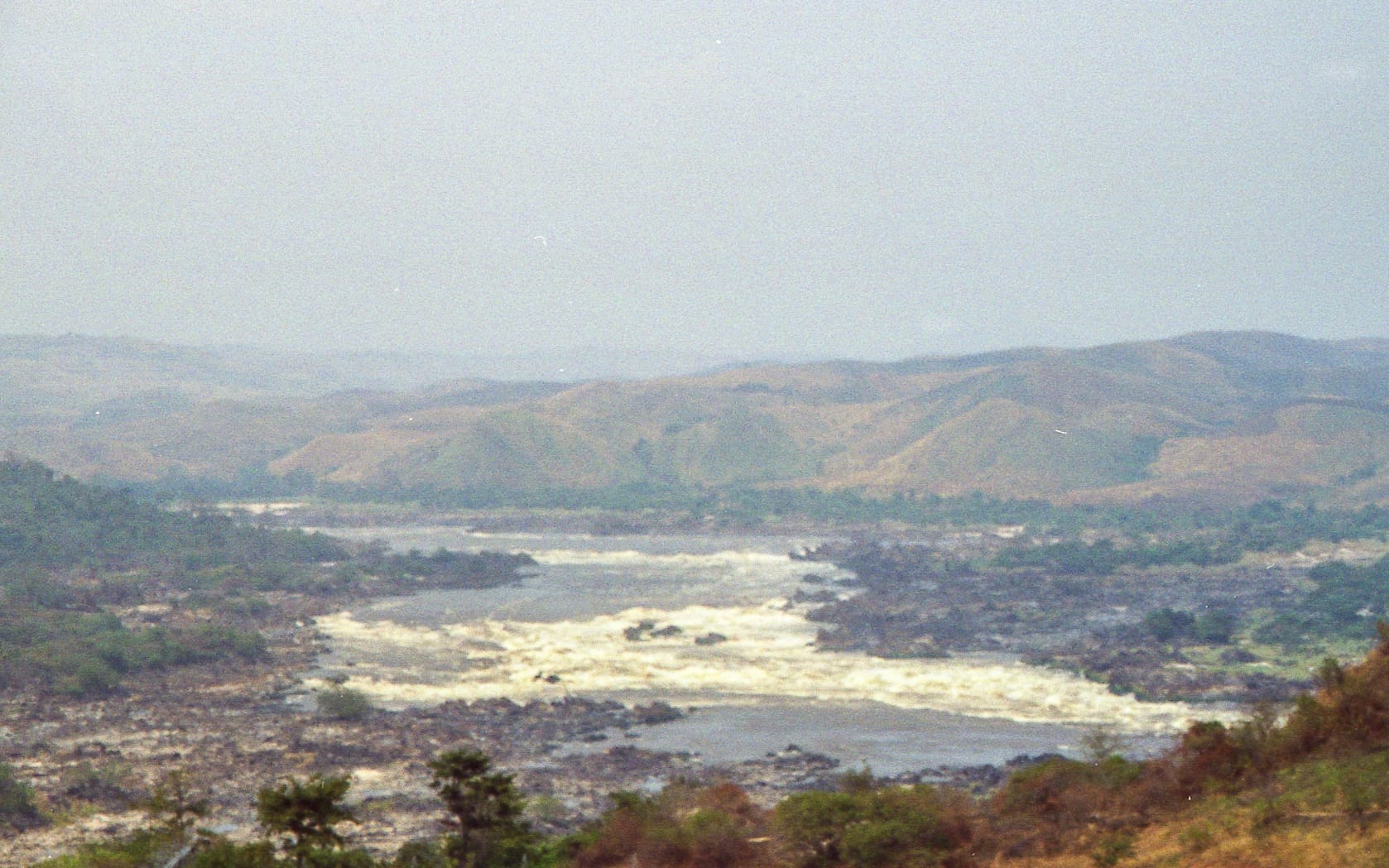
Ford and his crew knew there was no safe way of aborting the take-off attempt once they started it.
On the morning of 2nd January, 1942, Captain Bob Ford of the California Clipper threw her throttles forward to full power. The sound echoed through the plane, louder than ever now due to the loss of the exhaust cowling. Everyone on board knew what that sound meant. They would fly, or they would die.
The flying boat’s engines roared into life, sending California racing down the Congo in the 100 degree heat. Ahead of them, hazy with distance, both Ford and Mack could just make out the start of the Congo gorges. According to her specifications, the absolute maximum time the California could run her engines at full power was 90 seconds. Onboard at his engineering station, Rothe began counting up towards this total in his head.
20. 30. 40 seconds.
The California raced down the Congo. Ford and Mack pulled back gently on the yoke, testing to see whether she was ready to break free of the water. Not yet.
50. 60. 70 seconds.
All eyes on the flight deck were fixed on the gorges ahead now. The airspeed indicator crept over 70 knots. Still she refused to rise from the river. Ford began rocking the flying boat, as had worked at Khartoum, to try and encourage her to break free.
“Ninety one seconds!” Ford later recalled Rothe shouting when they hit the limit. The jolt of fear was burned into his brain for life. So too was his own reply.
“Keep those throttles open!”
Her engine dials pinned solidly in the red, the California began to vibrate. The scream of her engines grew louder. As one crew member later described it, it seemed like she was howling in pain, begging them to stop.
Just as the flying boat was about to hit the gorges Ford gave one final, desperate, heave on the yoke. Finally, she broke free, lurching up slightly into the air and missing the rocks below by mere inches in places. The battle to break the surface was now replaced with a battle to gain altitude. The plane was racing along just a few feet above the water through the large rocks, breaking waves and hills of the Congo valley.
100. 120. 130 seconds
Screaming in agony, the California began to slowly climb. At a rate barely over ten feet a minute, every second at full power was an extra inch of height. But it was also a step closer to critical failure. Still trapped in the winding gorges, they couldn’t afford to drop speed yet.
Ford and Rothe had always known it would take time to get the California to any kind of altitude. Luckily, the twisting gorges were wide enough for them to navigate. Or so they had thought. It was as they approached the first major turn that they discovered something was wrong. Ford gently tried to bank his aircraft. She didn’t respond.
It was Rothe, the engineer, who realised their perhaps-fatal error. Her flaps were stuck.
“It’s the extra fuel in the wing tanks!” He shouted back over California’s screams, “It’s bending the wings! The aileron cables must be trapped!”
Without thinking, Ford lunged for the rudder pedals. He would later say it was pure instinct. Whatever it was, it almost certainly saved both plane and crew. It slewed the aircraft round just enough and she cleared the turn by a whisper.
140… 150… 160… 170 seconds
Every second seemed like an eternity to the crew. The California howled and shuddered, as if trying to pull herself apart. Still climbing slowly, every elevation obstacle also forced Ford or Mack to pull the aerial equivalent of a hand brake turn, pounding the pedals in order to avoid a crash.
Then, finally, as if determined to make one last lunge for freedom, the California Clipper jumped upwards, riding the swirling winds created by the gorges and climbing up into the sky.
“Shut her down!” Ford yelled.
Swede Rothe lunged for the engine controls, bringing the aircraft back down to cruise speed. The California’s logs would later record, in cold detail, that she stayed at full power for more than three minutes. Twice the maximum power output she was meant to be able to give.
Ford later recalled the reaction of her chief engineer as distinctly human. Ford looked back down the cabin to see Rothe kneeling on the floor, stroking the deck.
“Good job baby.” He was whispering to his aircraft. “Good job.”
The reaction of Mack, in the co-pilot seat, was more understated.
“Let’s not do that again.” Ford remembered him saying, beads of sweat running down his face.
“Agreed.”
The last leg
It was Jim Hendricksen and John Steers who were in the pilot seats when they finally sighted the coast of Brazil. It was 9am and they’d been airborne for about 20 hours.
Three hours later the California Clipper landed in Natal. She had been in the air for 23 hours and 35 minutes. It was a new world record for a Boeing 314. They had about 90 minutes of fuel left by the time they landed. Rothe’s calculations at Kinshasa had been correct.
They landed to find the Pan Am station manager waiting ashore, holding a crate of cold beer. Ford later described it as the best beer he ever had.
After Natal, the stress of the journey evaporated completely. They were firmly back in company territory now, far from the chaos of war. From Natal, they hopped over to Trinidad & Tobago. There, the entire crew were given time to sleep, recover and rest. Pan Am maintenance engineers swept over the California giving her a rest too.
The crew were offered the opportunity to step down in favour of a relief crew for the final leg to New York, back to US territory for the first time. Ford and the others refused.
They had filled the California with fuel she couldn’t stand, run her hotter than she was rated and flown her farther and longer than any Boeing 314 had ever flown before. She hadn’t let them down. As Ford would later describe it, by that point they all felt a bit like Rothe had when she had finally taken to the air at Kinshasa. The California wasn’t just an aircraft to them now. She was part of the crew. They were proud of her. She had got them this far and they would not abandon her to a new crew who didn’t understand what she’d been through, so close to home. They would get home together.
And so as the cold, dawn light broke on 6th January 1942, it was Ford and Mack who were sat at the controls of the California Clipper as New York came into sight.
Rothe was at the engineering station. At the radio, was Poindexter. The man who had only signed on to go as far as Hawaii, over a month earlier and almost 50,000 miles ago. Ford had felt it was only fair he join them in bringing her in.
“Coming up on New York, Skipper,” said a subdued Johnny Mack from the seat next to Ford. “‘About time we said hello, don’t you think?”
At the radio, Poindexter beamed and gave Ford the thumbs up. The channel was open and Ford began to speak.
LAGUARDIA TOWER LAGUARDIA TOWER. OVER.
And then, for the first time in the entire journey, Captain Robert Ford of the California Clipper found himself lost for words.
“Skipper?” Ford remembered Johnny Mack prompting him, quietly.
Then it came to him.
LAGUARDIA TOWER LAGUARDIA TOWER. THIS IS PAN AMERICAN CLIPPER NC18602 INBOUND FROM AUCKLAND NEW ZEALAND. DUE TO ARRIVE PAN AMERICAN MARINE TERMINAL LAGUARDIA IN SEVEN MINUTES. OVER.
And somewhere, out there in the distance, the coffee mug of a surprised air traffic controller fell to the ground and shattered.
Epilogue
Hard as it may be to believe, everything you have read in this series of articles is true.
The library, the fuel problems, the submarine, the exploding engine, the incredible takeoff from the Congo — all of it.
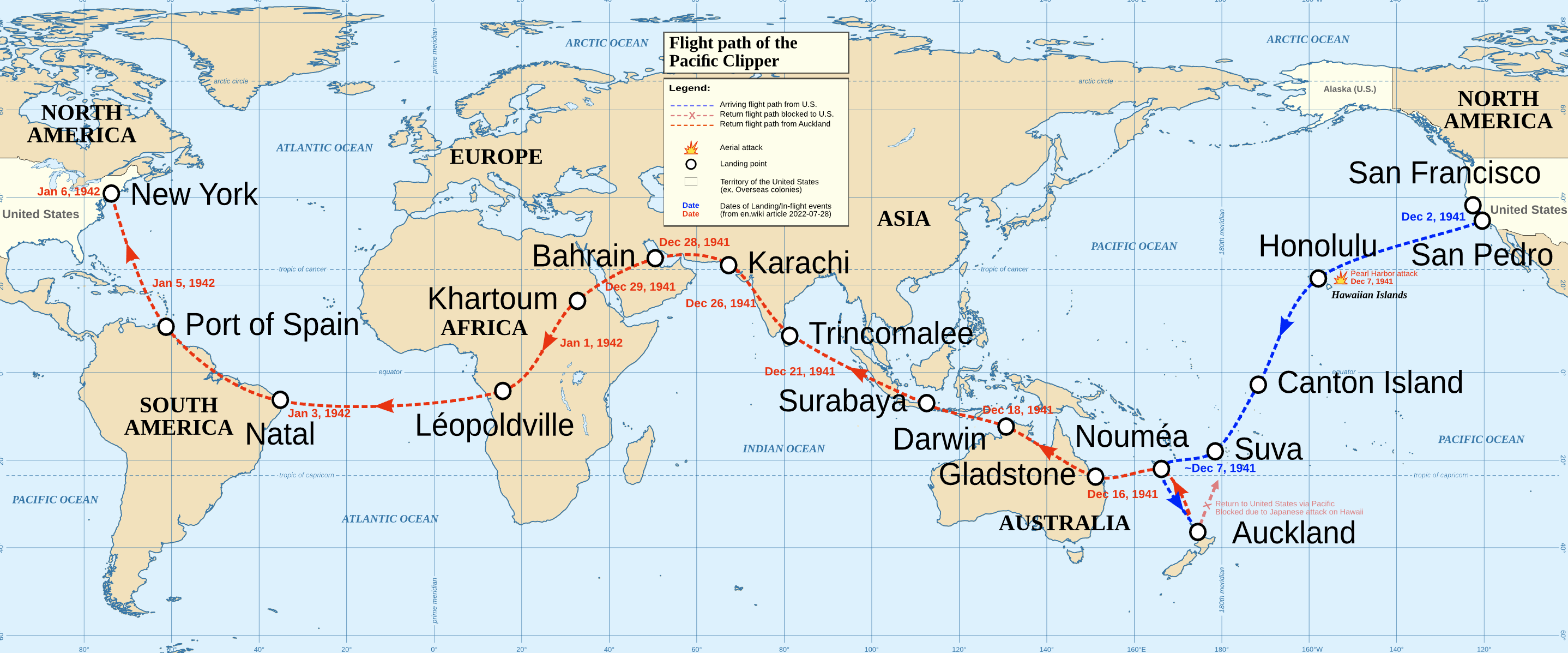
And yet this incredible achievement – of both aircraft and crew – would go almost unnoticed. In peacetime it would have been front-page news across the USA. Not least because Trippe, ever the publicist, would have wanted to take full advantage of the opportunity to have Pan Am front and centre in the news. But America had just been jolted into war. It wanted military heroes now, not civilian ones.
Over the next few years Ford and his crew would be split up, doing their own bit for their country in various flying roles. Soon the only real indication that the trip had ever happened would be the California herself. After making it home, Pan Am granted her the honour of a new name. The Pacific Clipper. But even that clue to her remarkable achievement was short-lived. She would serve the US as a vital long range transport in wartime, under a new crew, setting several more speed and distance records in the process. There could be no question that she was the queen of the Boeing 314 class. Perhaps one of the finest civilian aircraft ever made.
But there would be no long term glory or preservation for her. Post-war, Pan Am embraced the jet age. California (now the Pacific) was retired in 1946. Sold off to Universal Airlines, she was damaged in a storm a few years later and never repaired. No thought was given to preservation. She was a symbol of the old world, not the new. In 1951, after being stripped for spare parts, she was scrapped.
Ford and the majority of the California’s crew survived much longer, but they rarely spoke about what they had achieved. Indeed in the few public (or semi-public) interviews I have been able to track down, it is hard to shake the suspicion that they didn’t like the attention. As I have found with other aircrews of the era, they seemed fully aware of what they had achieved. But they refused to believe it was remarkable: any other aircrew, placed in their position, would have done the same. Perhaps this is true, but I do not think this renders what they did any less incredible. They were normal men, true, but what they achieved was extraordinary.
Whatever the reason, be it the legacy of wartime secrecy or their own modesty, today the story of the California and her crew is almost entirely forgotten. Indeed, I only became aware of their existence due to a chance encounter with an RAF veteran who told me about the time he helped fix a Pan Am flying boat in Bahrain. I thought it was a tall tale. It turned out to be entirely true. I like to think that Bob Ford would have approved. Ford himself died in 1994 at the age of 88. It is one of the great regrets of my life that I am too young to have had a chance to meet him, and to have shaken his hand.
Over the years, I have gradually built up as much research on the flight, from a variety of sources, as possible. If you have enjoyed this series though, then consider the official The Up Front recommendation for more to be buying a copy of Ed Dover’s book The Long Way Home.
Dover had the chance to interview Ford extensively before he died. Where I have included dialogue in this series, it is almost always thanks to Dover including elements of those interviews directly in his book. The book contains some inaccuracies, but these are minor. The result of Dover relying heavily on the memory of Ford for certain events during the flight. A memory that, after so many years, was understandably not perfect. If you notice major differences between the timeline, events or people mentioned in this series to Dover’s book, then this is why.
To understand the future of aviation, one must understand its past. The California Clipper and her crew did something utterly remarkable and unique in the history of aviation. This was why we felt they were the perfect subject for the first of our historical pieces here on The Up Front.
We hope you have enjoyed this series, and found it a good addition alongside our business-focused coverage. If that’s the case, please do let us know.
And, of course, if you have a similar piece of forgotten aviation history you feel we should cover, then do get in touch.
Our work on this series is possible thanks to our Premium and Business subscribers — if you’re not already a member, join us today to support all our independent aviation journalism.