
On 24th April 2026, Lufthansa proudly announced the latest element of its 100th anniversary celebrations. A comprehensive (and overdue) overhaul of its staff uniforms with the tagline “elegance takes flight”.
The uniforms themselves are fine, if indistinct, and lacking the welcome self-confidence present in Lufthansa’s recent anniversary livery.

The problem is the optics of the exercise, and the connotations that they bring with them. These starkly highlight why it is important for companies — and particularly communications teams — to know their corporate history.
Good as they look, the blue-bordering-on-black uniforms are designed by BOSS. A company under its previous identity and founder (Hugo Boss) linked heavily in the public narrative, and indeed on the company’s own history page, with Nazi-era uniforms.
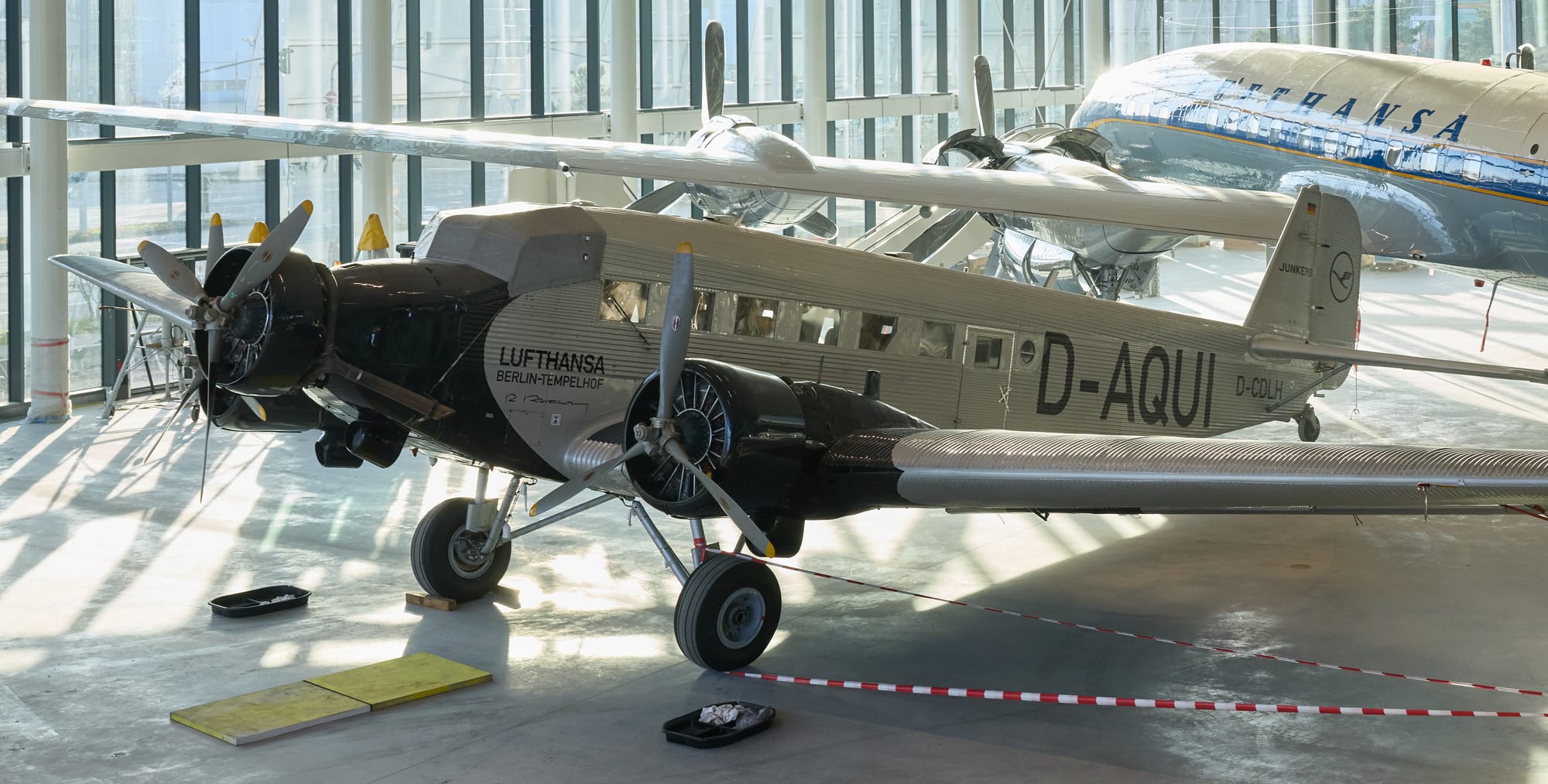
It’s an era with which neither company would want media or customers to associate them. But a link hardly minimised by the staging of the uniform reveal: in front of Lufthansa’s preserved Junkers Ju 52 1930s passenger plane. An image of which — with both corporate logos — accompanied the press release.
![Event with tables ready for attendees, with a large flat-panel screen showing [Lufthansa logo] x [BOSS logo] in front of a Ju 52 with modern Lufthansa markings.](https://theupfront.media/content/images/2026/04/fNewkKUp.jpeg)
It is worth noting, of course, that the livery displayed on Lufthansa’s (rightly, and gloriously) preserved Ju 52 today is not the livery it would originally have worn in service. That livery included a swastika, and would be illegal, in Germany and several other countries, to paint on the aircraft today.
Complicated histories
Until now, Lufthansa has walked a successful line in celebrating its anniversary. The recently revealed heritage livery for its aircraft is genuinely stunning. But the current announcement highlights that perhaps some internal awareness around the complexity of the company's history, and this anniversary, is required.
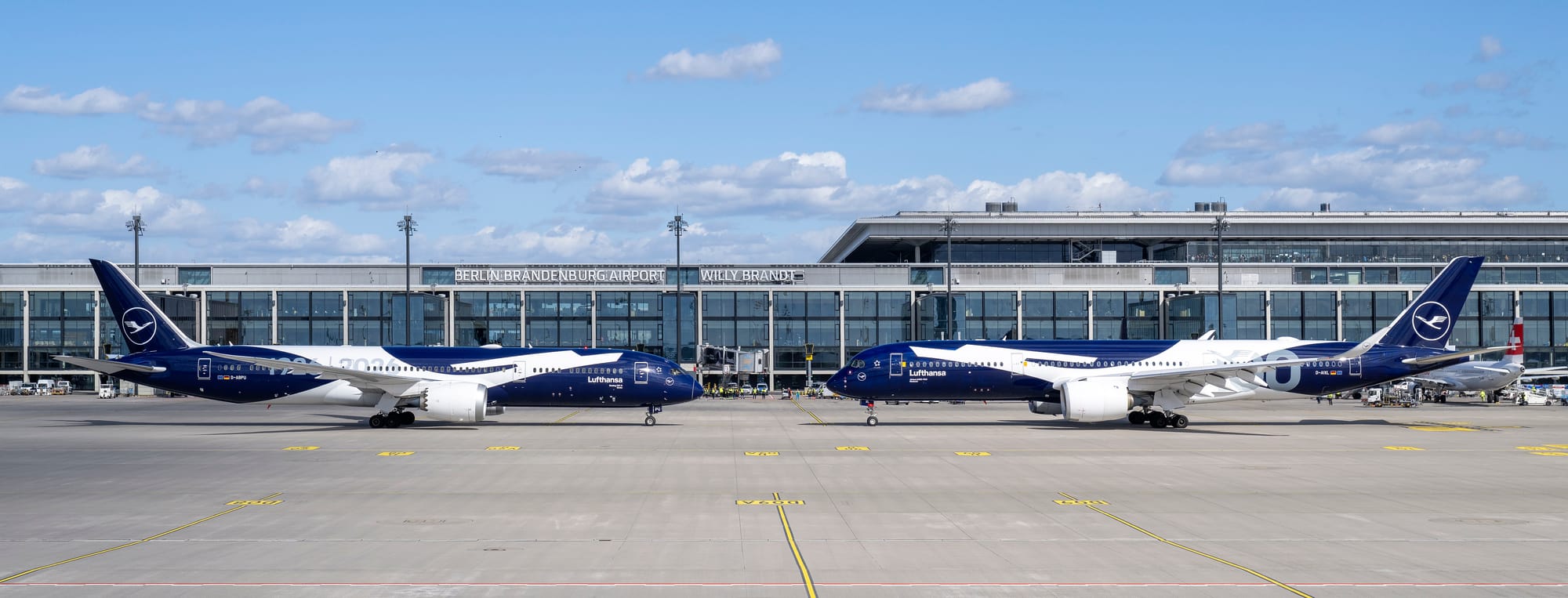
Until less than a decade ago, Lufthansa itself would have told you it was founded in 1951. Indeed, Lufthansa’s own uniform history page begins in 1955. But 1926 — the reason for Lufthansa’s current year of celebrations — has always been the more fundamentally honest date for its foundation.
1926 is when Deutsche Luft Hansa was founded. The reason Lufthansa avoided directly linking the modern company to the original was not that it would date the airline back to 1926. It was that doing so acknowledged a direct corporate connection to the period in Germany history that began in 1933: the rise and fall of the Nazi state.
The Nazi government was quick to recognise the important role Luft Hansa could play in their plans for Germany, and for rearmament. Under their rule, Luft Hansa was not just a flag carrier, it was quickly turned into a centralised arm of the state, Luft Hansa managing director Erhard Milch becoming head of the Reich’s Ministry of Aviation. As historian Lutz Budrass writes:
From then on, Lufthansa served as a front organization for armament, which took place secretly until 1935 - it was an air force in disguise.
During the war itself, Luft Hansa was officially absorbed into the Luftwaffe, the state air force, one reason the modern company traditionally disassociated itself from its former incarnation.
Another reason: under air force control, the operational entity previously known as Luft Hansa was an extensive user of slave labour, including a camp on the site of Tempelhof airport in Berlin. Erhard Milch would eventually be tried and convicted of war crimes at the Nuremberg trials.
Acknowledging the past
Lufthansa is not the only German firm that has to carefully balance its approach to acknowledging its history in both brand and communications. Almost every major German firm that can date its history back to before the war has to do so.
It’s not even alone in aviation. Shake a few rebrands and mergers off Airbus and the name Messerschmitt soon re-enters the picture. Plenty of European, American and Japanese firms have similar elements to their history they don't tend to acknowledge.
The “sustainability” section of Unilever’s website, for example, doesn’t mention that its extensive whaling fleets in the 1930s almost singlehandedly drove the blue whale into extinction (the Nazis were involved with that, too). All in the quest for better margarine.
What all those links mean, however, is that on a pragmatic level Lufthansa (and companies in similar positions) have to be critically aware of their own history. If not, they risk accidentally creating negative associations in the public mind, and in the media, with the worst of it. As one person commented on Bluesky, after seeing Lufthansa’s imagery:
First people to sign up for the newsletter gets the chance to win a free trip to Crete.
Not quite the association with the Ju 52 and its history that Lufthansa hopes for.
Avoiding obvious mistakes
Both Lufthansa and BOSS may see such associations as unfair. Certainly, any link this announcement has created with the darkest periods of both firms’ pasts seems entirely unintentional.
In BOSS’ case, it is doubly unfortunate, as Hugo Boss (the man) did not, in fact, design the look of the SS’ black uniforms, nor those for the NSDAP, SA, Hitler Youth or other arms of the Third Reich. That was mostly the work of Karl Diebitsch and Walter Heck. What BOSS themselves have acknowledged, though, is that the company made an awful lot of those uniforms. Like Luft Hansa, they were also an extensive user of slave labour.
That the association between Lufthansa uniforms for the 2020s and Nazi uniforms from the same manufacturer in the 1930s and 1940s can be made, however, seems entirely down to a lack of historical awareness on the part of those involved in how this partnership and announcement were crafted.
Moreover, it is a self-inflicted wound that could easily have been avoided. Lufthansa in particular will need to learn from this. Celebrating its past also means owning that past, and understanding it. In doing so, it can avoid future blunders, which can and will derail the celebrations it rightfully celebrates. A greater awareness of its past can also unlock ways of reconnecting positively with the darker elements of it along the way.
There are examples to be found elsewhere.
An unlikely helper
In 1995 the Bletchley Park Trust, custodians of the home of Britain's critical codebreaking department in the Second World War, received an unexpected gift. The plans for an original Turing Bombe, one of the first true computers. One that Bletchley Park had used to break German codes and turn the tide against the Nazis.
The trust decided to use those plans to create a modern replica of this legendary machine — a machine of which no original examples survive today. It would take them almost ten years to complete, with volunteers scouring the UK and Europe for long-forgotten electronic circuitry and parts.
One part in particular, however, proved impossible to find. It was a specific electrical relay of which over 100 were needed. No matter how wide the volunteers cast their net, they could find none. It simply wasn't manufactured anymore and no surviving examples seemed to exist.
And then, one day, the project team were contacted out of the blue by a company. That company had heard about the volunteers' search. They said that they had manufactured similar parts themselves at the time when the original Bombe was made. They didn't make those parts any more, but they were prepared to reach out to their own network of retired engineers to find someone who remembered how to do so.
In the end it took more engineering time, effort and money than the company expected, but they succeeded. The Bletchley volunteers were presented with the parts they needed to complete their replica of one of the most important machines in the history of the British war effort. They asked for no money in return. They felt a duty, they said, to help preserve the memory of the machine and its historical role.
In gratitude, the volunteers offered the company the chance to feature prominently alongside other sponsors whenever, and wherever the project was mentioned. The company declined, they didn't feel it was appropriate. They asked only that they be allowed to print their name, in small letters, on the reverse of the part — where only eyes deliberately looking for it would see. That way the efforts of the company's employees, and their retired engineers, would be acknowledged.
Which is why, if you know where to look on the replica British codebreaking machine that has pride of place at Bletchley Park today, you will find tiny logos for a very large German firm.
Siemens AG.
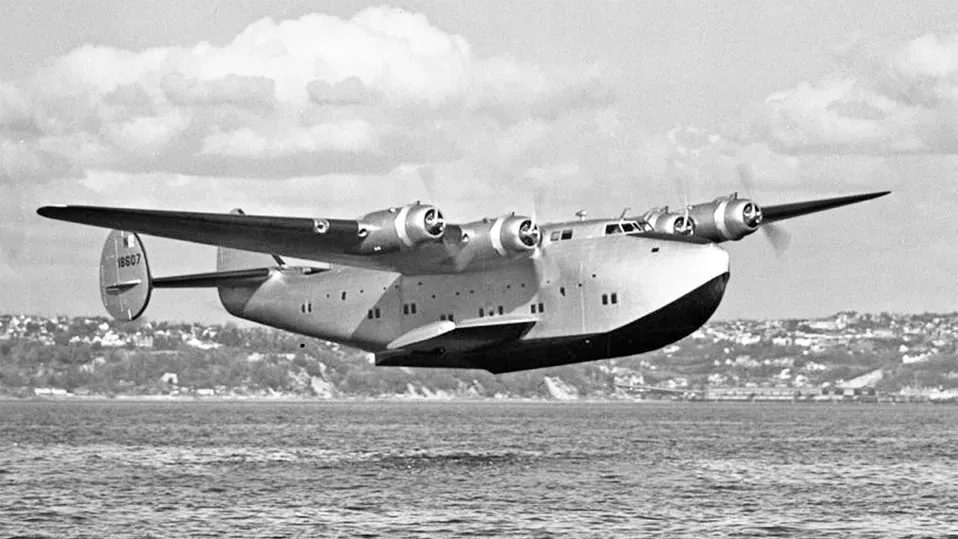
Next in our history features: In 1941, the Japanese attacked Hawaii, leaving Pan Am flight 18602 trapped the wrong side of Pearl Harbor. To get home, its civilian crew would have to do something incredible: circumnavigate the world.