
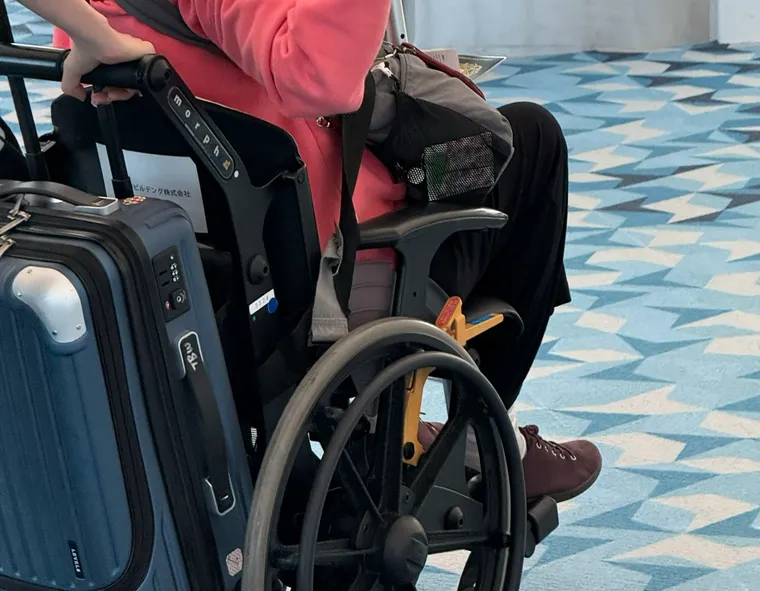
“They Get Wheeled on Flights and Miraculously Walk Off. Praise ‘Jetway Jesus,’” reads a headline in The Wall Street Journal from late last month. The WSJ’s Natasha Dangoor, whose previous headline was “Young Daters Confront a Relationship Killer: The ‘Swag Gap’”, is the byline responsible.
It’s paywalled, and I would normally respect that, but this article deserves no respect. Read it on archive.is if you want, but there’s nothing new here apart from the regrettable involvement of TikTokers on the one hand, and Dangoor’s choice to use needlessly yet pointedly disrespectful language like “Mario Karting to the front of the line” on the other.
The crux of the news here, Dangoor writes, is that judgmental passenger Carlos Gomez counted 25 passengers using wheelchairs on a flight from Guadalajara. But if Dangoor applied even a modicum of thought — let alone any subject-matter expertise — to her article, that number is roughly how many people should, in a general population, need wheelchair assistance.
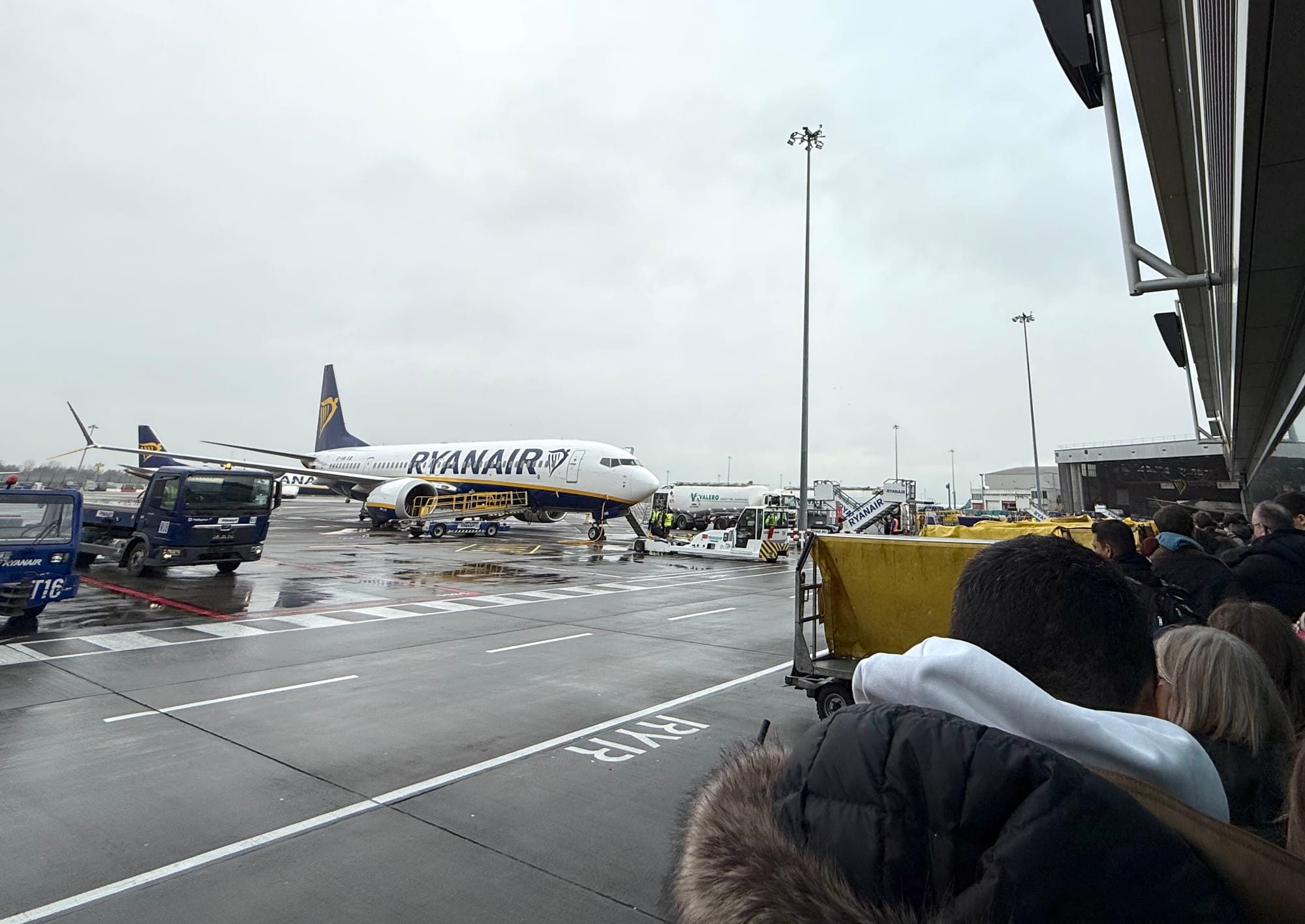
Guadalajara’s departure board suggests that most of its traffic is on low-cost carriers Volaris or Viva, using A320 or A321 family aircraft. AeroLOPA suggests that the average seat count on Volaris and on Viva is somewhere between 180 and 240, so let’s say 200 at the lower end. That means that 25 wheelchair passengers would be roughly 12 percent of the people on an example aircraft.
That is almost exactly the percentage of US adults — 12.2 percent — who, the CDC said in July 2024, “have a mobility disability with serious difficulty walking or climbing stairs”.
That makes 25 passengers a statistically average number of passengers on an average low-cost narrowbody who might need to use a wheelchair in an airport — even before taking into account the greater likelihood for disabled travellers to request assistance on low-cost airlines, which use airstairs rather than jetways more frequently.
If only the Wall Street Journal were competent in basic statistics, and used journalists with elementary knowledge of the aviation industry to write its coverage of aviation. Perhaps none were available — or willing to put their name to this tripe.
But let’s dive deeper, because the underlying “wheelchair scam” and “Jetway Jesus” narratives are pernicious and persistent.
The “wheelchair scam” clickbait conveniently ignores the reality of the way the modern airport experience has been designed to be hostile to passengers
This WSJ piece is neither insightful nor innovative in its reporting: it followed shortly after a round of more “wheelchair scam” clickbait in November and British tabloid manufactured outrage from a former UK prime minister.
Let’s get one thing out of the way first. There is absolutely no way for an observer to determine whether a wheelchair user is “disabled or not”, “faking it”, or otherwise judge their needs.
Moreover, physical disabilities are invisible. Many wheelchair users can walk for short distances but not for the often significant distances inside airports. Many disabilities are not predictable in their specific impact on mobility from day to day. And the airport experience itself is not predictable in what mobility barriers or obstacles are presented to travellers from airport to airport, airline to airline or flight to flight.
Sure, a very small number of people out there abuse wheelchair provision — egged on or not by TikTokers chasing clout — as blind accessibility advocate Justin Yarbrough notes.
“I’ll be the first to acknowledge that there are people out there using disability assistance to game the system and that doing so takes resources away from passengers that need them,” Yarbrough tells The Up Front. “However, articles like the recent WSJ piece and other hot takes over the years almost always fail to acknowledge that the extent of people’s disabilities can vary wildly from person to person, even for people with the same type of disability.”
For example, Yarbrough explains, “maybe someone only has trouble if they have to walk long distances or up stairs, but can easily handle other situations. As an example of this, I twisted my knee years ago while doing guide dog training. While I was recovering, I could handle walking up stairs or ramps fine but had problems walking down them.”
Similarly, my parents, 84 and 79 years old, are still keen to travel, and are still active retirees, but for the last few years have requested wheelchair assistance whenever they fly. Why? Well, last time they didn’t do so, on a simple nonstop trip between Birmingham and Gran Canaria, my mother’s iPhone logged 5 kilometres (3 miles) of walking, plus the need to use airstairs at the aircraft door. And that was without any delays or other irregular operations.
Being physically able to walk a 5k should not be a prerequisite to be able to travel by air.
But from the layout of terminals to underprovisioning of processing capacity at checkin, bag drop, security and boarding — indeed, it has been years since I saw a gate area with adequate seating for the passengers awaiting an aircraft — airports demand a needlessly high level of ability to stand, walk, and wait.
Meanwhile the entry-level assistance that airports and airlines offer is the use of a wheelchair, using special service request codes. Of these, the most common are:
- WCHR: wheelchair assistance to the gate: passenger is able to walk a short distance including up or down stairs
- WCHS: wheelchair assistance to the door of the aircraft: passenger cannot walk up or down stairs, but can walk to their seat within the aircraft
- WCHC: wheelchair assistance to their seat: passenger cannot walk within the aircraft, and needs an aisle chair to get to their seat
If 12.2 percent of US adults, as the CDC says, “have a mobility disability with serious difficulty walking or climbing stairs”, that suggests they would benefit from assistance of the WCHS code type. If more than one in ten passengers would need assistance to be able to access air travel, then it’s time to change the design of what happens on the ground.
The insulting “Jetway Jesus” myth returns, but it’s time for a miraculous conversion on the industry’s point of view
Ever since I was a small airplane-mad child avidly reading much-thumbed copies of glossy airliner magazines, I remember reading snide commentary from able-bodied people observing the phenomenon of passengers who used wheelchairs to get to the aircraft but would exit the aircraft on foot.
This is mocked as, variously, the “miracle of flight” or “Jetway Jesus”, with the supposed narrative being that these wheelchair-scamming fakers aren’t really disabled, just playing the system.
But to anyone with a modicum of understanding or a shred of consideration, there are any number of reasons why a passenger might use a wheelchair to board the aircraft but not to deplane:
- the passenger might be in pain, including from sitting for a long period of time in a small, immovable airline seat, and movement might be better than waiting seated until the entire plane empties out
- the passenger might have a disability where being bumped into by other passengers deplaning could make it worse
- the passenger might be arriving at a level jetway, and/or at a smaller airport they already know is accessible to them
- the passenger might be able to walk to arrivals to depart the airport quickly, but not to stand in security and gate queues for a long time
- the passenger might have experienced being left behind on an aircraft when assistance does not turn up, and have judged walking off to be the option of least risk
- the passenger might need to use the lavatory, not least since there is no regulatory requirement for lavatories on narrowbody flights to be accessible
- the passenger, if seated in an aisle seat, might be asked to stand up and move in any case by their middle/window seat neighbours, so walking off the plane might not be a significant additional effort at that point
- once again, not all disabilities are the visible or the same, and no random passenger or flight attendant observer on board an aircraft can tell whether a passenger is “faking it”
Fundamentally, as I wrote a few weeks ago in The Up Front Update #25, there is no provision that passengers can routinely arrange between absolutely nothing and the WCHR code for “wheelchair, can use stairs”.
There is also no way to request assistance only for departure (a process involving an indeterminate and indeterminable amount of standing, walking and waiting) if that is the portion of the journey about which a passenger has concerns.
There is also, often, a frankly racist element to this myth. Flights to and from India, Pakistan and Bangladesh are often quoted here as having high numbers of passengers requesting wheelchair assistance. Yet these are some of the biggest markets for diaspora VFR — visiting friends and relatives — travel in the world. It is very common for older and elderly relatives both to travel from this region to visit expatriate family members overseas, and for older and elderly expatriates living overseas to return to the region to visit family and friends there.
Often, geopolitical and airline network realities mean that these passengers need to connect, including at some of the largest hubs airport in Europe or the Middle East. It’s understandable if they — or their younger relatives who might be helping with travel planning — might feel concerned at having to navigate the experience without assistance.
That experience is likely not just a single flight from (say) Sialkot or Thiruvananthapuram on an airline whose working languages are not their first — or even second or third — language, but where there might be just one or two language-speaking flight attendants. on the plane.
It’s also the transit at enormous hubs like Frankfurt, Amsterdam or Dubai, which are unlikely to have language facilities in not just Hindi (528 million native speakers) or Bengali (97 million native speakers) but Marathi (83 million native speakers), Telugu (81 million native speakers) or the nearly three dozen languages with more than a million native speakers in India alone.
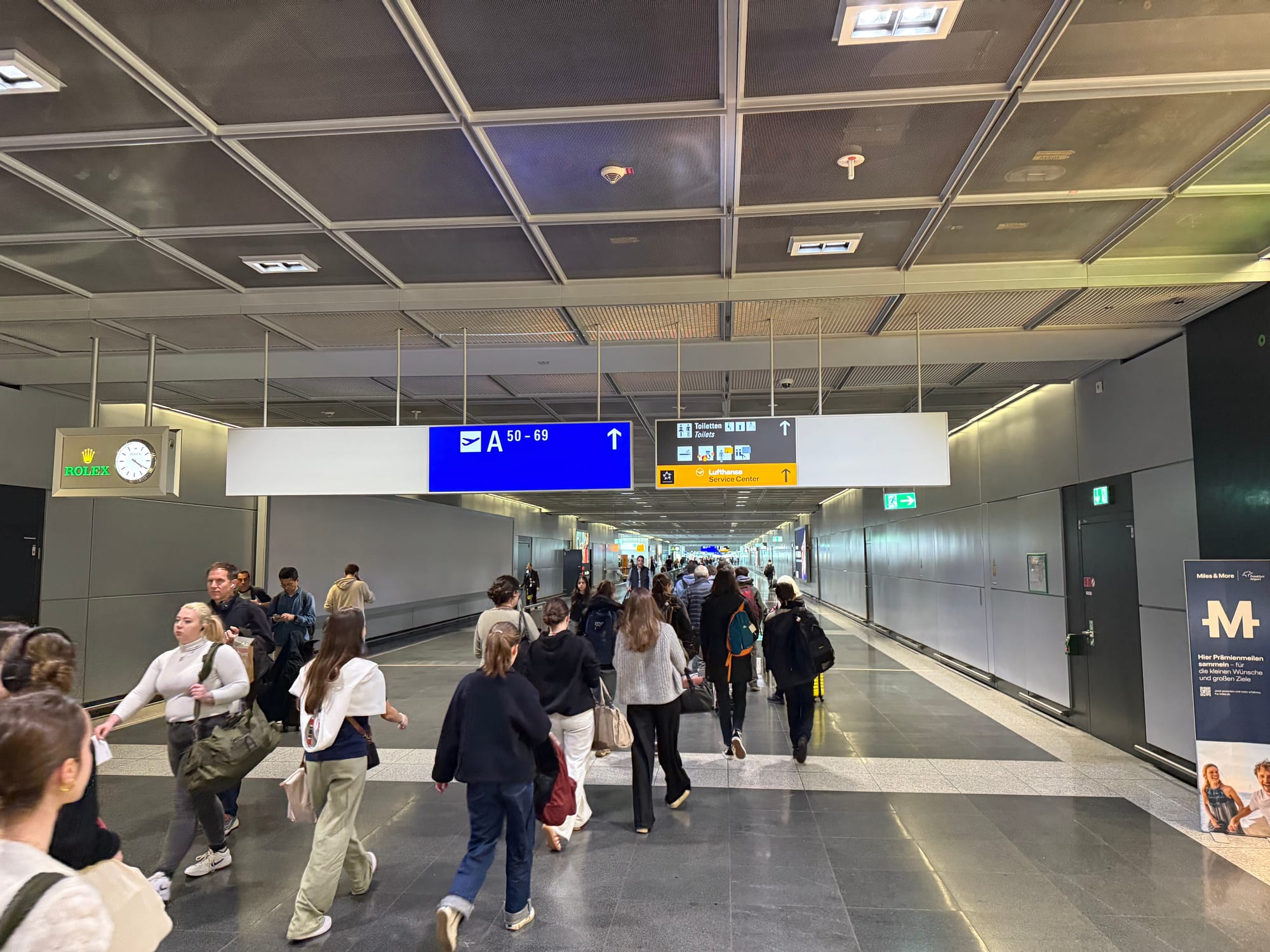
And then it’s the onward journey to, say, the UK, Canada or USA, perhaps on an entirely different partner airline, where it’s unlikely that there will be any relevant language-speakers onboard, and where border queues and processes on arrival for non-citizens are infamously long and arduous.
If a nonstop between two relatively small European airports required a 5k of walking and waiting, how much more would a connection across a mega-hub require? What about two connections? What about the ability required to be able to queue for hours and hours at immigration?
Airlines and airports in particular need to move beyond stigmatising passengers to create better accessibility — and assistance options
It’s all too common for industry executives like newly departed Frontier chief exec Barry Biffle to cite “massive, rampant abuse” of wheelchair services at industry events without providing evidence to back up their claims, or indeed being challenged.
These prejudices and assumptions are unkind, unhelpful, and, indeed, unproductive.
Returning to our discussion of that WSJ article, “the other, and bigger, issue with articles like this,” says accessibility advocate Justin Yarbrough, “is that they create an environment where people who have legit invisible disabilities may be hesitant to take advantage of services they need for fear of being judged by airline staff or their fellow passengers.”
The Carlos Gomezes of this world, snapping intrusive photographs of wheelchair users, are creating exactly that environment. So are the Wall Street Journals — and other media — who give them airtime for their prejudices.
The result, Yarbrough says, “outside of the fear or anxiety that may cause, it’s possible people may wind up hurting themselves or others because they felt pressured to push themselves beyond their capabilities. At the end of the day, the folks who are judgmental about people using passenger assistance really just need to mind their own business because they don’t know that other person’s story.”
Rejecting the all-too-pernicious trend of passenger shaming is important on an individual level, but if the aviation industry wants fewer passengers to need to use wheelchairs to access its experiences, it should make those experiences more accessible — and offer more types of assistance that do not comprise wheelchairs.
Improving processing time, reducing queueing, and offering adequate seating is a must. So are accurate, predictable estimates of the distances required. So too would be the regular, dependable provision of buggy services. So would designing airports and terminals to minimise, not maximise, walking: every time I am in Heathrow Terminal 5, forced to go out of my way to do a loop of both floors of retail by the design of the passenger flow, I am reminded of the genuinely hostile design of this terminal, and it is not alone.
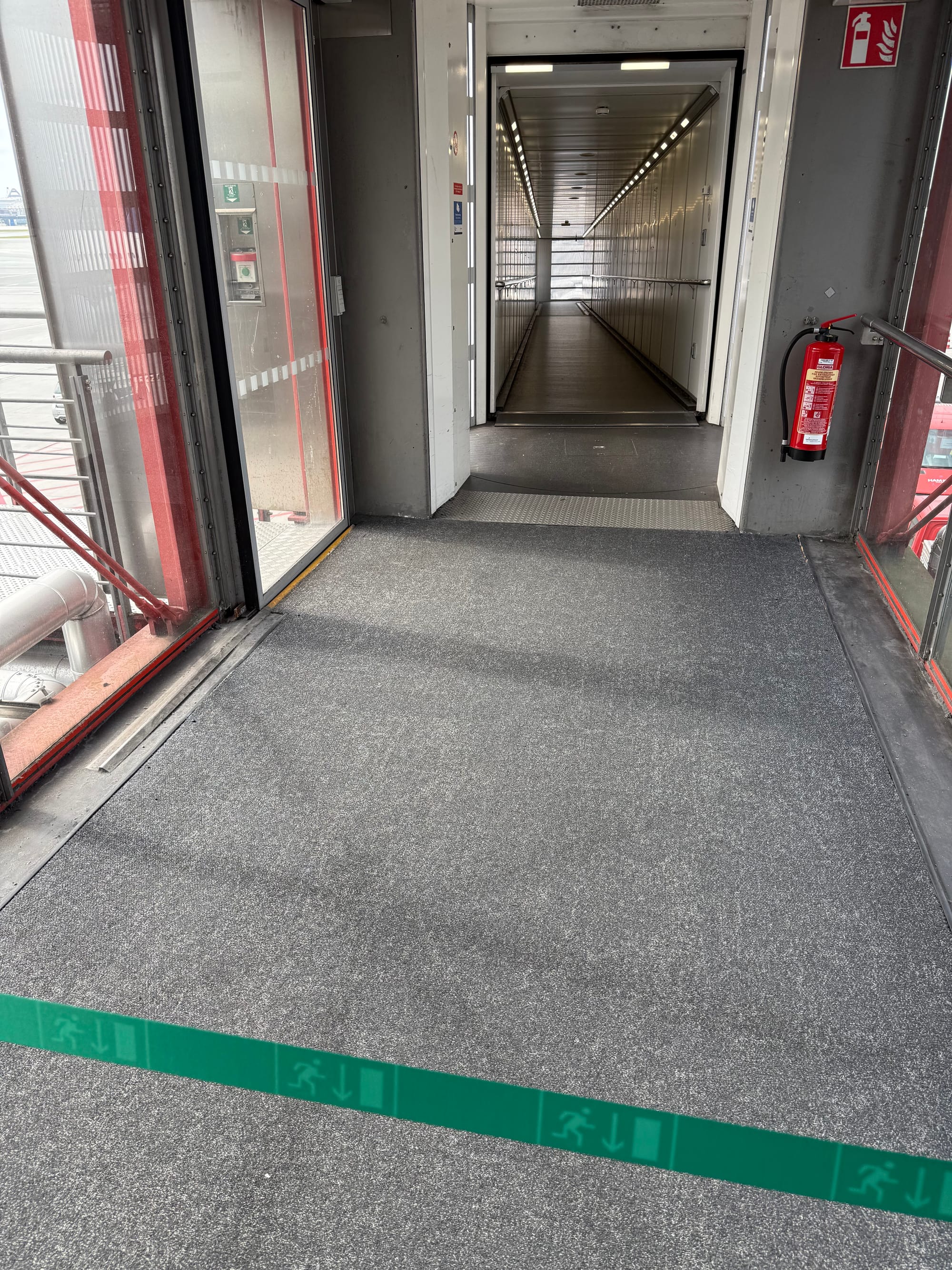
But more assistance options could be beneficial both for passengers and for the industry. Many airlines already offer assistance for younger passengers, and indeed I travelled as an unaccompanied minor for quite a bit of my childhood. Yet there is no option for older or elderly travellers to request what we might call “unaccompanied senior” assistance. Nor is there an option for passengers whose mobility falls into the wide intermediate space between “daily wheelchair user” and “not always fully able to walk a 5k” to ask for a sort of “escorted traveller” option.
For these, a passenger might be:
- collected in a small group from check-in and assisted through what might be a confusing terminal or terminals
- processed through security without having to queue long distances or stand for a long time
- transported to the gate area and/or premium lounge by buggy and provided with priority seating
- boarded directly to the aircraft without using stairs or having to stand for lengthy periods in jetways in a “boarding-not-boarding” situation
- assisted once more through any connection
- on arrival, assisted off the aircraft and through immigration, customs and other formalities without, again, long queues or needing to stand for a substantial period
That would match the unaccompanied minor provision offered by many airlines. It would offer passengers who do fall into that intermediate mobility space a dignified and reassuring travel experience. It would reduce the amount (and cost) of wheelchair provision for airlines and airports. And it would go a long way towards showing an understanding of the situation by the industry — and a willingness to take concrete, effective action to make it better.
We established The Up Front with a strong principle that all our feature articles on disability and accessibility in air travel — including this one — should be free to read for all. We encourage you to share it with your network, and thank our subscribers for making this work possible.
