
The focus on making aircraft interiors, seats and cabins more accessible to disabled passengers and travellers with reduced mobility is growing, as awareness-raising, industry attention — and in some cases regulatory impetus — means that it’s less acceptable than ever before that flying remains inaccessible to many passengers.
From getting onto the aircraft, being seated, using the seat, accessing a lavatory, being able to understand announcements, and beyond, there is welcome progress towards making more accessible products more visible on Aircraft Interiors Expo stands, in corporate presentation materials, and across the industry.

But this progress is by no means guaranteed, not least in the time of the pernicious myth of “Jetway Jesus” about disabled passengers. Indeed, one high-profile accessibility initiative — the Air4All wheelchair securement system, one of the innovations previously at the vanguard of pushing the industry forward — was disappointingly absent this year. More on that shortly.
On the positive side, the Accessibility category in the Crystal Cabin Awards, new for last year’s cycle, was strongly contested across the spectrum of industry players: from airframers to tier 1s, materials suppliers, assistive device manufacturers, and beyond.
There’s also a welcome and growing trend within the industry to engage with disability advocates, accessibility advocacy organisations, and disabled passenger travel groups themselves, under the “nothing about us without us” principle.
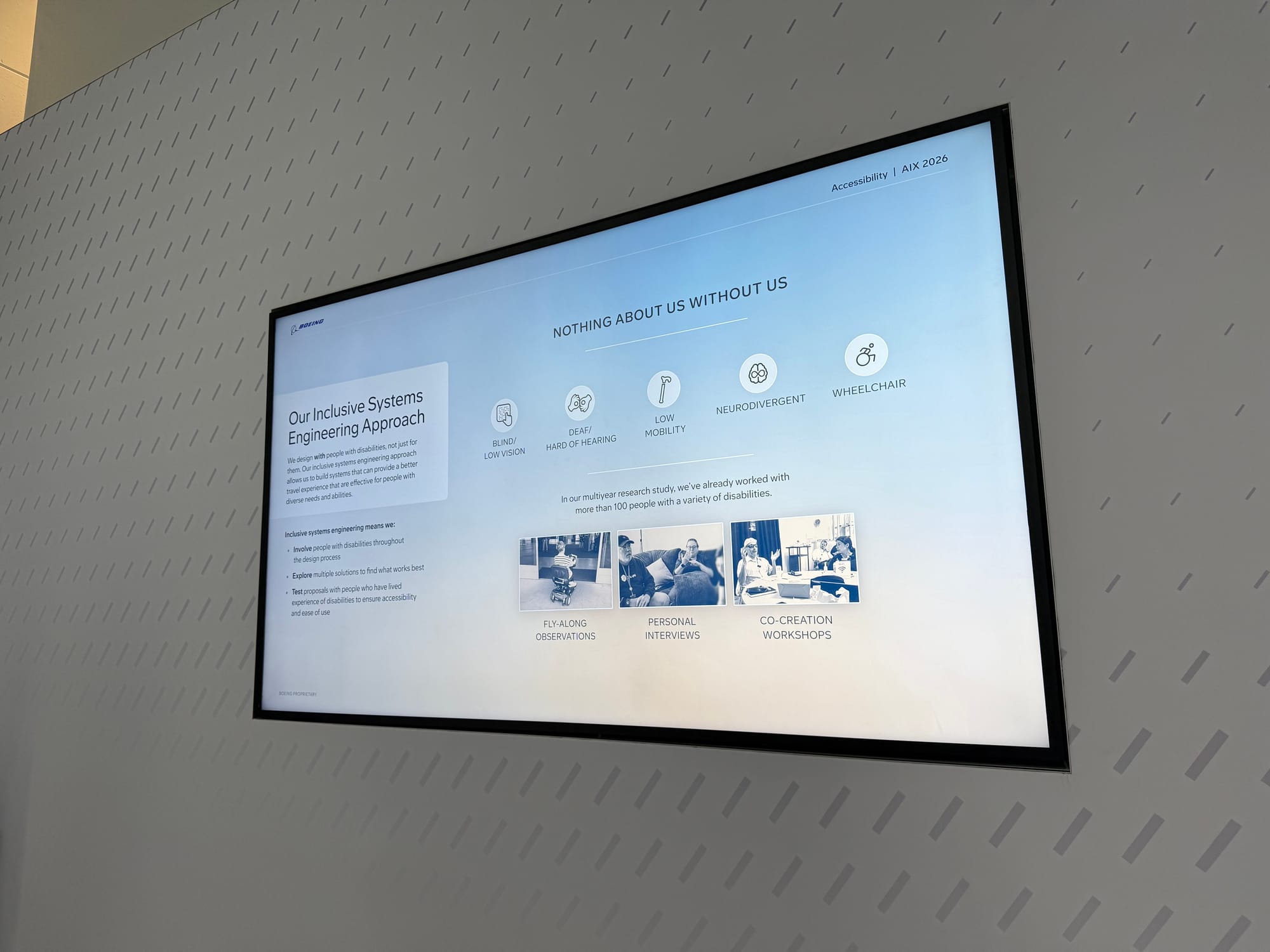
It’s crucial, though, that this engagement be more open and more specific, naming the groups with which a supplier is engaging, in order to demonstrate that they are taking a wide and inclusive view of accessibility and disability.
It is too easy to fall into the trap of engaging with a slick operation that omits the inclusion of real people with disabilities, leading to box-ticking exercises that miss genuine opportunities.
Reflecting on this year’s AIX, The Up Front is tracking four primary categories in accessibility innovations and products:
- physical access to and within the aircraft, including powered wheelchair securing positions
- accessible lavatories and washrooms
- accessible seat controls, including voice controls
- transcription and translation of onboard announcements and information
First, though, some wider strategic perspective spanning those categories.
In some cases, especially around voice seat controls and transcription/translation, we saw multiple suppliers presenting these innovations firstly as a technology play — using the vague and unhelpful AI buzzword — rather than as an accessibility move, where accessibility was the primary driver of the work.
Presenting a voice control for seats as an AI innovation puts the unpleasant idea of a cabin of people shouting “Alexa, recline my seat!” or “Siri, deploy tray table!” in mind. There’s no need to avoid presenting these accessibility improvements as accessibility improvements, and slapping an “AI-powered!” sticker on them is not just unhelpful but, in this case, counterproductive.
A wider trend is the accelerated iterative cycle for accessibility innovations, specifically the faster speed driven by suppliers and manufacturers taking feedback from disabled passengers and advocates who are engaging with the industry and working with it swiftly.
As one example: at last year’s show, seatmaker Unum observed accessible aviation and inclusion consultant Mary Doyle, a wheelchair user, self-transferring into their business class seat. As a result, they developed 3D-printed grab bars that hook onto the top of the seat, presenting them at this year’s show for feedback and further iteration.
Speaking with The Up Front during and after AIX, Doyle’s conclusion is that more work is needed to make the process more accessible, but that it is a strong net positive that supplier approaches and prototyping technologies mean the iteration-feedback cycle is shortening — and that there is more scope to shorten it further.
One last note: the AIX (and WTCE) event is now so large and so expansive that it is physically impossible for us to have visited, seen and experienced every accessibility innovation.
After speaking with accessibility advocates and disabled travel specialists during and after the show, we specifically want to note a number of products that we didn’t see (but heard much about) around improving the provision of aisle chairs on aircraft, as well as several products on show to that end.
We also heartily recommend Mary Doyle’s analyses of AIX showfloor products on LinkedIn, as well as John Morris’ WheelchairTravel.org for further reading.
Physical access to and within the aircraft, including powered wheelchair securing positions
A key accessibility goal is enabling disabled passengers, especially wheelchair users, and most especially the users of powered wheelchairs, which are frequently damaged by airlines by being transported in cargo holds, after their users have transferred (or indeed been transferred) to aisle chairs and airline seats.
Boeing returned to AIX to show updates to the company’s ongoing work here, and indeed to add further elements to it.
In terms of updates, the high value cargo container — developed specifically for protecting wheelchairs, but with applicability elsewhere — returned in an upgraded iteration.
This year, Boeing specifically made note of sizing it for the 737 hold, which is the most space-constrained among mainline aircraft and which is, unlike the A320 family or widebodies, not able to take standard ULD cargo containers. With little progress on the rate of damage to wheelchairs loaded into holds, progress here is a positive.
Also at Boeing: a remarkably low-tech yet high-impact ramp to enable passengers in wheelchairs, or who are unsteady on their feet, to bridge the often sizeable gap from jetway to the aircraft door.
This feels like one of those almost painfully obvious solutions to plainly visible problems that nonetheless requires a good deal of work to implement properly, while also highlighting an element that should arguably belong within the realm of airport accessibility — why is every jetway not equipped with one as standard? — yet which is being taken up on the interiors side of the industry to mitigate inaction by others.
In perhaps the most welcome accessibility news of the show, Boeing is also working together with Airbus to improve and to standardise visual and tactile signage, placards, and other wayfinding elements.
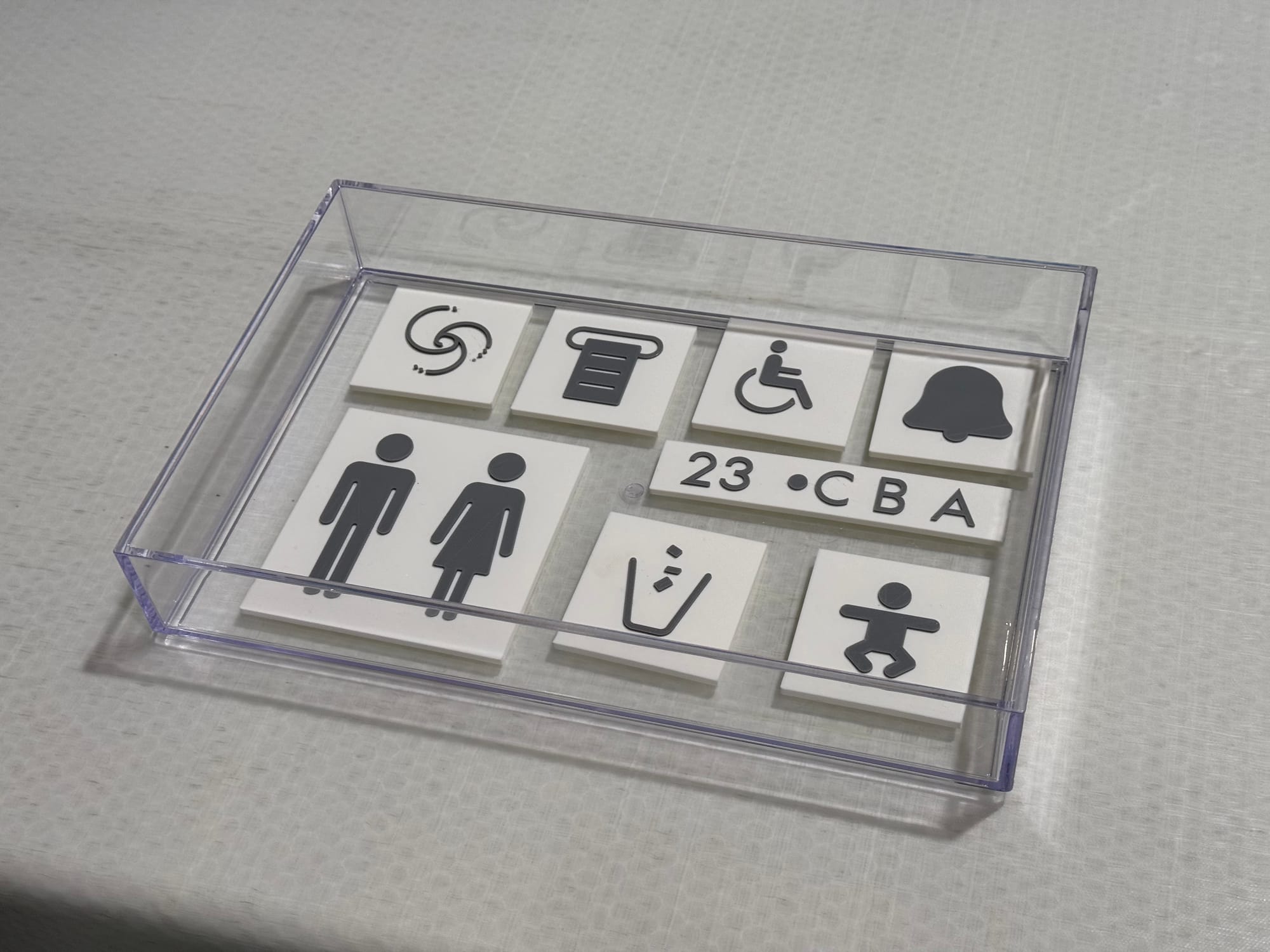
This work is really fascinating, with some signage and symbology more complex than others: how do you represent a lavatory flush function both for visual and tactile users, for example? Early feedback from blind users and people with reduced visual acuity suggests that curves sweeping towards a central element is most clear, and research is ongoing.
Moving over to Airbus itself, the European airframer made accessibility a big part of its stand and indeed its media presentation this year. To start, Airbus briefly mentioned digital wayfinding for blind and low vision passengers within the aircraft using a passenger’s personal device here, which it is working on with Emirates.
![Airbus Slide. Headline: Airspace Cabin Accessibility. Sub-head: Blind & low vision: ACCESS digital & tactile placards. Left-hand text: Access vital journey information autonomously via digital applications on personal devices. Emirates and Airbus collaboration to make air travel more accessible through digital services. [cartoon of person with white cane using a phone to find their seat] Right-hand text: Uses raised characters, tactile symbols, and high contrast for seat numbering and lavatory controls to aid wayfinding for all. Develop a common industry standard for non-regulatory placards. [images of raised signage placards including a non-active wheelchair user, numbers, and person with arm outstretched]](https://theupfront.media/content/images/2026/05/Airbus-accessibility.png)
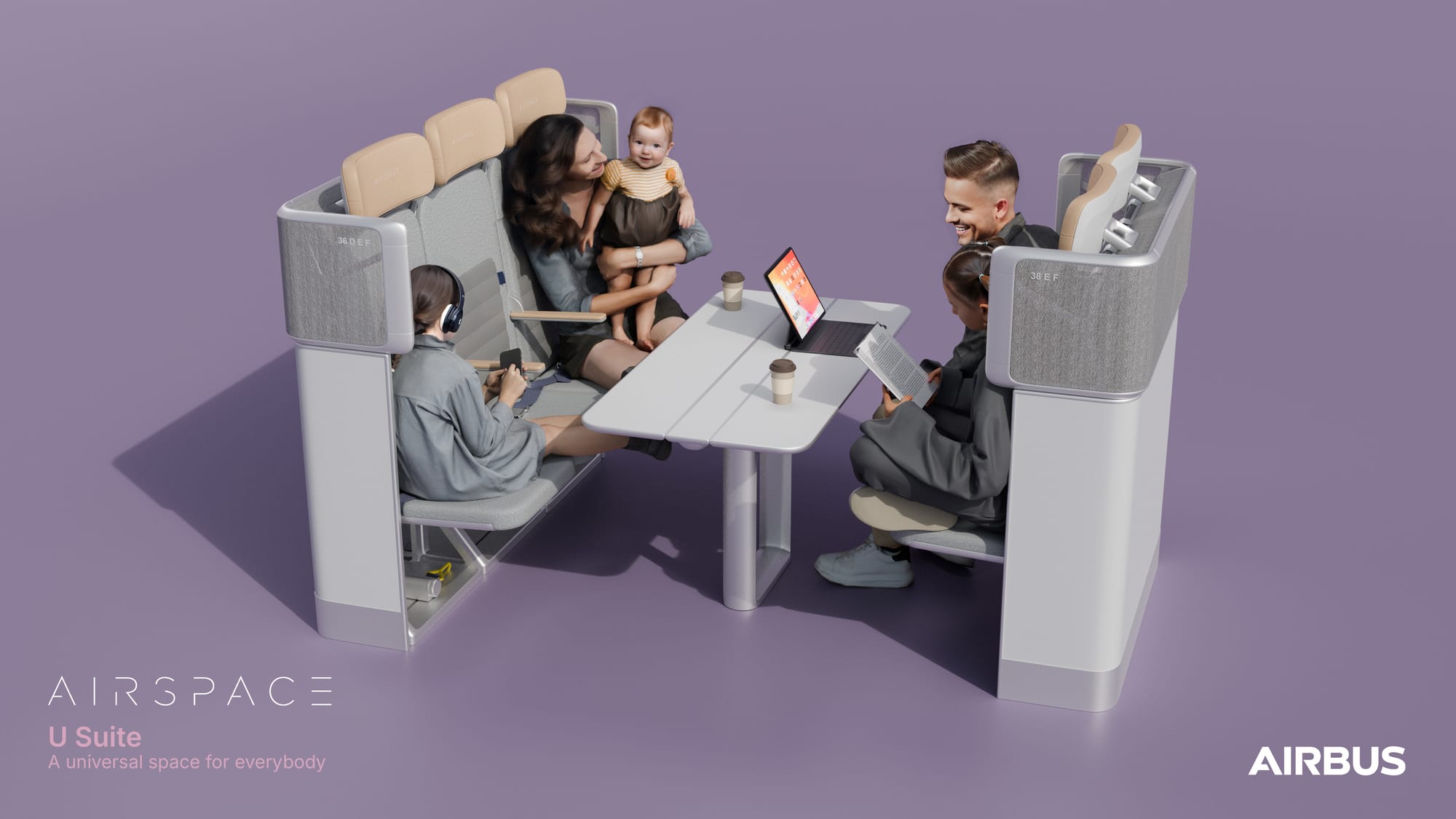
Airbus’ U Suite combination wheelchair securement system and group seating zone (a Crystal Cabin finalist developed in partnership with Ipeco and AMF-Bruns) went from a greenscreen rendering in February to flying on the testbed A350 in March to AIX stand in April — quite the acceleration.
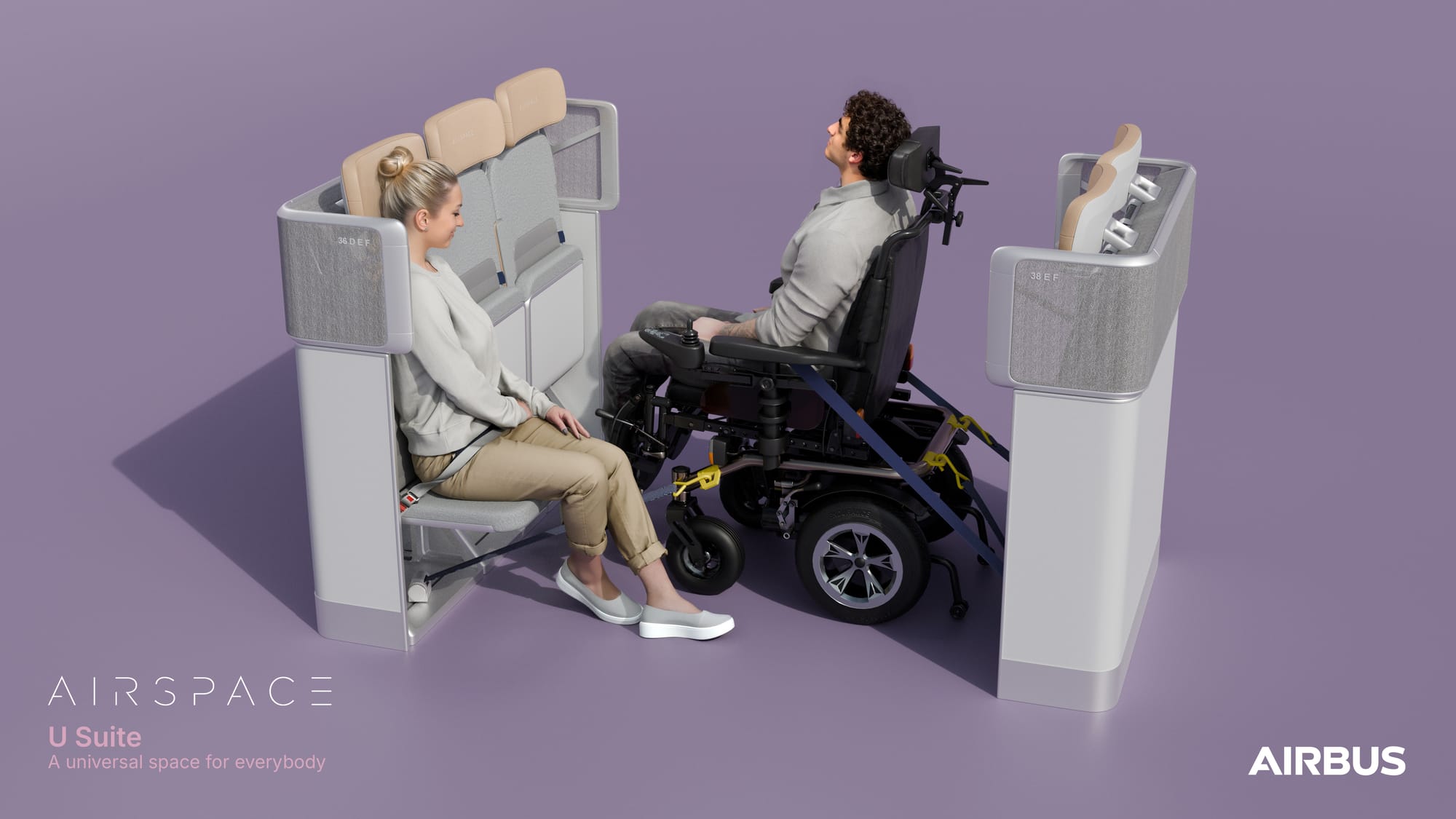
Read accessible travel advocate and wheelchair user John Morris’ analysis on WheelchairTravel.org for first-hand expert thoughts on the product itself, but questions remain over Airbus’ frankly bold claim that removing 8-9 standard economy seats from a cabin, to replace them with a maximum of 5 tip-up seats, is revenue neutral.
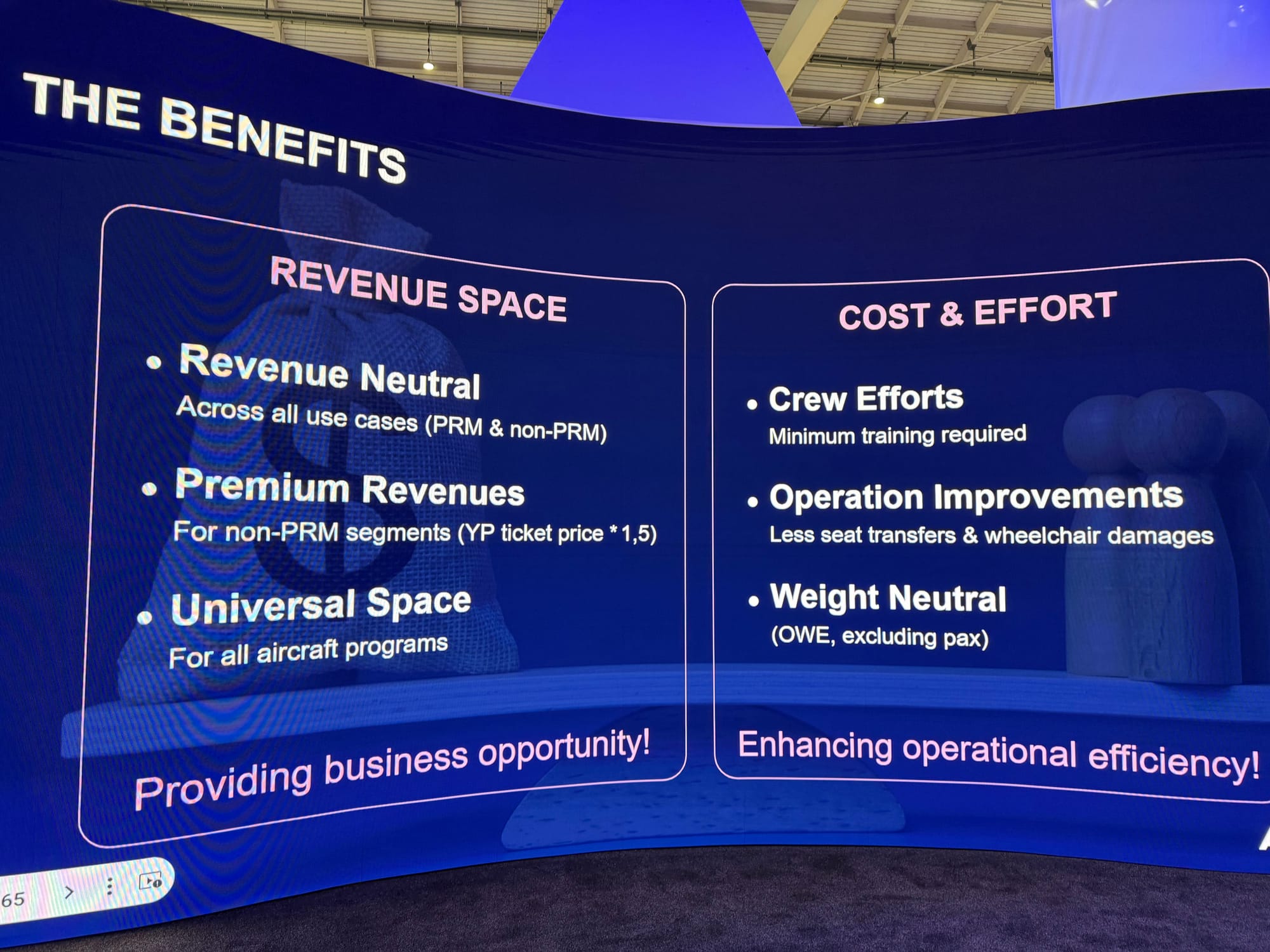
LOPA questions aside, disabled travellers we spoke with around the event also noted the issue of contested use of multi-function spaces such as this one aboard other means of transport like bus and rail.
All too often, wheelchair users, who should and often legally do have priority for the use of these spaces, are denied them in practice by other passengers with prams or luggage, with little help from staff.
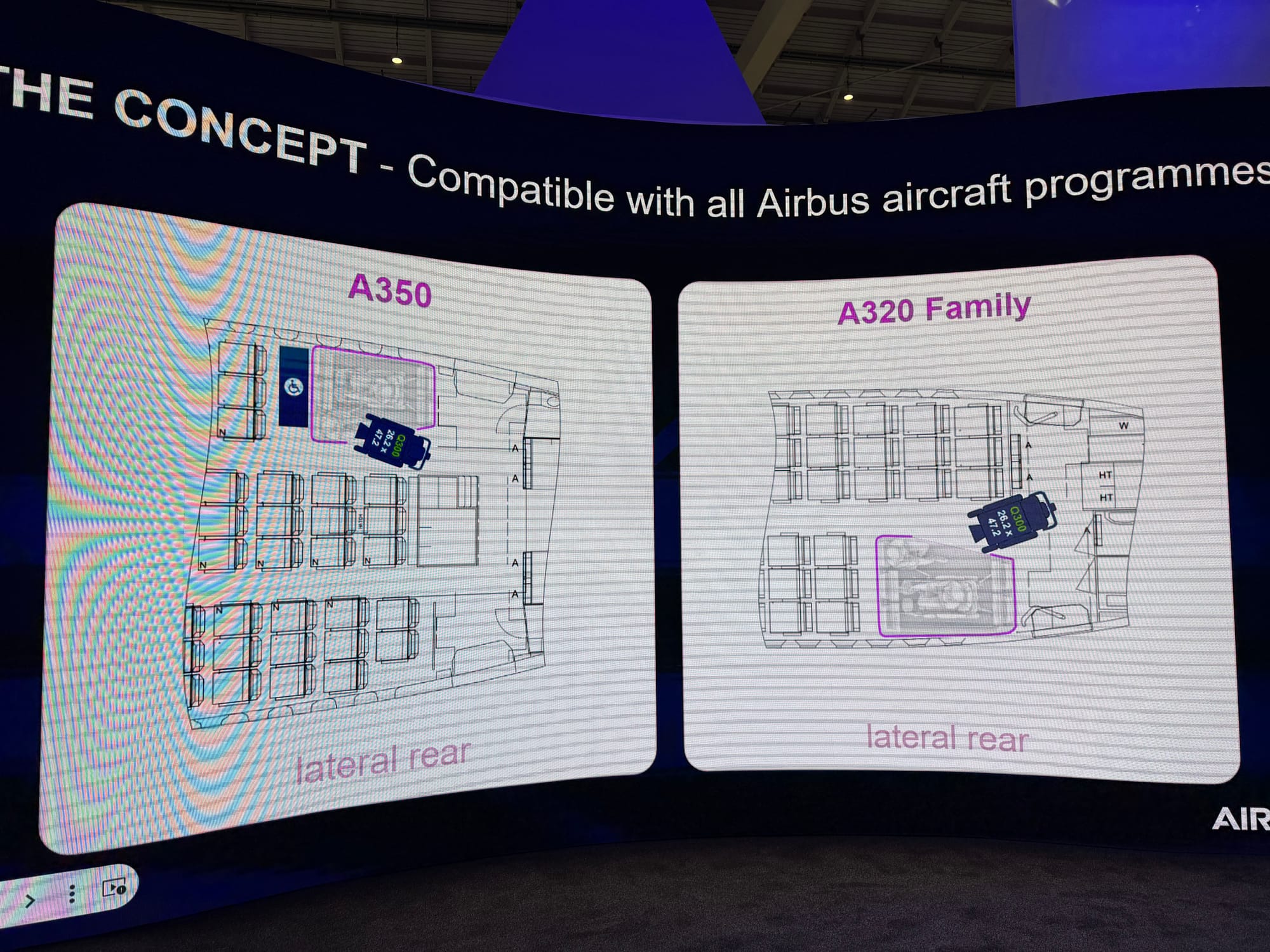
Moreover, Airbus showed U Suite as “compatible with all Airbus aircraft programmes” but showed only A350 and A320 LOPA segments. The narrower two-seat-width equivalent space on an A330 was not shown.
Consider the prospect of, say, an airline or flight attendant needing to a family of five — who paid extra to book the questionably certifiable special bed function and table that emerges from nowhere per the renders — to secure a single wheelchair passenger. How would the policies around this work?
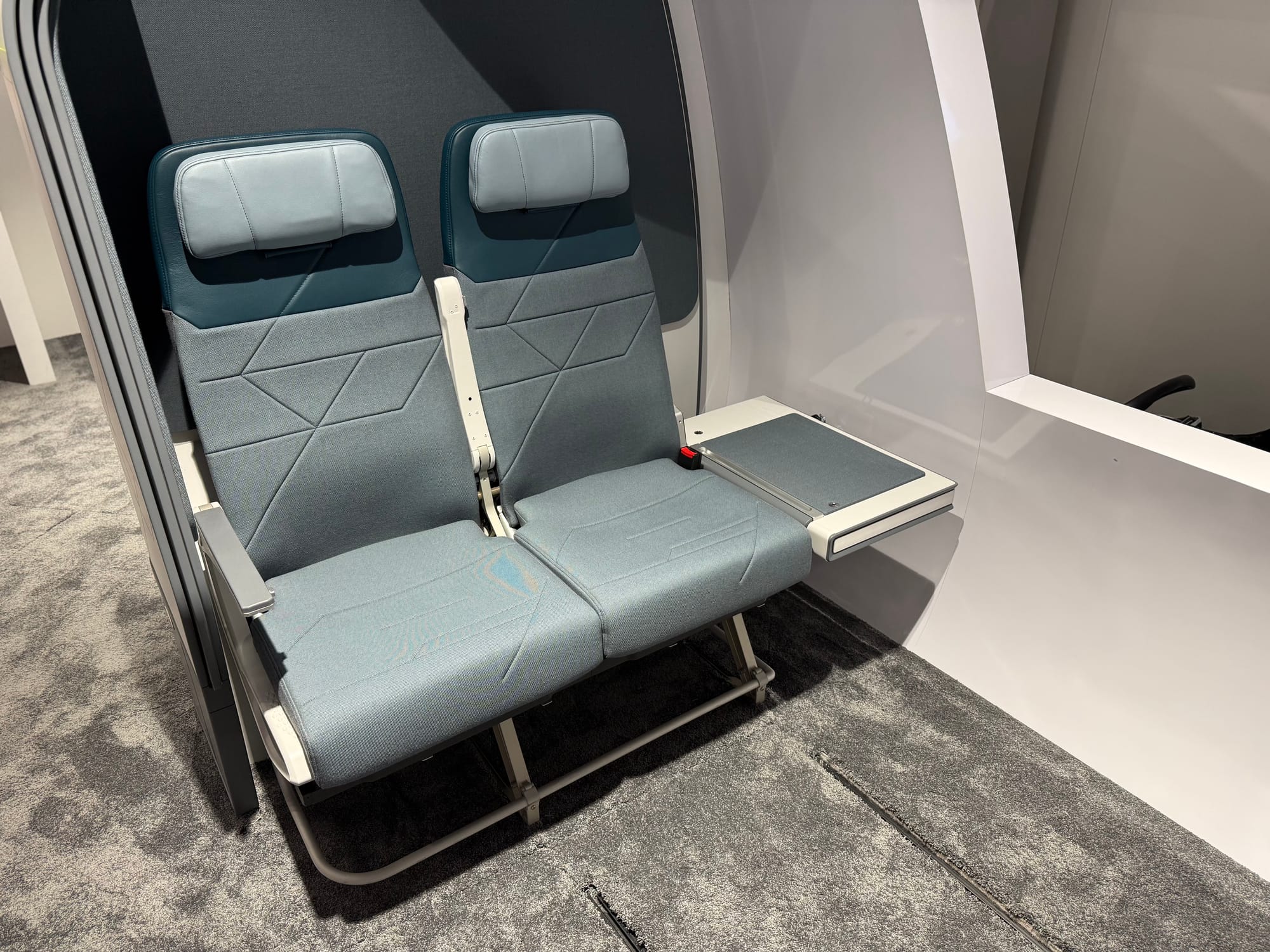
More developed as a concept, and less impactful on the cabin LOPA, is the front-row Prime wheelchair securement solution from Collins Aerospace.
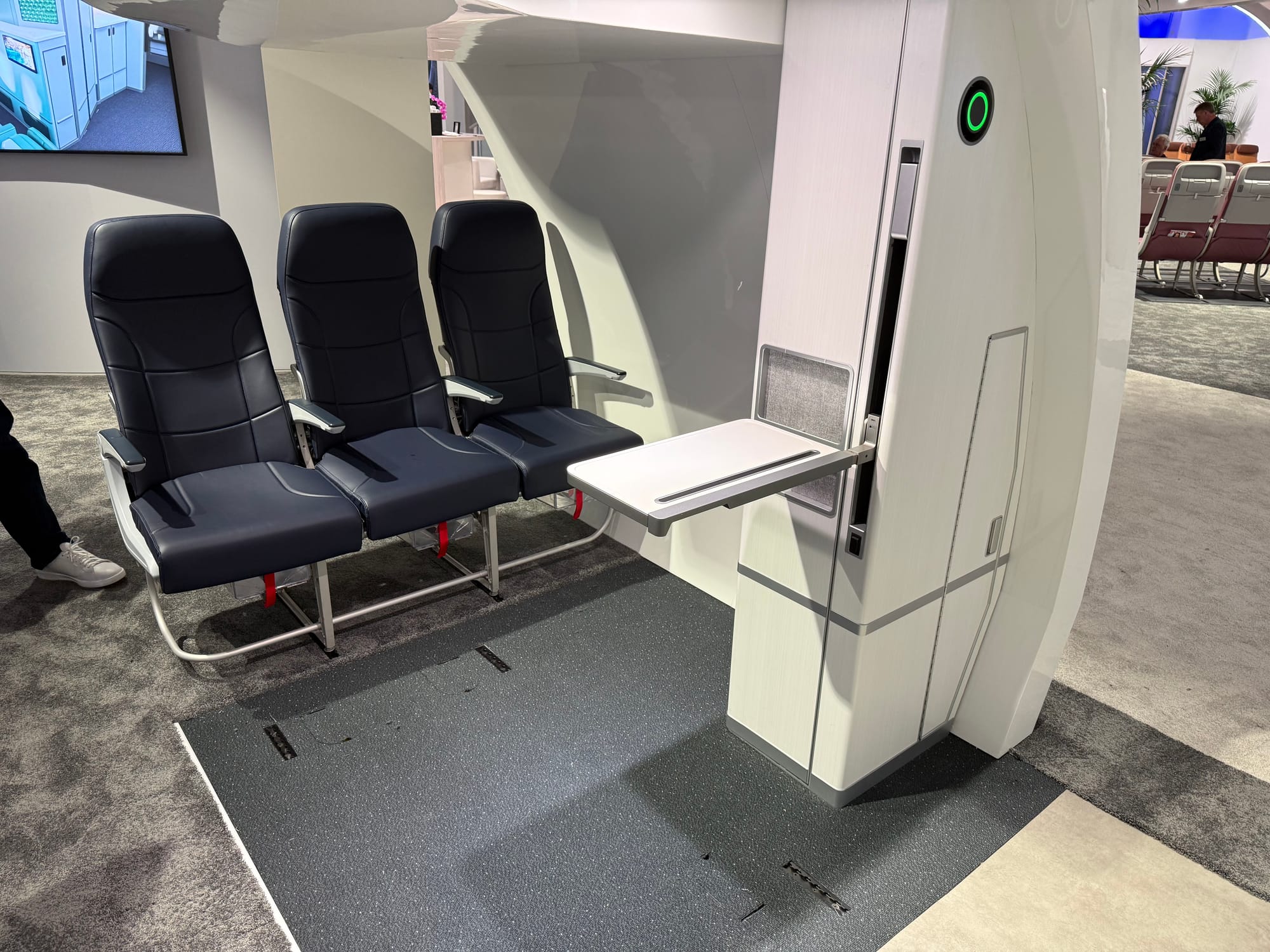
Returning for a third year, Collins has developed Prime further and is now showing it integrated with an economy class seat triple rather than a business/premium economy/US domestic first recliner double. This feels like a mature, developed product that is ready for, excuse the pun, prime time with airlines.
Not at AIX this year was the Air4All consortium’s wheelchair securement seat option, shown previously on the Delta Flight Products stand as an advanced mockup. With DFP not exhibiting this year, it would appear that accessibility is no longer a priority for Delta.
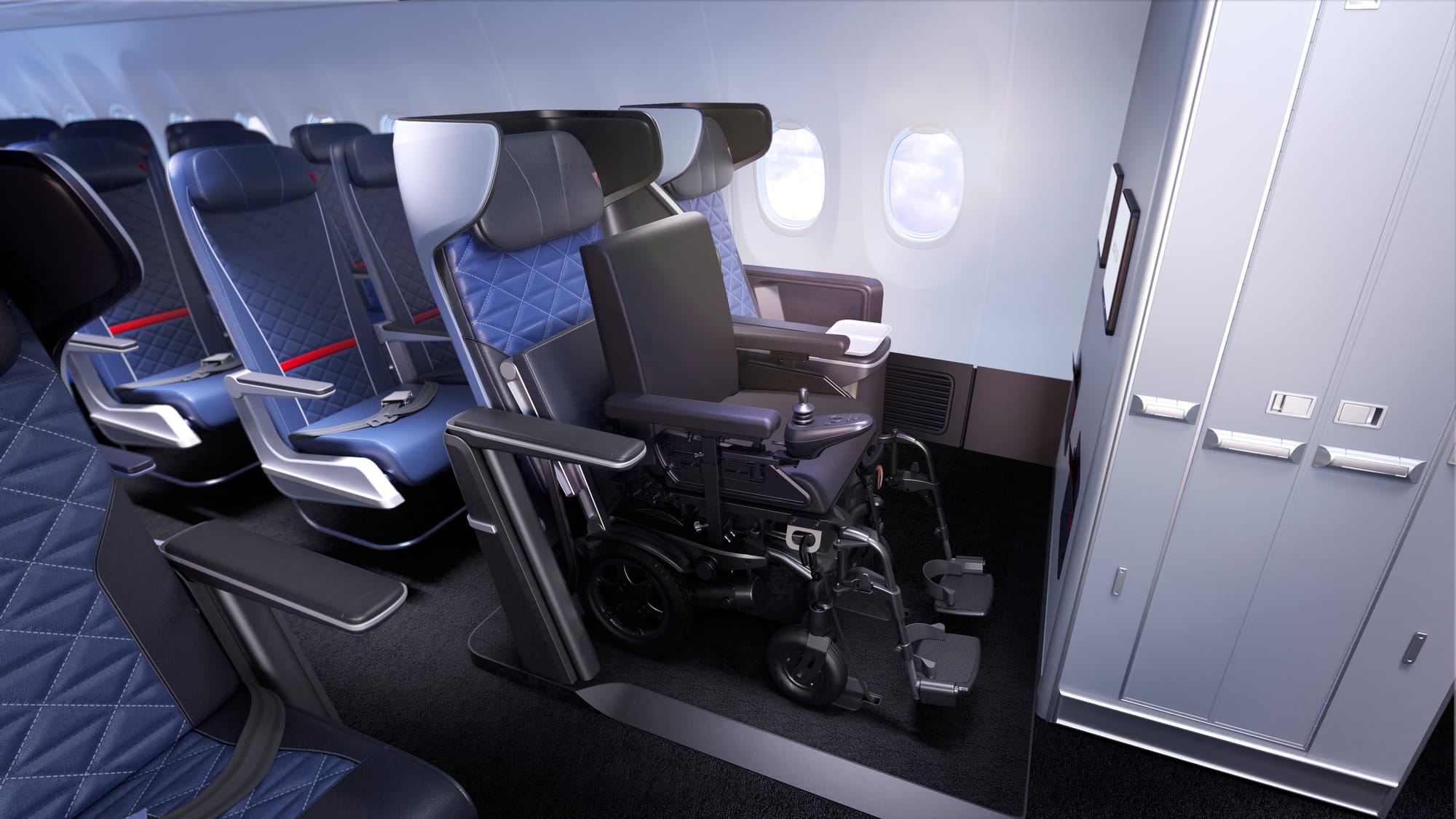
Air4All founding partner Christopher Wood tells The Up Front that “Air4All is considering its options. At the moment we are looking to direct certification via UK CAA to EASA. We need a partner or partners to take Air4All to the final stages.”
Rounding out this category, one of the use cases for Collins’ SkyNook — which makes use of previously empty space at the rear of tapering fuselages to install a deployable side surface — is to enable space to be provided for service animals to travel more comfortably within the cabin.
Accessible lavatories and washrooms, including those enabling independent use
Perhaps the most striking and thought-provoking among the numerous accessible lavatory and washroom innovations on stands at this year’s AIX was the Jamco Metamorphic Lavatory, designed in conjunction with Japanese space agency JAXA.
In standard operation mode, a single lavatory with accessible grab handles sits alongside an entirely separate sink-only washroom area — inherently reducing the pressure on lavatory facilities from passengers who just want to brush their teeth or wash their face, while also meaning that people don’t have to do so right next to the loo bowl itself within a tiny lav.
But it’s when the lavatory door swings elegantly out to encompass the space of the washroom to create a larger, accessible lavatory, including an industry first adult changing table, that the Metamorphic Lavatory truly wows.
Also impressive: Airbus’ inclusive lavatory, Expand, where the lavatory ahead of the rear left-hand door of an A320 family aircraft is designed so its door can swing outwards slightly into the galley space behind in order to expand the footprint of the lavatory for wheelchair users and other passengers with reduced mobility.
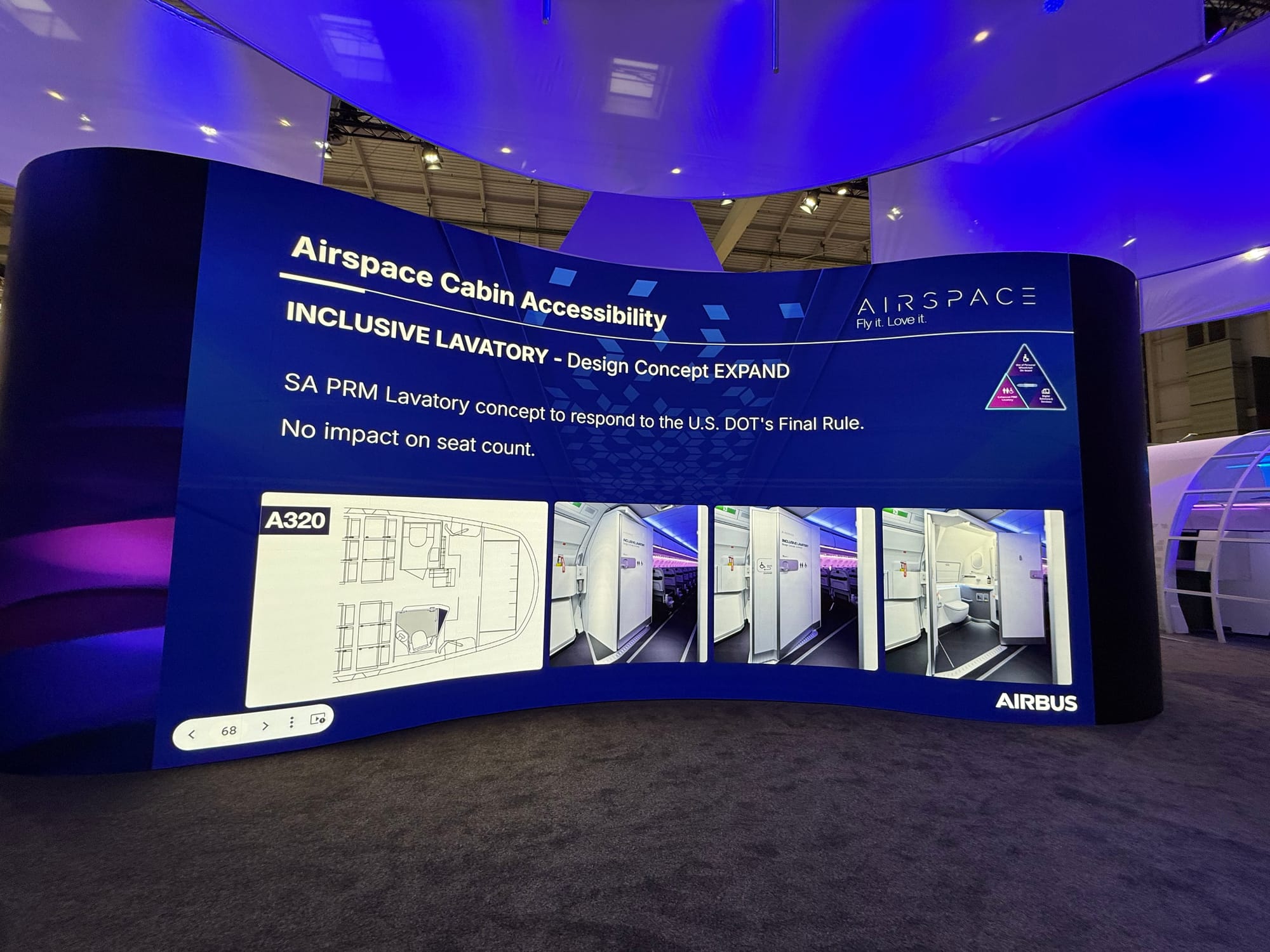
Responding to US regulatory requirements, Expand is seat count neutral, but will likely require the flight attendant jumpseat normally on the rear wall of that lavatory — which, with Expand, now moves — to be placed elsewhere.
Returning to the show and winning the Crystal Cabin Accessibility category, Diehl’s AURS (Adaptive User Routing System) lavatory with its enlarged visual and tactile signage, braille, high contrast, backlit panels and voice guidance has been matured further.
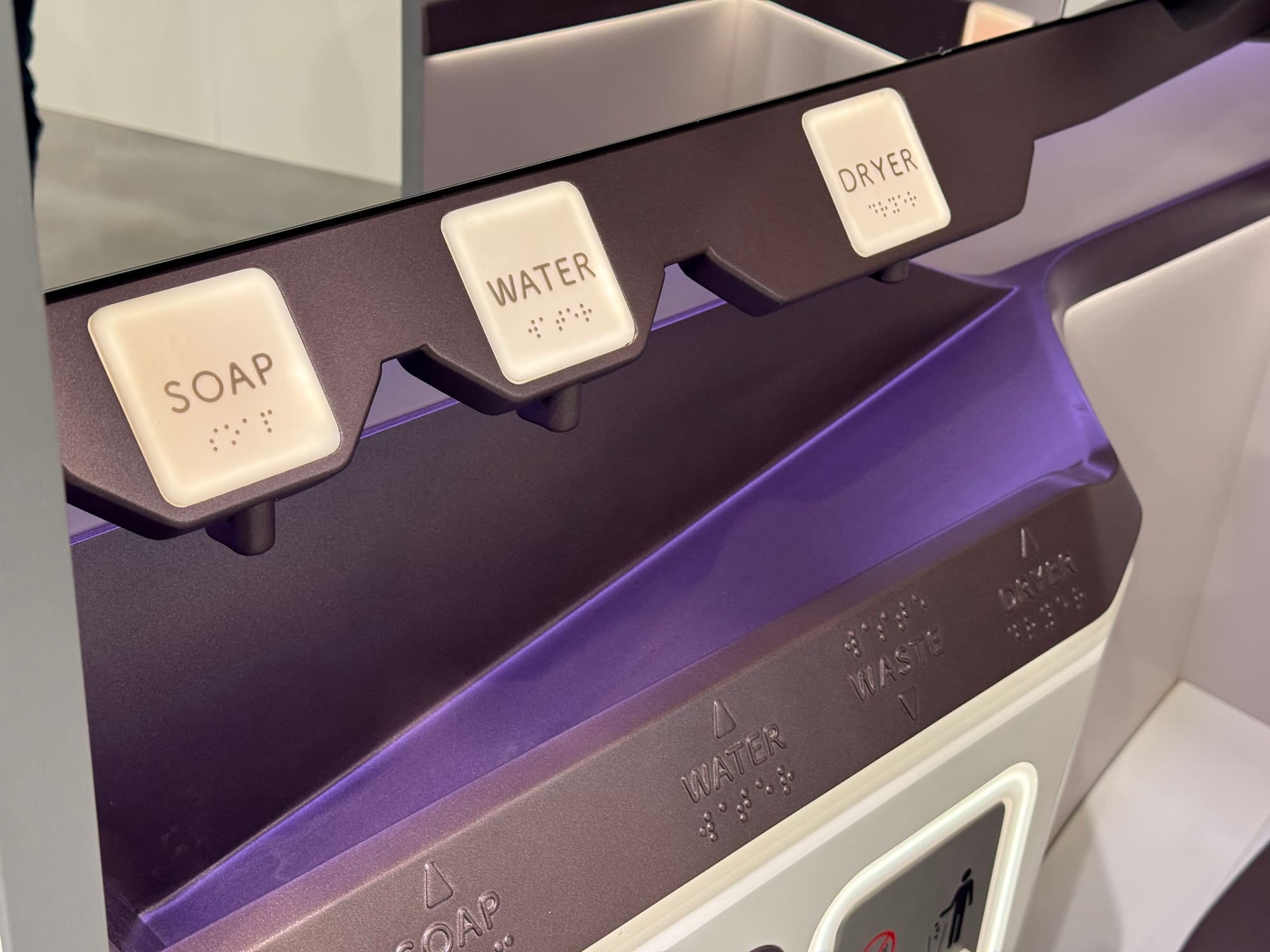
Diehl has worked closely with disabled passenger organisations and advocates here. Also notable with AURS is the series of experiential eyeglasses on offer for visitors in order to simulate specific reductions in visual acuity, which encourage understanding of some of the challenges faced by disabled lavatory users.
Also on Diehl’s stand was the updated iteration of the company’s accessible lavatory concept, Space3, last year’s Crystal Cabin Accessibility winner. The standout this time round: integrated grab handles that allow some wheelchair users the opportunity to use the lavatory independently rather than having to be assisted to transfer from the aisle chair to the toilet. Space3 is slated for entry into service with an undisclosed airline later this year.
Collins Aerospace’s accessible lavatory demonstrator, too, offered extendable (and very solid) support arms to the same end. (Collins requested no photographs of this early demonstrator.)
Accessible seat controls, including voice controls
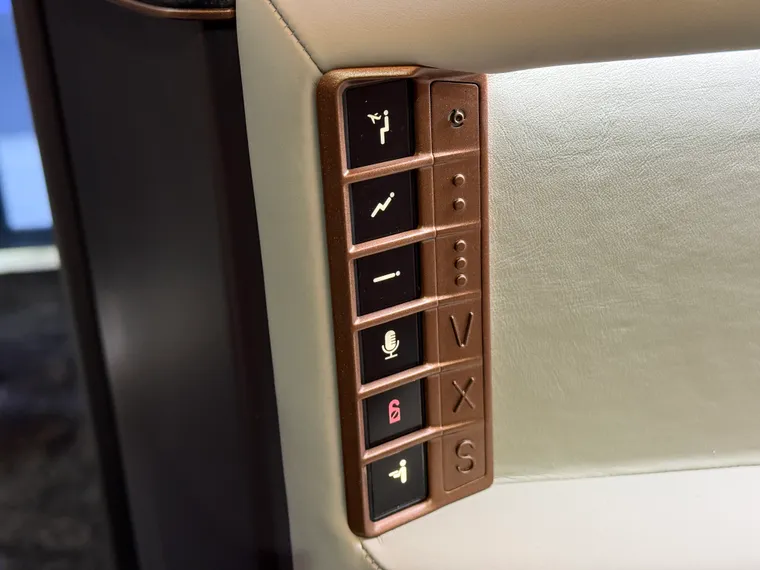
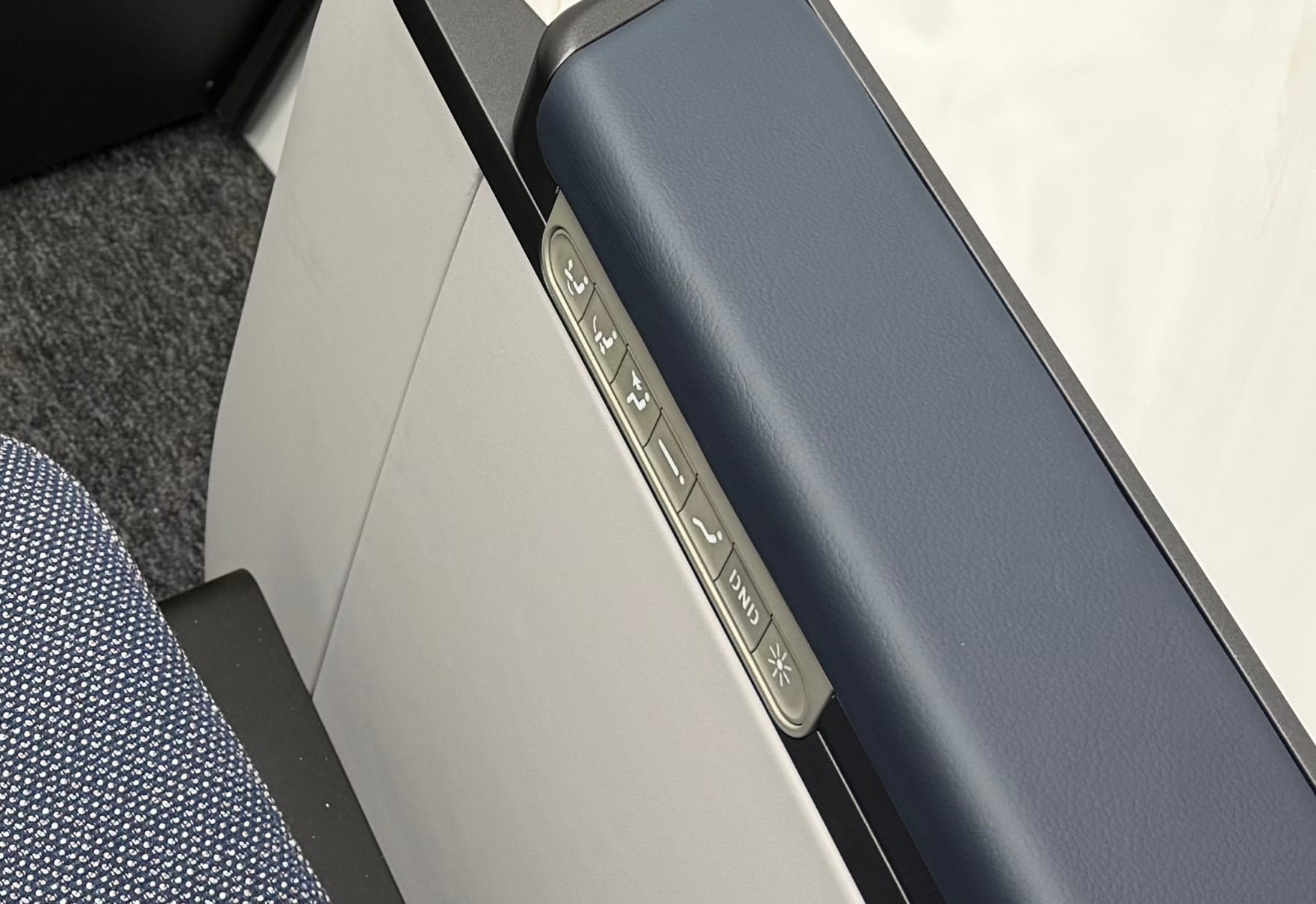
Improving the accessibility and usability of seat controls — especially when so many are now based on capacitative touch screens, which are inherently hostile to users with reduced visual acuity or physical dexterity — is crucial.
There remain fundamental barriers that would be relatively easy, verging in some cases on trivial, for seatmakers to reduce. For example, a tactile raised dot or line on specific controls on an otherwise flat screen, along the lines of those on the F and J of the standard QWERTY computer keyboard, which orient users to where their fingers are without the need to look down, should be standard.
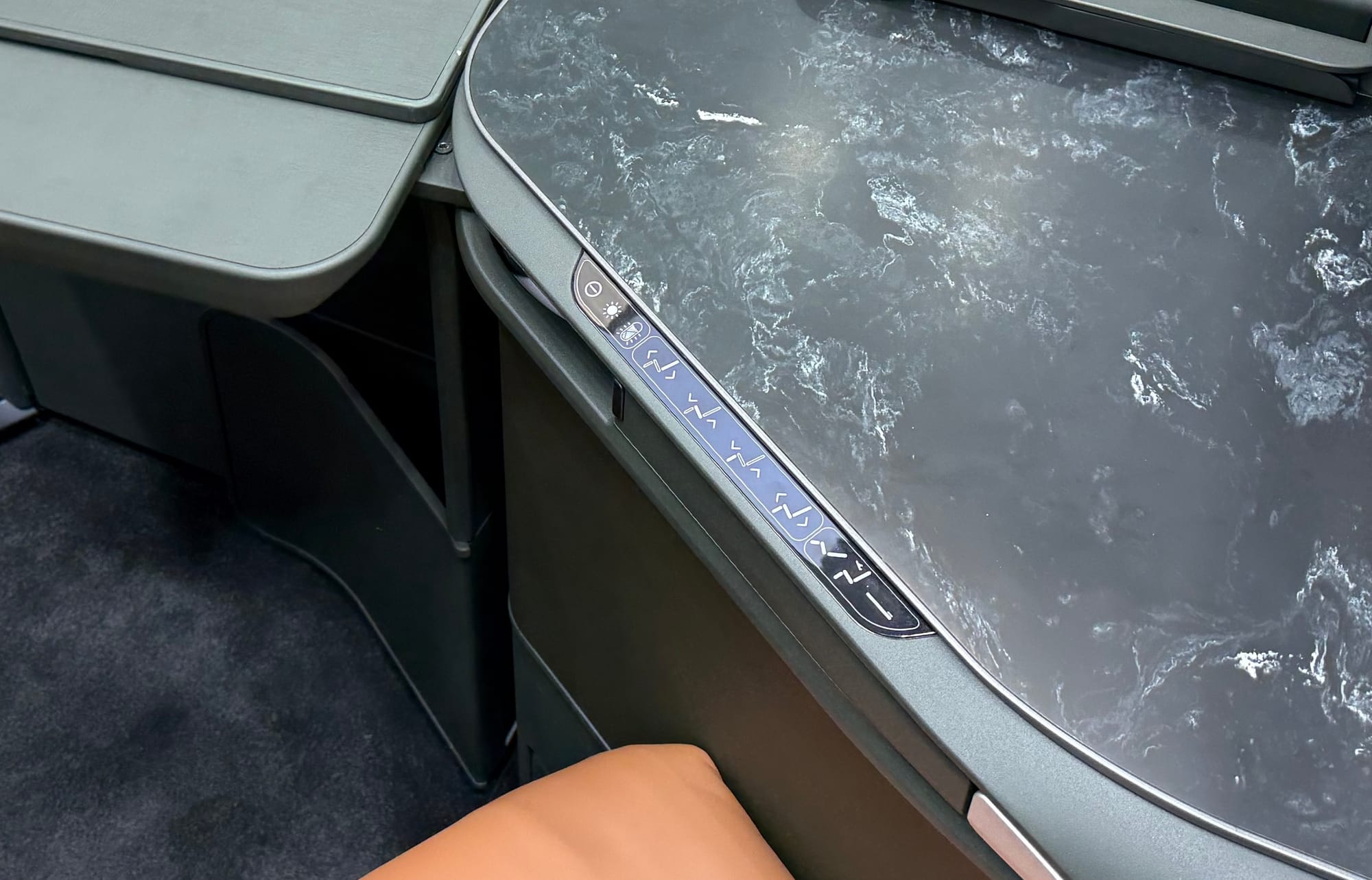
Some coordination and standardisation work between seatmakers, along the lines of what Airbus and Boeing are doing with visual and tactile signage, seems well overdue here.
In the absence of any of that — and, to reiterate, that is a very clear and easy opportunity for airlines and seatmakers to make substantial accessibility improvements — a key trend coming out of AIX is to move towards vocal commands.
These might be either directly to the seat, to an offered handset, or to a passenger’s personal electronic device, with the latter two also enabling the possibility of using existing accessibility options like Apple’s VoiceOver or Android’s TalkBack, with which passengers who might need to use these options may well already be familiar.
Recaro was showing, as part of its near-to-medium-term business class technology demonstrator R7 Horizon, what it calls “AI-powered seat control by voice”. This was at an early stage, and involved activating a capacitative button to speak to the seat in one of, Recaro says, “more than 90 languages”.
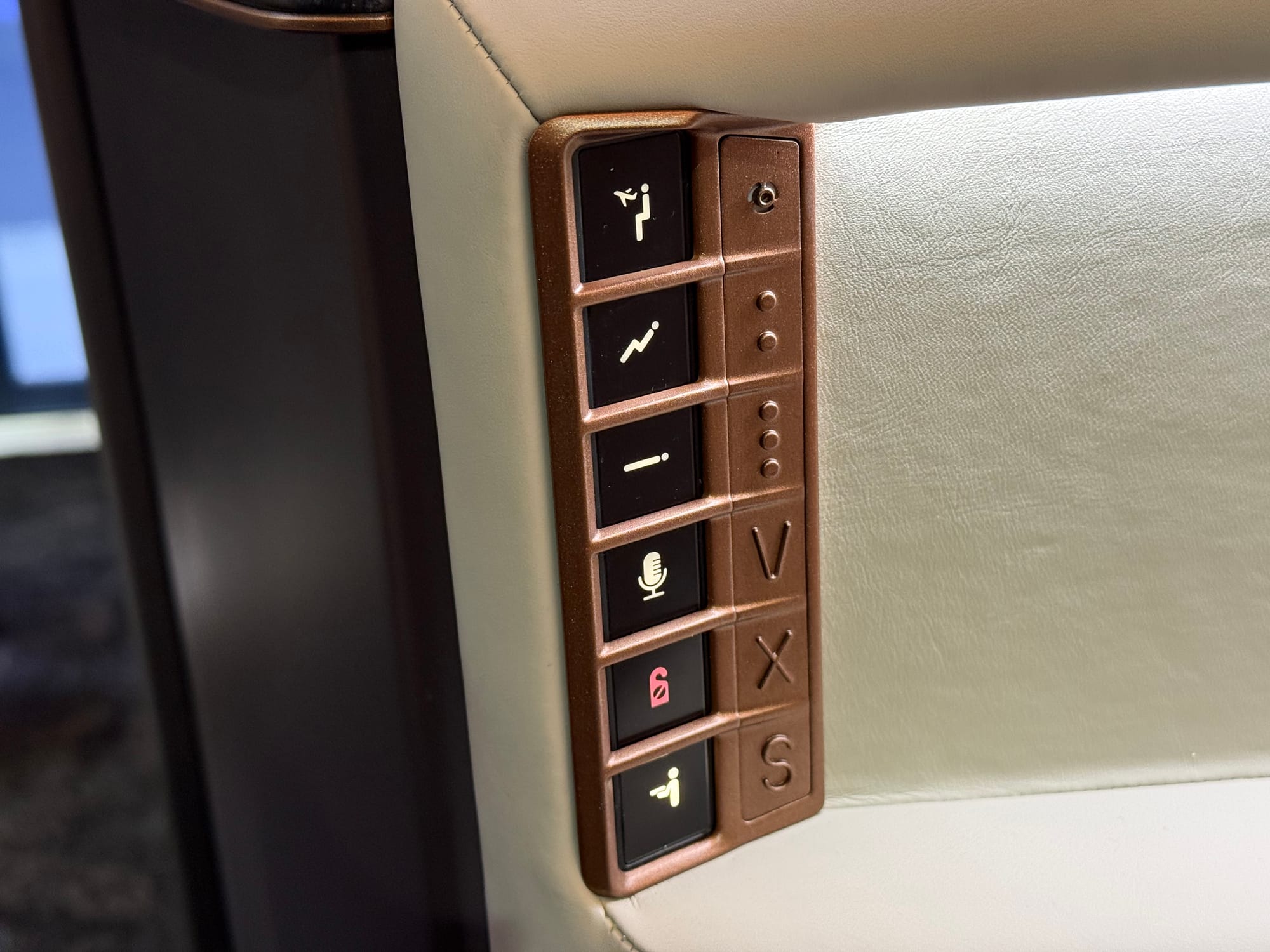
The voice control then moved the seat from upright to relax to flat mode.
Essentially, the system embeds a small language model processor that allows passengers to use natural language — and journalists had a go. For me, it worked well in English and German, and slightly less well in French, Russian, Mandarin and Japanese.
It should be relatively simple to improve the language models, though, and of course the ambient noise of a busy expo stand on the Monday evening with construction ongoing in the background is perhaps more than what might be expected in a business class cabin.
While this was an early prototype, the way that Recaro’s engineers had implemented a capacitative button with no haptic or other non-visible feedback — for a function that is fundamentally aimed at blind passengers and people with reduced visual acuity — did flag just how dominant the capacitative control paradigm is, and how much of a problem it creates.
It was notable that this capacitative control was installed right next to raised tactile elements on the demonstrator to show what this control did, but no way to determine if the control had been activated and was waiting for the user to speak.
Another solution, and one independent of seatmakers that The Up Front has been tracking for some time, is Access-IQ.
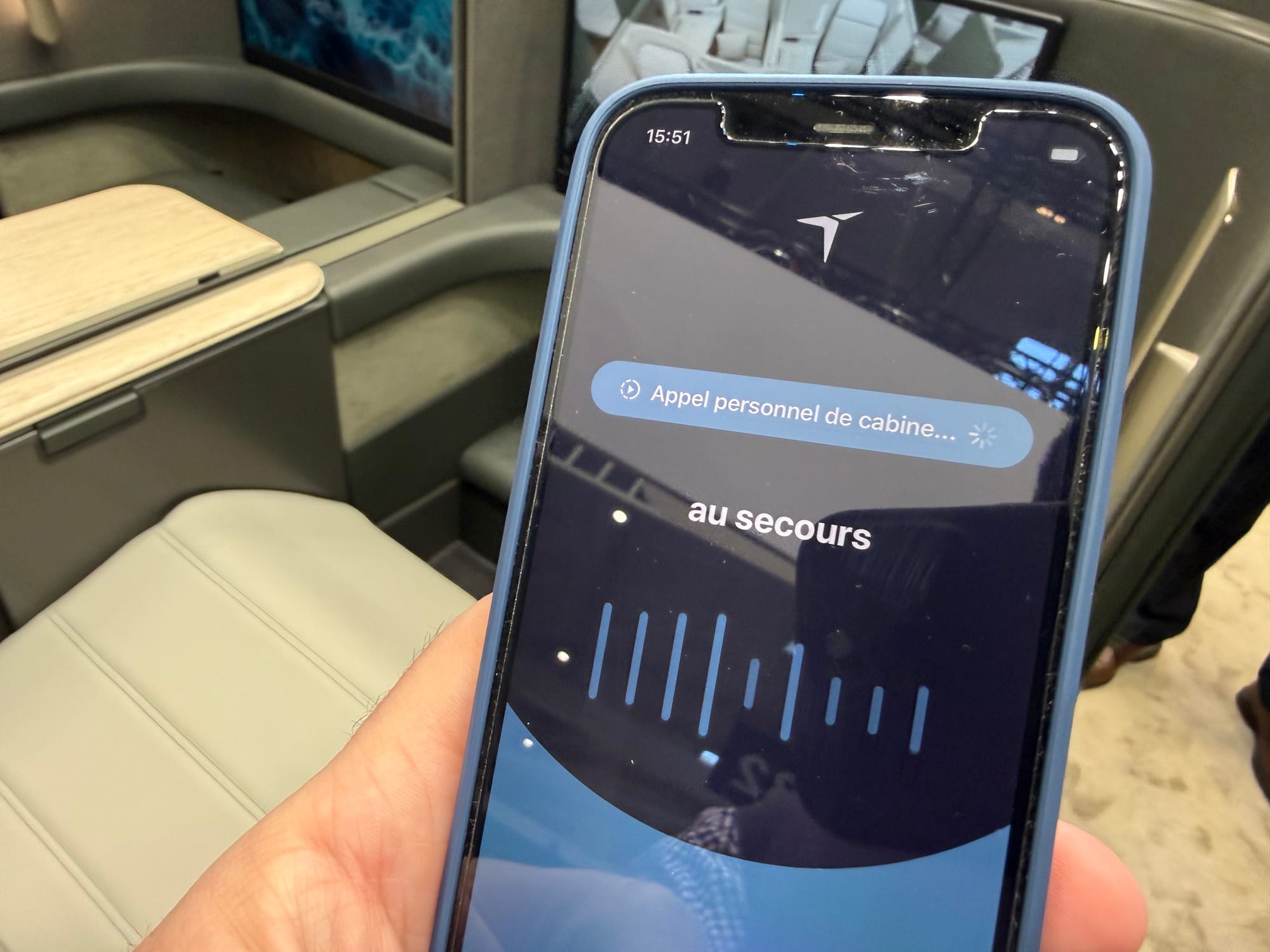
Installed on both Thompson and Unum seats at AIX, this allows passenger devices to be connected to the seat via Bluetooth, and to interact either via the device screen (in their preferred language) or via voice control.
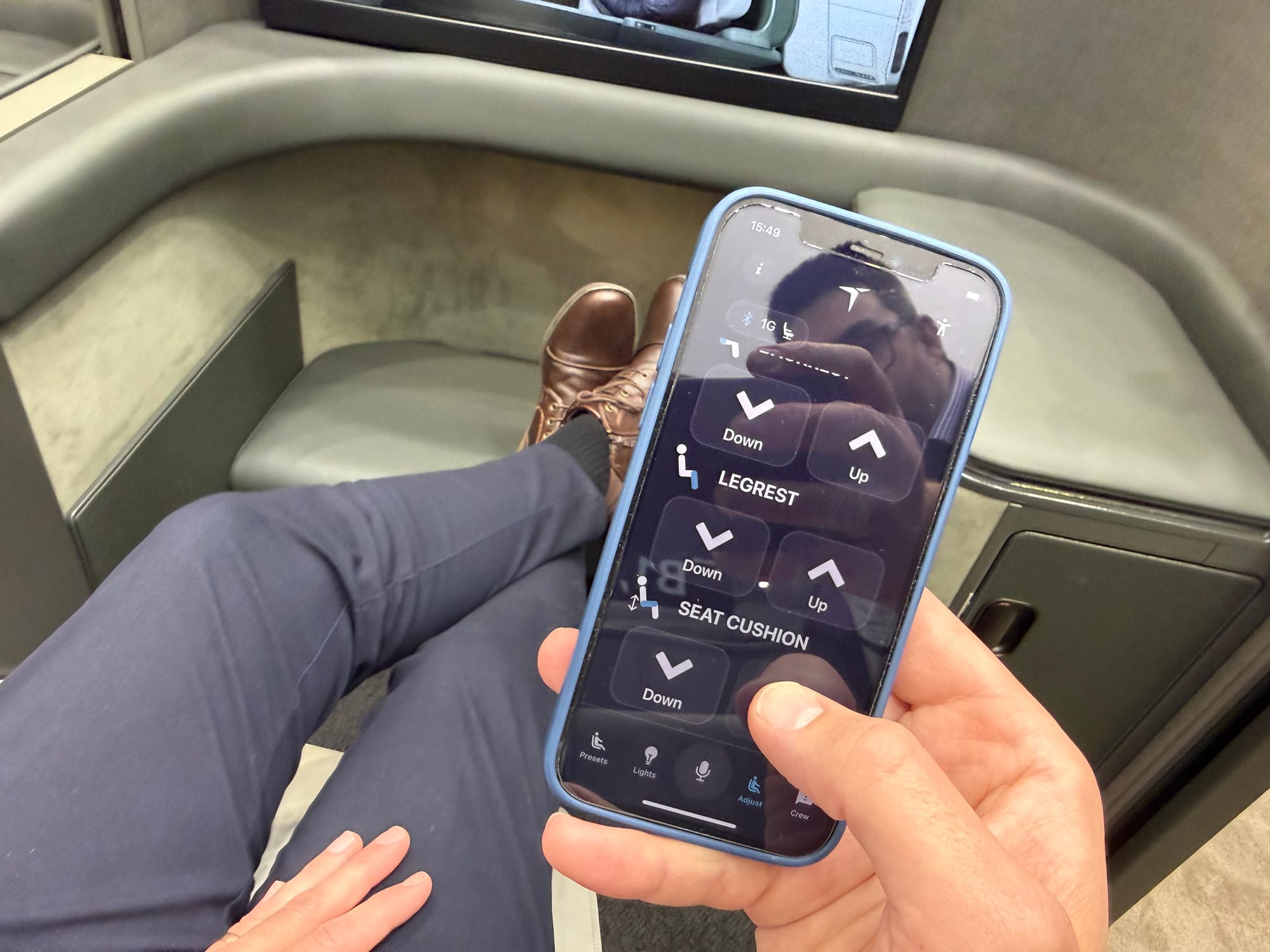
The voice control worked very well in English and French, the two test languages on the phone we tried on the show floor.
The range of interactions is remarkably wide: seat control, plus crew interaction (including summoning help, either vocally or via a text chat function), as well as transcription and transliteration of public address announcements.
On which note…
Transcription and translation of onboard announcements and information
Improving the accessibility of onboard public address announcements — particularly those made ad hoc, with updated specific details, or with non-standard information — via text is inherently beneficial for people who are Deaf or hard of hearing.
But it’s also a big safety win for passengers who do not speak the languages being used over the tannoy, of whom there are often a substantial number given globalised airline networks and partnerships.
Here, multiple approaches to both automated transcription and translation of announcements are being taken by airframers, inflight entertainment providers, seatmakers and others within the cabin ecosystem.
Boeing returned with an improved version of its transcription and translation integration, where the variety of very specific inflight jargon that the system has been trained to recognise is particularly impressive.
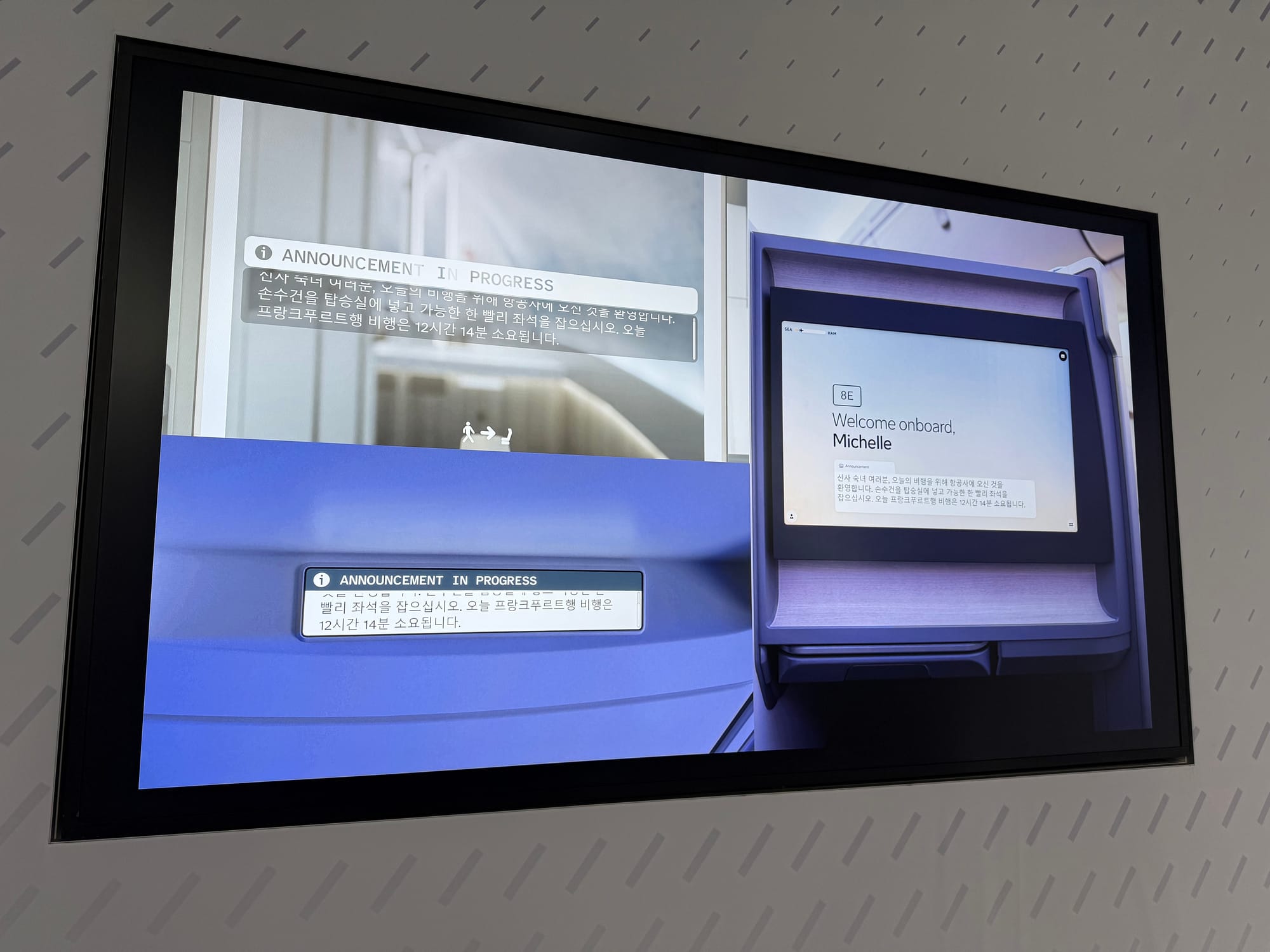
This is, of course, crucial given the importance of accurate transcriptions and translations. Boeing has demonstrated its work on a variety of screens, with the actual technology seeming platform-agnostic.
RAVE’s inflight entertainment system — laudably early to the accessibility party in 2023 with the Accessible Mode for its RAVE OS system — continues to impress, with live transcription and translation for both the standard and more accessible skins.
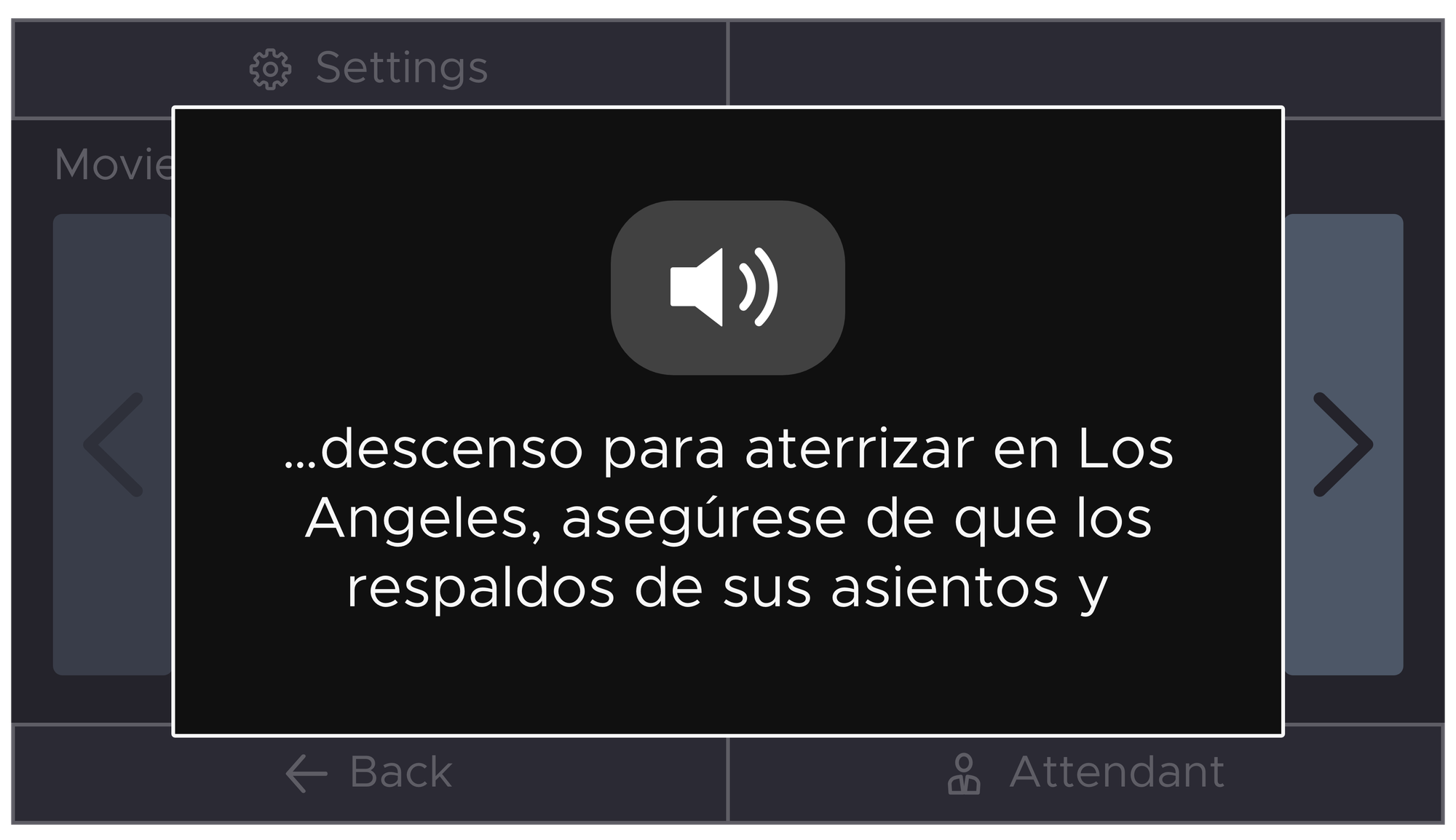
The Access-IQ system (see above) more widely connects passengers’ personal devices to the seat and wider cabin systems, including the call bell, and also has a transcription, translation and even crew text chat option, though we didn’t test these elements of the system live.
More widely, automated transcription and translation are strong examples of how innovations to improve accessibility and reduce barriers — laudable goals in and of themselves — also improve safety and the wider passenger experience for everyone on the aircraft.
The need for translated safety information has been evident for many years. Key questions include: to what extent do passengers travelling between (say) Shanghai and Dakar via a third country hub receive safety information on their connecting flight in a language they understand sufficiently?
French announcements may be made on the Dakar flight, and Mandarin used on the Shanghai flight, likely alongside English and the operating airline’s official language or languages. But how do French speakers get vital safety information on their onward connection to Shanghai?
In the era of noise-cancelling headphones too, where passengers may not hear announcements, displaying information visually on seatback monitors, overhead mini-screens, or personal devices via the airline app — in a passenger’s own language — is also a significant safety improvement.
Integration of other airline-held data here could also be useful, with obvious low-hanging fruit here including passengers’ passport nationalities, information about the website language selection they made when booking, managing, or checking in for their flight, and the language they use for the airline’s app.
And it’s this kind of next step — around integration, progress, further iteration and industrialisation of these accessibility innovations — that presents itself to airlines, and to the industry.
The interiors manufacturing and supply chain part of the commercial aviation world is showing products that are ready for airlines to adopt and put into place. There’s no longer the excuse that accessible options aren’t available, or couldn’t be selected now to be installed on aircraft very soon.
The challenge now is for airlines to work towards adoption of these technologies, products and innovations within their own operations.
